A Victoria sponge can fail for a surprisingly small reason: a 10°C oven error, a 5g flour imbalance, or butter that is too cold to hold air. The basic formula is simple, but the margin for sloppy measuring is narrow. Use equal weights of butter, sugar, eggs, and flour, then control the air, heat, and moisture. That produces a level cake with a soft crumb instead of a heavy middle or a burnt ridge.
Why does a Victoria sponge rise evenly?
The rise starts before the cake reaches the oven. During creaming, sugar cuts tiny pockets into softened butter. Those pockets hold air, and the trapped air expands as the batter heats. Eggs then add water, protein, and structure. Flour surrounds the mixture with starch and gluten, while baking powder adds more gas if the recipe uses plain flour. The finished crumb depends on keeping those parts in balance.
Air is the first ingredient
Use butter at about 18 to 21°C. It should bend when pressed but still hold its shape. Cold butter stays in lumps, so it cannot trap enough air. Melted butter creates a different cake because it gives you fat without the same network of air cells. Cream softened butter and caster sugar for three to five minutes, scraping the bowl once or twice. The mixture should look paler and slightly fluffy, not greasy or grainy.
Flour controls the crumb
For a traditional two-layer cake, weigh four large eggs without their shells. If they weigh 200g, use 200g butter, 200g sugar, and 200g self-raising flour. That equal-weight method matters more than a fashionable ingredient label. Add the flour in two or three portions and fold it gently with a spatula. Stop as soon as no dry streaks remain. Vigorous stirring develops gluten and pushes out the air you spent several minutes creating.
Heat turns batter into structure
Use two greased and lined 20cm round pans. Bake at 175°C conventional or 160°C fan for about 22 to 28 minutes. The oven must already be hot. Early heat sets the outside while the expanding air lifts the centre. An oven that runs too hot sets the edges first, forcing the middle into a dome. An oven that runs too cool leaves the centre wet and weak. The best test is a lightly springing centre, a clean skewer, and an internal temperature near 96 to 99°C.
Verdict: even rise comes from controlled air and measured heat, not from adding extra baking powder. Extra leavening often creates a fast lift followed by a sunken middle.
How should you mix and bake the sponge?
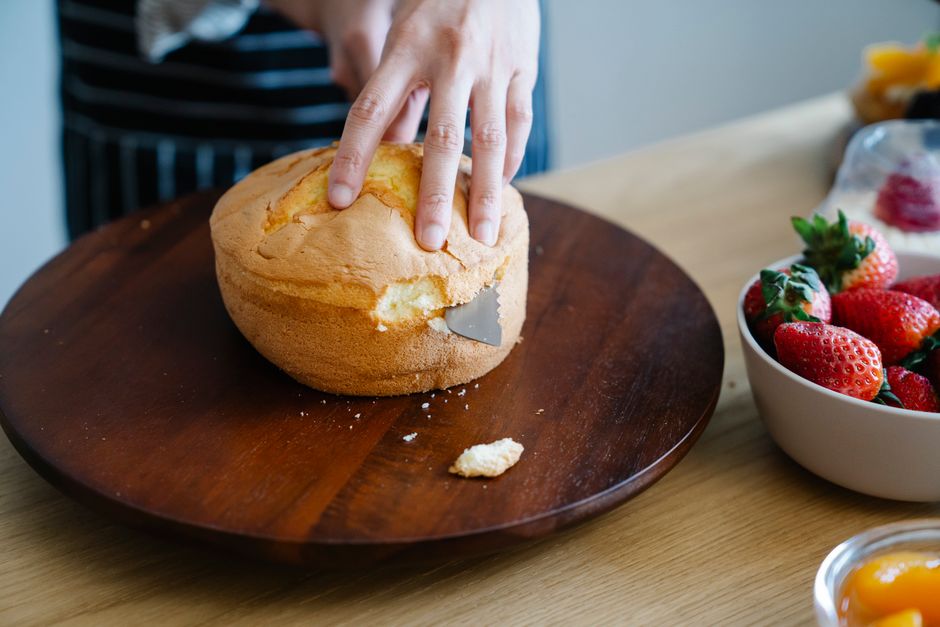
The most reliable method is plain and repeatable. Keep the batter moving gently once flour enters the bowl, and make the oven do the lifting.
Use this six-step method
- Bring the butter and eggs to room temperature. If the eggs are cold, place them in lukewarm water for five minutes. Do not microwave the butter until it melts.
- Line the pan bases with baking paper and lightly grease the sides. Measure the batter into both pans so the layers bake at the same speed.
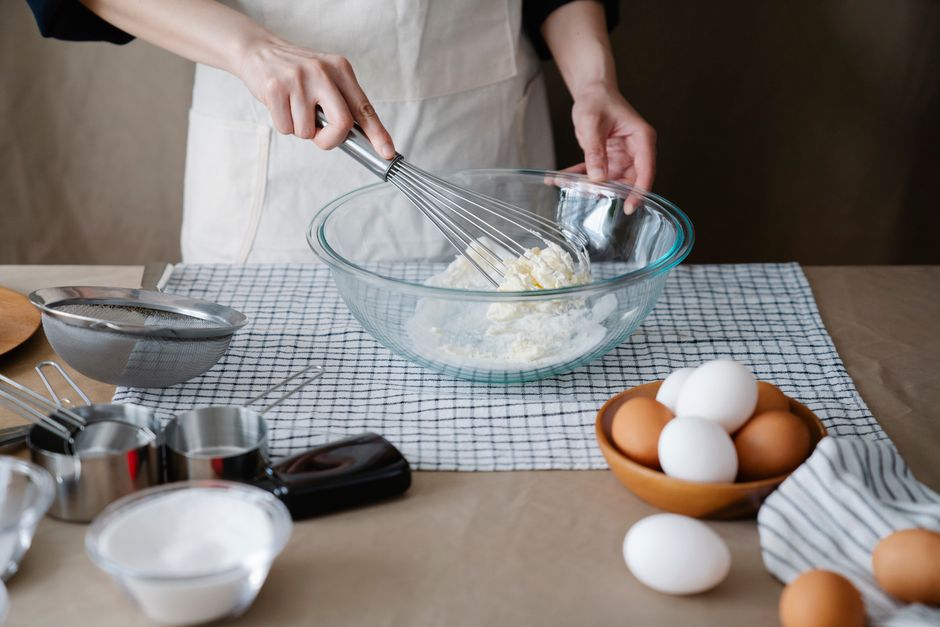
- Cream butter and sugar for three to five minutes. Beat in the eggs gradually, adding a spoonful of flour if the mixture starts to split.
- Fold in the sifted flour with a broad spatula. Use eight to twelve gentle turns, then stop when the batter looks even.
- Divide the batter, smooth the tops, and bake on the same oven shelf. Cool in the pans for five minutes, then move the layers to a rack.
Do not open the oven too early
Leave the door shut for at least 20 minutes. The cake needs time for the egg proteins and starches to set. A sudden blast of cool air can collapse a centre that has risen but cannot yet support itself. If one layer is darker, rotate the pans only after the structure has formed.
Cool before filling
Jam and cream belong on a fully cool cake. Warm layers release steam, soften the crumb, and make the filling slide. For a clean finish, spread about 120g raspberry or strawberry jam over one layer, leaving a 1cm border. Add whipped cream only after the jam has cooled. The lightest sponge is still fragile when hot.
Why did the sponge sink, dome, or turn dense?
Most failures have a physical cause. The cake is not random, and adding more baking powder is rarely the fix.
Why did the centre sink?
The centre usually sank because it was underbaked, over-leavened, or exposed to a cold draft before the structure set. Check the oven temperature with a separate thermometer if the cake repeatedly browns before the timer ends. Bake until the middle springs back and the skewer shows only a few moist crumbs. A deep, wet line through the centre means the cake needed more time, not more decoration.
Why did the cake dome?
A high dome points to strong heat around the edges. The outside sets while the middle keeps expanding. Lower the temperature by 10°C, use the correct pan size, and avoid placing the pans close to the top heating element. Do not press the dome flat while the cake is hot; that compacts the crumb. Trim it only after cooling if a level finish matters.
Can plain flour replace self-raising flour?
Yes. For every 200g plain flour, add about 8g baking powder and a small pinch of salt. Sift them together twice before folding. The trade-off is less built-in consistency, so weigh the baking powder carefully. Do not buy expensive cake flour for a standard Victoria sponge. It can produce a tender result, but the difference is smaller than the effect of accurate weighing and gentle mixing.
My verdict: precision beats extra ingredients
My clear recommendation is to use the equal-weight method with two 20cm pans, a 1g scale, and a properly checked oven. That combination gives the best balance of height, tenderness, cost, and repeatability. The cake does not need oil, yogurt, extra baking powder, or a premium flour to become light. It needs enough air at the start and enough heat at the end.
Choose a different cake when the job changes
Do not use a Victoria sponge when you need a very moist cake that stays soft for several days. An oil-based sponge handles storage better because liquid oil stays fluid when cool. Do not use it for a heavily loaded fruit cake either; the light crumb can compress under wet fruit and thick frosting. For a tall celebration cake, a genoise gives more height and a firmer structure, but it demands more careful egg whipping and syrup management.
Keep the final decision simple
For afternoon tea, use the classic formula and fill it with jam and lightly whipped cream. For transport, use a firmer buttercream or choose an oil-based cake. For a first attempt, bake one plain sponge before adding fruit, chocolate, or unusual extracts. Each extra ingredient changes moisture or weight, making a failure harder to diagnose.
The real cost of this cake is low, and the useful lesson is broad: accurate measurements beat persuasive packaging. As home baking moves toward inexpensive precision, the humble scale and a properly checked oven will matter more than glossy gadget claims.