You know the scene: it is a cool Saturday morning, the kitchen is warm, and you want cinnamon buns ready before lunch. The problem is that many recipes leave you with tight dough, burnt sugar, or a raw center. These cinnamon swirl buns solve that with a soft enriched dough, a firm butter filling, and a baking schedule that fits a real weekend.
Why Cinnamon Swirl Buns Need More Than Extra Sugar
The dough must hold its shape
Cinnamon buns are built from enriched yeast dough. Milk, butter, egg, and sugar make the crumb tender, but they also slow gluten development. That tradeoff creates the soft texture people want. It also means the dough needs enough kneading to stretch without tearing.
The dough should feel supple and slightly tacky, not wet enough to smear across the bowl. When you press it with one finger, the dent should fill slowly. That simple test tells you more than a timer because flour absorbs liquid at different rates.
The filling controls the spiral
The filling has two jobs: bring cinnamon flavor and keep the layers distinct. Melted butter spreads quickly, but it can soak into the dough and leave a weak swirl. Soft butter works better because it stays in place while you roll. Use a thin, even layer from edge to edge, leaving a 1-inch strip bare along the far edge so the roll can seal.
For a balanced bun, use 100 grams of light brown sugar, 14 grams of ground cinnamon, 2 grams of fine salt, and 85 grams of soft unsalted butter for a dough made with 500 grams of flour. More sugar does not make a better bun. It increases leakage and makes the bottom burn before the center cooks.
Which Ingredients Make the Softest Autumn Buns?
Choose flour for structure, not label appeal
For the most dependable dough, use King Arthur Bread Flour, which lists about 12.7 percent protein. It gives the roll enough strength to hold a broad spiral. Bob’s Red Mill Unbleached White All-Purpose Flour, at about 11.7 percent protein, makes a softer dough but may need a longer knead. The clear winner for first-time bakers is the bread flour because it gives you more room for small measuring errors.
Do not swap all the flour for whole wheat. Whole-wheat flour absorbs more water and cuts the rise. If you want its flavor, replace only 75 grams of the white flour and add 15 grams of milk during mixing.
Use yeast and butter that behave predictably
SAF Red Instant Yeast is a strong choice because it mixes directly into the flour and does not need a separate proofing step. One standard 7-gram packet is enough for a dough using 500 grams of flour. Keep the milk between 100 and 110 degrees Fahrenheit. Hotter milk can weaken the yeast; cooler milk simply extends the rise.
Plugrá Unsalted Butter provides about 82 percent butterfat, so it spreads smoothly while keeping the filling rich. Regular unsalted butter also works. Add one teaspoon of Nielsen-Massey Madagascar Bourbon Vanilla Extract to the icing if you have it, but vanilla cannot rescue a dry bun. Moisture and timing matter more.
What Is the Best Weekend Schedule for Cinnamon Buns?
Use a clock, then confirm with the dough
The schedule below gives you warm buns by late morning without forcing the dough through an overnight rise. Room temperature means roughly 70 to 75 degrees Fahrenheit. A colder kitchen may add 20 to 30 minutes to each rise.
| Time | Task | Target |
|---|---|---|
| 8:00 a.m. | Mix and knead the dough | Dough reaches 78 to 80 degrees Fahrenheit |
| 8:35 a.m. | Start the first rise | Dough expands by about 75 percent |
| 9:25 a.m. | Roll, fill, and cut | 12 pieces, each about 1.5 inches wide |
| 9:45 a.m. | Start the second rise | Buns look puffy and touch at the sides |
| 10:25 a.m. | Bake at 350 degrees Fahrenheit | Centers reach 190 to 195 degrees |
| 10:55 a.m. | Cool and ice | Serve warm, not scorching hot |
Make the schedule flexible
The dough decides when it is ready. If the first rise finishes early, shape the buns and place them in the refrigerator for up to 12 hours. Let them sit at room temperature for 45 to 60 minutes before baking. This makes the recipe useful for a Sunday breakfast because most of the work happens the night before.
Never judge the second rise by the minute alone. A fully risen bun jiggles when you move the pan. An under-risen bun looks tight and springs back fast when pressed. Give it another 15 minutes. That extra wait is cheaper than a tray of heavy rolls.
How to Knead, Roll, and Cut the Dough Without Flattening It
Build gluten before adding more flour
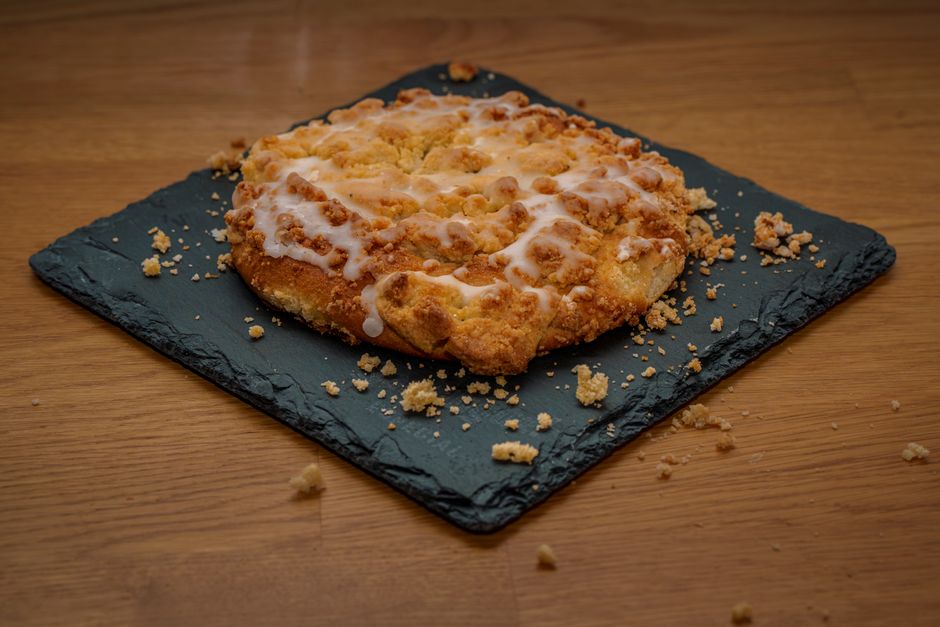
Mix the flour, yeast, sugar, salt, warm milk, and egg until no dry patches remain. Rest the mixture for 10 minutes. This short pause lets the flour absorb the milk and makes kneading easier. Add softened butter in three portions, kneading after each addition until the dough looks smooth again.
Knead by hand for 8 to 10 minutes or in a stand mixer for 6 to 8 minutes on low to medium-low speed. The dough should pull away from the bowl but still feel soft. Bakers often add flour too soon because sticky dough feels wrong. That is the mistake. Extra flour creates dry buns. Oil your hands lightly if the dough clings during the first few minutes.
Roll from the center and cut with thread
After the first rise, press the dough into a rectangle instead of punching it flat. Roll from the center outward until you have a rectangle about 16 by 12 inches. Keep the thickness close to 1/4 inch so the center and edges bake at the same speed.
Spread the filling evenly, leaving the far edge clear. Roll from the long side into a firm log, but do not crush it. Pinch the seam closed. Mark the log into 12 equal pieces, then cut with unflavored dental floss or a sharp serrated knife. A knife can drag the spiral; floss gives cleaner layers.
Place the pieces in a greased 9-by-13-inch pan with about 1 inch between them. They should touch after the second rise. If the pan is packed before rising, the centers can stay dense because the buns have nowhere to expand.
Can You Make Cinnamon Buns Without a Stand Mixer?
Yes, and hand kneading gives useful feedback
A stand mixer saves effort, but it does not produce better buns by itself. Hand kneading works well because you can feel the dough change from rough and sticky to smooth and elastic. Use a bench scraper during the first few minutes, then knead on a lightly greased surface instead of burying the dough in flour.
What if the dough rises slowly?
A slow rise usually means the room is cold, the milk was too cool, or the yeast is old. Move the covered bowl to a switched-off oven with the light on, but check that the space stays below 85 degrees Fahrenheit. Warmth speeds yeast activity; excessive heat weakens the dough and softens the butter before shaping.
Can you replace cinnamon with another spice?
Yes, but the result changes. Use 10 grams of ground cardamom for a sharper bun, or combine 10 grams of cinnamon with 2 grams of ground ginger for a stronger autumn profile. Do not replace cinnamon with a large amount of nutmeg. Nutmeg becomes bitter quickly, especially beside brown sugar.
How to Serve, Store, and Reheat the Buns
The best icing is thin enough to melt
Mix 115 grams of softened cream cheese, 30 grams of unsalted butter, 90 grams of powdered sugar, 15 grams of milk, and a pinch of salt. Spread it over buns that have cooled for 10 to 15 minutes. If the buns are piping hot, the icing disappears into the pan. That is not a disaster, but it gives you glaze instead of a visible topping.
Keep the crumb soft after baking day
Store cooled buns in an airtight container at room temperature for up to two days. Reheat one bun in the microwave for 12 to 18 seconds, or warm a covered pan at 300 degrees Fahrenheit for 10 minutes. Freeze un-iced buns for up to two months, wrapped individually and placed in a freezer bag. Thaw overnight in the refrigerator, then warm before icing.
For autumn weekend baking, this recipe wins because it makes the timing, texture, and failure points clear. The next step for cinnamon buns is not more sugar or taller frosting; it is better control of dough temperature, fermentation, and the small details that make a home-baked spiral taste deliberate.