According to the National Coffee Association (NCA), 63% of American adults consume coffee daily, yet consumer satisfaction data reveals that nearly 40% of home brewers are dissatisfied with the consistency of their machines within the first 24 months of use. This discrepancy often stems from a fundamental misunderstanding of brand-specific engineering and how different manufacturers prioritize thermal stability versus convenience features. Achieving the SCAA (Specialty Coffee Association of America) Golden Cup Standard requires a machine to maintain a water temperature between 195°F and 205°F throughout the entire brewing cycle, a feat that many mass-market brands fail to accomplish. When evaluating the best coffee maker brands, one must look beyond aesthetic appeal and examine the internal heating architecture, pump pressure consistency, and the longevity of mechanical components.
Which coffee maker brands offer the highest reliability and longevity?
Reliability in the coffee industry is measured by a machine’s ability to perform thousands of cycles without thermal degradation or pump failure. For consumers seeking a long-term investment, the distinction between consumer-grade and prosumer-grade engineering is vital. Brands that utilize copper heating elements and modular designs tend to outperform those relying on integrated aluminum thermoblocks, which are prone to scale buildup and are often impossible to repair once a single component fails.
Technivorm: The Standard for Longevity
Technivorm, specifically the Moccamaster line, remains the industry benchmark for drip coffee reliability. Manufactured in the Netherlands, these machines are hand-built and individually tested before shipping. The primary advantage of Technivorm is its heavy-duty copper boiling element, which ensures the water reaches the precise temperature of 196°F–205°F within seconds. Unlike many competitors that use plastic internal tubing, Technivorm utilizes metal and high-grade BPA-free plastics that do not leach chemicals over time. The average lifespan of a Moccamaster often exceeds 15 years, provided regular descaling is performed.
- Model: Technivorm Moccamaster KBGV Select
- Approximate Price: $350
- Pros: SCAA certified, 5-year warranty, fully repairable parts.
- Cons: Lacks programmable timers or automated strength settings.
Breville: Precision Engineering and Features
Breville has positioned itself as the leader in the “smart” coffee category, blending high-end extraction technology with user-friendly digital interfaces. Their Precision Brewer series allows users to adjust bloom time, flow rate, and temperature to a single degree. While Breville machines contain more electronic components than Technivorm—which theoretically increases the number of potential failure points—their build quality remains superior to standard retail brands. The use of PID (Proportional-Integral-Derivative) temperature control in their higher-end models ensures that the water temperature remains stable throughout the extraction, preventing the sourness associated with under-extraction or the bitterness of over-extraction.
- Model: Breville Precision Brewer Thermal
- Approximate Price: $300
- Pros: Highly customizable brew settings, large 60oz capacity.
- Cons: Larger footprint requires significant counter space.
| Feature | Technivorm | Breville |
|---|---|---|
| Heating Element | Copper | Thermocoil/PID |
| Warranty | 5 Years | 2 Years |
| Repairability | High (Modular) | Moderate (Electronic) |
| SCAA Certified | Yes | Yes |
What are the best coffee maker brands for espresso enthusiasts?

The engineering requirements for espresso are significantly more demanding than those for drip coffee. An espresso machine must generate a consistent 9 bars of pressure while maintaining a precise temperature. Brands in this category are often divided into manual, semi-automatic, and super-automatic categories. For the serious home barista, the quality of the boiler and the portafilter size are the two most critical metrics. Commercial-standard 58mm portafilters allow for better heat retention and more even extraction than the 50mm or 54mm versions found in budget machines.
Gaggia: The Entry-Point for Prosumers
Gaggia is a brand with deep historical roots in Italy, and their Classic Pro model is widely considered the best entry-level machine for those who want a real espresso experience. The brand utilizes a three-way solenoid valve, which relieves pressure from the group head after the shot is pulled, leaving a dry puck that is easy to discard. This feature is rarely found in machines under $500. Gaggia machines are built with brushed stainless steel and utilize heavy brass components internally, which aids in thermal mass and stability. They are the antithesis of the “disposable” appliance trend.
- Model: Gaggia Classic Pro
- Approximate Price: $450
- Pros: Commercial 58mm chrome-plated brass portafilter, excellent steam wand.
- Cons: Single boiler requires a wait time between brewing and steaming.
Jura: The Pinnacle of Super-Automatic Convenience
For users who prioritize convenience but refuse to compromise on bean quality, Jura represents the gold standard. Based in Switzerland, Jura focuses exclusively on super-automatic machines that grind, tamp, and brew at the touch of a button. Their Pulse Extraction Process (P.E.P.®) optimizes the extraction time for short specialties like ristretto and espresso. While the price point is significantly higher than most household brands, the durability of their internal brewing units and the precision of their AromaG3 grinders justify the investment for high-volume households. These machines are available through high-end retail partners found on the Awin network, such as Currys or Williams Sonoma.
- Model: Jura E8
- Approximate Price: $2,400
- Pros: One-touch milk system, incredible consistency, sleek design.
- Cons: High maintenance costs due to proprietary cleaning tablets.
The quality of an espresso is 50% machine and 50% grinder. Even the most expensive Jura or Gaggia will fail to produce a quality shot if the grind size is inconsistent or the beans are stale.
How do entry-level drip coffee maker brands compare in performance?
The entry-level market is saturated with brands like Ninja, Keurig, and Hamilton Beach. In this segment, the focus shifts from pure extraction science to versatility and speed. While these brands may not always meet the rigorous Golden Cup Standard for temperature, they offer features that appeal to the average consumer, such as built-in frothers or the ability to brew multiple sizes from a single reservoir. However, the trade-off is often a shorter lifespan and a reliance on plastic components that are difficult to clean thoroughly.
Ninja: Versatility for the Modern Kitchen
Ninja has successfully disrupted the coffee market by offering “specialty” features at a mid-range price point. Their machines are designed to mimic espresso-style concentrates and provide cold brew functions without the 12-hour wait. Ninja uses a thermal flavor extraction technology that controls water bloom and saturation. While their machines are feature-rich, they are complex. The sheer number of moving parts and sensors means that maintenance is critical. Users frequently report that the “Clean” light cycle must be followed strictly to prevent the internal sensors from shutting down the machine.
- Model: Ninja Specialty Coffee Maker (CM401)
- Approximate Price: $170
- Pros: Built-in fold-away frother, six brew sizes, no pods required.
- Cons: Plastic-heavy construction, inconsistent temperature on smaller brew sizes.
Keurig: The Speed and Convenience Leader
Keurig remains the dominant force in the single-serve market. Their business model is built on the K-Cup ecosystem, which offers unparalleled variety. From a performance standpoint, Keurig machines are designed for speed rather than extraction depth. Most models brew a cup in under 60 seconds. The internal heating system is a small reservoir that keeps water hot, which can lead to energy inefficiency if left on all day. For those who prioritize a quick cup before work, Keurig is the logical choice, but it is rarely the choice for those who value the nuanced notes of single-origin beans. Retailers like Argos and Best Buy frequently offer these units at competitive prices through affiliate channels.
- Model: Keurig K-Elite
- Approximate Price: $160
- Pros: Instant brewing, massive variety of pods, iced coffee setting.
- Cons: High cost per cup, environmental impact of pods, limited extraction control.
Which specialty coffee maker brands are worth the investment for pour-over and cold brew?
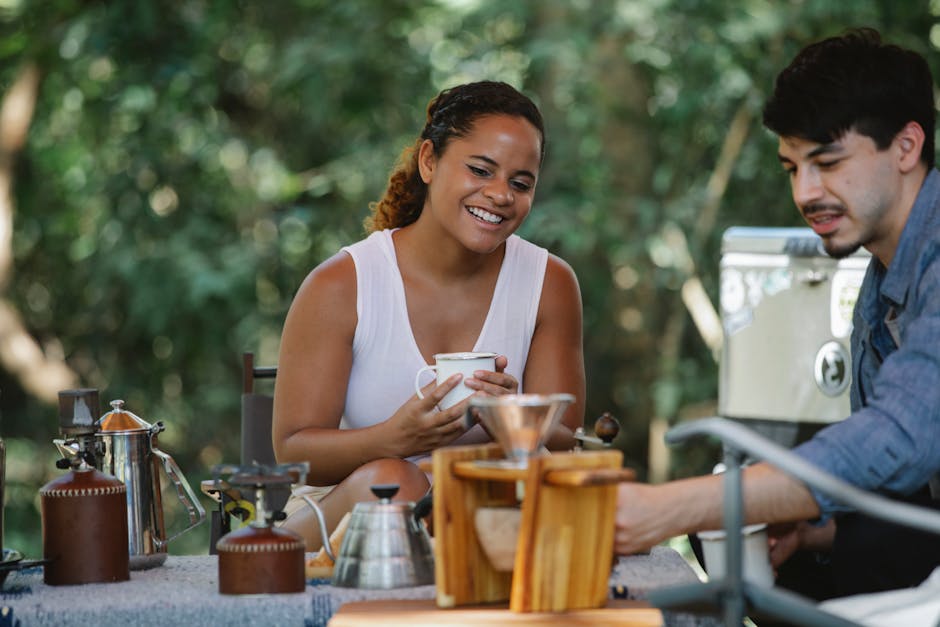
Specialty coffee brands focus on the “slow coffee” movement, where manual control over every variable is the goal. These brands often produce equipment that is aesthetically minimalist but scientifically advanced. When choosing a brand in this category, the material of the brewer—whether ceramic, glass, or stainless steel—is the primary consideration because of its thermal conductivity properties. A brewer that loses heat too quickly will result in a flat, sour cup.
Fellow: Aesthetic Meets Utility
Fellow is a relatively young brand that has gained a cult following among baristas. Their Stagg EKG electric kettle is a staple in specialty cafes for its precision pour spout and PID-controlled temperature. Their foray into brewers, like the Stagg XF, utilizes a vacuum-insulated dripper that maintains a constant temperature during the pour-over process. This is a critical advancement because traditional ceramic drippers can act as a heat sink, pulling energy away from the coffee bed. Fellow products are designed for the consumer who views coffee making as a ritual rather than a chore.
- Model: Fellow Stagg EKG Electric Kettle
- Approximate Price: $165
- Pros: To-the-degree temperature control, sleek aesthetic, 1200W quick heat.
- Cons: Limited capacity (0.9L), premium price for a kettle.
Chemex: The Icon of Filtration
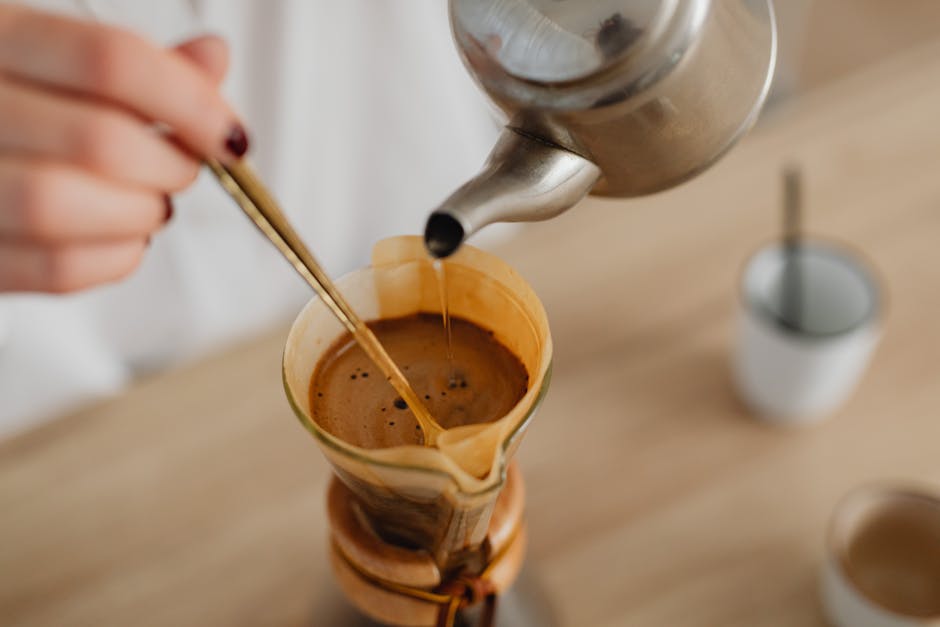
Chemex is more than just a brand; it is a patented filtration system. The hourglass-shaped glass carafe is a permanent fixture in the Museum of Modern Art, but its true value lies in the proprietary bonded paper filters. These filters are 20-30% thicker than standard filters, removing almost all sediment and fats. This results in the cleanest cup of coffee possible, highlighting the bright, acidic notes of light-roast beans. Because the Chemex is made of non-porous Borosilicate glass, it does not absorb odors or chemical residues. It is a brand that rewards patience and technique.
- Model: Chemex Classic Series 8-Cup
- Approximate Price: $50
- Pros: Purest flavor profile, no mechanical parts to break, elegant design.
- Cons: Glass is fragile, requires specific (and sometimes expensive) filters.
Hario: The Professional standard
Hario, a Japanese company specializing in heat-resistant glass, produces the V60, which is perhaps the most widely used manual dripper in the world. The “V” shape and the spiral ribs on the interior of the dripper allow air to escape, maximizing the expansion of the coffee grounds. Hario offers the V60 in plastic, ceramic, glass, and copper. Data suggests that the plastic version actually has the best thermal retention, as it does not require as much energy to heat up as ceramic or metal. Hario is the brand of choice for those who want to master the physics of brewing without a significant financial barrier.
- Model: Hario V60 Ceramic Coffee Dripper
- Approximate Price: $25
- Pros: Total control over brew variables, extremely affordable, durable.
- Cons: Requires a high level of skill and a gooseneck kettle for best results.
When selecting a coffee maker brand, the decision should be dictated by your daily volume and your willingness to engage with the brewing process. For those who want a “set it and forget it” experience that will last a decade, Technivorm is the clear winner. For the tech-focused user who wants to experiment with different beans and profiles, Breville offers the most robust feature set. Espresso lovers should look toward Gaggia for a hands-on experience or Jura for automated luxury. Finally, for the purist, Hario and Chemex provide the tools to explore the deepest complexities of the coffee bean. Each of these brands represents a different philosophy of extraction, but all are leaders in their respective segments of the market.