Spinach is not the iron superfood most people assume. At 3.6mg per 100g on paper, it looks like a solid choice — but oxalic acid in spinach binds to iron in the gut and blocks most of it from being absorbed. The amount your body actually extracts is a fraction of what the nutrition label suggests.
This is the first trap in iron deficiency meal planning: optimising for food label numbers rather than absorbed iron. Those two figures are not the same. The gap between them explains why ferritin levels stay stubbornly low despite diets that look iron-rich on paper.
This guide covers the absorption mechanics, the blockers people don’t account for, a practical 5-day meal plan, and an honest look at where supplements become necessary regardless of dietary quality.
This is not medical advice. Consult your GP or a registered dietitian before making significant dietary changes or starting iron supplementation.
The Heme vs Non-Heme Iron Split That Changes Your Whole Approach
Every dietary iron source falls into one of two categories. Your body handles them completely differently, and your meal planning strategy should reflect that distinction from the start.
Heme iron comes from animal tissue — beef, lamb, chicken liver, sardines, mussels, dark poultry meat. Absorption rate: 15–35%, consistently, regardless of what else is in the meal. The molecular structure is close enough to human haemoglobin that your intestinal cells pull it in efficiently without requiring much assistance.
Non-heme iron comes from everything else — lentils, chickpeas, tofu, pumpkin seeds, fortified cereals, dark leafy greens. Absorption rate: 2–20%. That is not a vague range. It is the real difference between a meal that maximises absorption conditions and one that does not. Same food, up to ten times the variation in what your body actually gets.
Vegetarians and vegans rely entirely on non-heme iron. That is nutritionally manageable, but it makes absorption optimisation non-negotiable rather than optional.
Best Heme Iron Sources by Iron Content
Chicken liver tops the list at 11.6mg per 100g — the most iron-dense regularly available food, with absorption at the high end of the heme range. Beef mince delivers around 2.5mg per 100g and is flexible enough to include two or three times a week without menu fatigue. Lamb is similar. Sardines in tomato sauce are particularly useful: roughly 2.9mg of heme iron plus vitamin C from the tomato sauce in a single tin. Mussels are underused here at 6.7mg per 100g — considerably higher than beef and inexpensive.
For scale: an adult woman needs 14.8mg of iron per day. A 150g portion of beef mince plus a serving of lentils represents roughly 6–8mg in absorbed terms when the meal is well-constructed — not the full daily requirement, but a meaningful contribution that stacks correctly through the day.
Non-Heme Iron: The Conditions That Determine Whether It Works
Red lentils: 3.3mg per 100g cooked. Canned chickpeas: 2.9mg. Pumpkin seeds: 8.8mg per 100g raw — one of the better plant sources on a per-gram basis. Fortified cereals like Weetabix: around 5mg per 35g serving. These are useful numbers, but only when the meal also includes absorption enhancers and excludes inhibitors.
Without those conditions in place, you’re looking at the 2% end of the absorption range. That makes fortified cereal a nutritional footnote rather than a meaningful iron source. The conditions around the food matter as much as the food itself. This is the core principle that separates functional iron meal planning from label optimisation.
The Absorption Blockers You Need to Time Around
Several compounds that appear in ordinary daily diets bind to iron in the gut and carry it out before absorption can occur. The mechanism is chemistry, not preference. You cannot compensate for it by eating more iron. Timing is the only practical lever.
| Blocker | Reduction in Non-Heme Iron Absorption | Practical Fix |
|---|---|---|
| Black or green tea | Up to 62% | 1-hour gap before or after iron-rich meals |
| Coffee | Up to 39% | Same 1-hour rule applies |
| Calcium (dairy, supplements) | Up to 50% at high doses | Separate calcium supplements from iron meals by 2 hours minimum |
| Phytates (whole grains, legumes) | 10–50%, variable | Soak dried legumes overnight; canned are a reliable shortcut |
| Polyphenols (red wine, herbal teas) | Up to 67% in high-polyphenol meals | Avoid pairing with iron-focused meals |
The Calcium Timing Issue Is Underestimated
Tea and coffee are well-known blockers. Calcium gets discussed far less and is equally disruptive. A glass of milk, a yoghurt, or a calcium supplement taken alongside an iron-rich meal substantially reduces what gets absorbed. For anyone managing a calcium supplement for bone health and iron supplementation simultaneously — a common combination — the standard approach is morning iron, evening calcium, with two hours of separation as a minimum. It sounds administrative. It is genuinely consequential for ferritin recovery.
Phytates: Manageable, Not a Reason to Avoid Legumes
Soaking dried beans or lentils overnight and discarding the water cuts phytate levels significantly. Canned legumes have been through an equivalent process during manufacturing and are a practical alternative. The goal is not to eliminate legumes from an iron-deficiency diet — they are genuinely useful sources. The goal is to prepare and pair them correctly so the non-heme iron they contain has a reasonable chance of being absorbed.
A 5-Day Iron Meal Plan Built Around Absorption Logic
The structure below reflects pairing principles rather than prescribing exact portions. Each day shows how to combine iron sources with absorption enhancers while timing blockers away from meals. Coffee and tea are positioned at mid-morning and mid-afternoon throughout — not alongside food.
- Day 1 — High Heme Focus: Breakfast: Weetabix with a small glass of orange juice (fortified cereal plus vitamin C enhancement). Lunch: Chicken liver pâté on sourdough with red pepper strips. Dinner: Beef mince chilli with kidney beans and tinned tomatoes — vitamin C from the tomatoes, heme iron from the beef, non-heme from the beans.
- Day 2 — Plant-Based Stack: Breakfast: Porridge with pumpkin seeds, dried apricots, and orange juice. Lunch: Red lentil soup with lemon squeezed in at the end of cooking (adding lemon after cooking preserves the vitamin C). Dinner: Tofu stir-fry with broccoli and red peppers — the peppers are doing the absorption work here.
- Day 3 — Mixed Sources: Breakfast: Scrambled eggs on fortified seeded bread with sliced tomatoes. Lunch: Sardines in tomato sauce on sourdough toast — heme iron and vitamin C in the same tin, no extra effort required. Dinner: Lamb chops with roasted red peppers and a lemon-dressed salad.
- Day 4 — Convenience-Led: Breakfast: Fortified cereal plus orange juice. Lunch: Hummus with red pepper strips and wholemeal pitta — standard hummus contains lemon juice, which adds the vitamin C hit. Dinner: Beef burger from M&S or Waitrose (both brands use higher-quality mince with better iron content than budget supermarket options) served with a tomato-heavy salsa.
- Day 5 — High Absorption Priority: Breakfast: Boiled eggs with fortified toast and orange juice. Lunch: Three-bean salad with a lemon and olive oil dressing. Dinner: Grilled mackerel with sweet potato (contains vitamin C) and steamed broccoli.
Vitamin C appears at every meal across all five days. That is not incidental. It is the single most effective non-food-swap intervention for non-heme iron absorption, and it costs nothing to implement beyond planning.
The Vitamin C Rule
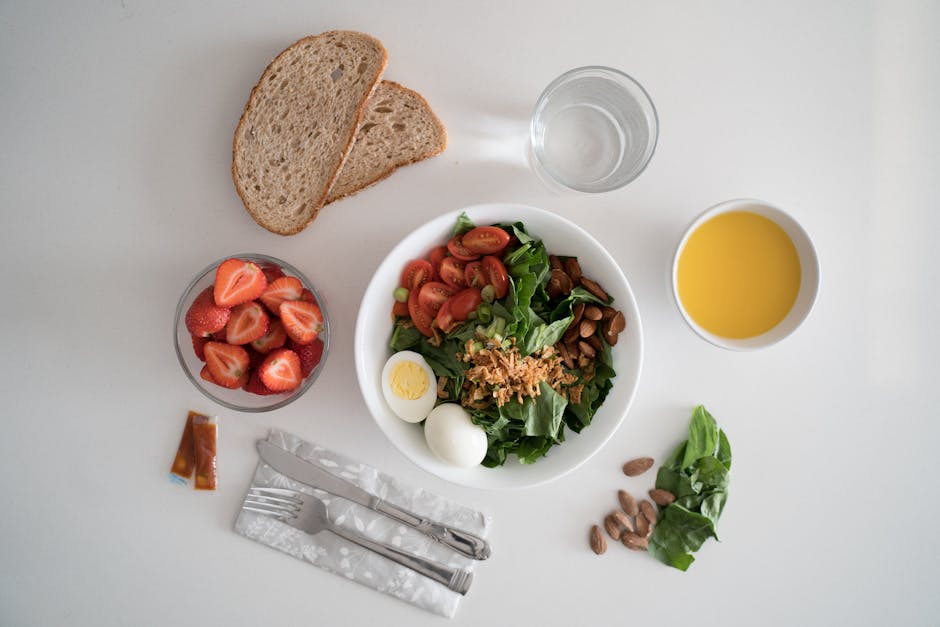
Consuming vitamin C in the same meal as non-heme iron converts it into a more bioavailable form. Studies show this pairing can increase non-heme iron absorption by 200–300% in a single meal. A squeeze of lemon, half a red pepper, a handful of strawberries, or a small glass of orange juice is sufficient. The requirement is same meal, not same day — vitamin C consumed hours later does not carry the effect forward.
Why Ferritin Stays Low Despite a Technically Iron-Rich Diet
Are You Relying Too Heavily on Fortified Cereals?
Fortified cereals contain iron in forms such as ferric pyrophosphate and reduced iron — both harder to absorb than the iron naturally present in meat or legumes. Weetabix is a useful contribution to daily intake. It is not a foundation for iron recovery. People who eat a bowl of fortified cereal at breakfast and consider their iron needs addressed have often made a category error. It is a top-up, not a treatment.
Is the Tea Habit Cancelling Out Your Efforts?
This is the most common unacknowledged blocker in UK households. Tea with breakfast, tea after lunch, tea mid-afternoon, tea after dinner. Black tea’s tannin content is high enough to reduce non-heme iron absorption by up to 62% per meal. The solution is not to stop drinking tea. It is to move it to between meals. One hour before or after food is the practical standard — and it is free to implement.
Are You Cooking in Ways That Destroy Vitamin C?
Vitamin C is heat-sensitive. Boiling vegetables for extended periods eliminates most of it. Steaming or roasting at moderate temperatures preserves significantly more. Adding lemon juice after cooking rather than during — to soup, salads, stir-fries — keeps the vitamin C content intact and functional. If you’re counting on broccoli or peppers to provide the absorption enhancement effect, how they’re cooked determines whether that effect materialises at all.
Is Blood Loss the Underlying Variable?
Heavy menstrual bleeding is the most common cause of iron deficiency in women of reproductive age. If ongoing blood loss outpaces dietary intake, even a well-constructed meal plan will not keep pace with the deficit. A meal plan helps; it does not override a physiological loss that requires clinical management. Ferritin that stays low despite genuine dietary effort is a signal that the conversation with a GP needs to happen regardless of what the menu looks like.
When Food Alone Will Not Fix Iron Deficiency
Dietary changes are the right starting point. But if ferritin is below 30 µg/L — a threshold commonly used to indicate functional deficiency — food alone is unlikely to restore levels fast enough to resolve fatigue, hair loss, or reduced concentration. At that point, supplements carry the load and diet supports them.
The supplement market makes claims that frequently outrun the evidence. Here is what the data and costs actually look like.
Ferrous sulphate is what GPs prescribe because the evidence base is extensive and it works. It delivers 65mg of elemental iron per tablet. Side effects — constipation, nausea, dark stools — are real for a significant minority. Taking it on an empty stomach maximises absorption; taking it with food reduces side effects at the cost of some absorption. That tradeoff is genuine and depends on individual tolerance.
Spatone (Boots, approximately £9 for 28 sachets) is naturally iron-rich water providing 5mg per sachet in a well-absorbed form with minimal gastrointestinal side effects. Useful for mild deficiency or maintenance once levels are restored. Not adequate as primary treatment for active, symptomatic iron deficiency where ferritin is critically low.
Feroglobin by Vitabiotics (around £8–10 for 30 days) contains 17mg of ferrous bisglycinate — a chelated form with roughly double the absorption rate of ferrous sulphate and substantially fewer side effects. A sensible middle option for people who need a meaningful dose without the tolerability issues of prescription-strength iron.
Floradix (approximately £15 for a two-week supply) provides 7.5mg of iron per dose as liquid ferrous gluconate with herbal additions. Well-tolerated and popular, but the iron dose is low and the cost is high relative to what you get. Worth considering if tablets and capsules are genuinely unworkable — not a first choice on efficacy-per-pound grounds.
Solgar Gentle Iron (approximately £10 for 90 capsules) delivers 25mg of ferrous bisglycinate with good tolerability. Cost-effective for the iron dose delivered and the most practical option for people who need something stronger than Spatone but cannot tolerate ferrous sulphate.
This is not medical advice. Supplement choice should be discussed with your GP, particularly if ferritin is significantly low or symptoms are affecting daily function.
Bottom Line: If your GP has prescribed ferrous sulphate, take it. For mild deficiency or post-treatment maintenance, Feroglobin or Solgar Gentle Iron offer a meaningful dose with better tolerability. Spatone fills a specific role — maintenance and mild cases — and is frequently overused as treatment for active deficiency where it is underpowered.
| Supplement | Iron Per Dose | Iron Form | Approx. Cost | Best Use Case |
|---|---|---|---|---|
| Ferrous Sulphate (GP prescription) | 65mg elemental | Ferrous sulphate | Prescription / very low cost | Active, significant deficiency |
| Spatone | 5mg | Natural iron-rich water | £9 / 28 sachets | Mild deficiency, maintenance |
| Feroglobin by Vitabiotics | 17mg | Ferrous bisglycinate | £8–10 / 30 days | Moderate deficiency, GI sensitivity |
| Floradix | 7.5mg | Liquid ferrous gluconate | ~£15 / 2 weeks | Tablet-intolerant, mild cases only |
| Solgar Gentle Iron | 25mg | Ferrous bisglycinate | ~£10 / 90 capsules | Cost-effective for GI-sensitive users |