You bought a pot of double cream with every intention of using it. Three days later it is still sitting in the fridge. The use-by date is tomorrow. Now you are committed.
This is the situation most cream-based desserts are actually born from — not ambition, but mild panic. The good news is that cream is one of the most forgiving ingredients in a kitchen, provided you understand two things: which type does which job, and when to stop interfering with it.
What follows is a practical guide — the recipes worth making, the technique behind them, and the specific mistakes that turn a good dessert into a greasy, split, or deflated disappointment.
Which Cream Does What: A Direct Comparison
The single biggest source of dessert failure is using the wrong cream. Not because the recipe is complicated, but because the word “cream” on a shopping list covers five different products with wildly different fat contents and entirely different jobs in the kitchen.
| Cream Type | Fat Content | Whips? | Best Use | Brands Worth Knowing |
|---|---|---|---|---|
| Single Cream | 18% | No | Pouring, coffee, thin sauces | Anchor, Lakeland Dairies |
| Whipping Cream | 35% | Yes — soft to medium peaks | Mousse, trifle, cake filling | President, Anchor |
| Double Cream | 48% | Yes — firm peaks | Posset, ganache, panna cotta, crème brûlée | Anchor Double, Yeo Valley |
| Clotted Cream | 55%+ | No | Scones, cold topping only | Rodda’s, Trelawney |
| Crème Fraîche | 28–30% | Partially | Baked desserts, tart contrast, fruit fools | Yeo Valley Organic, Waitrose own-label |
The fat content is not just a nutritional label. It determines whether cream holds structure, splits under heat, or collapses thirty minutes after being whipped. Single cream at 18% fat does not have enough fat globules to trap air. Double cream at 48% can be over-whipped into butter if you lose concentration for twenty seconds. These are not edge cases — they happen regularly to home bakers who assumed all cream behaves the same.
The fat threshold rule
Any cream below 30% fat will not whip. This is not a preference — it is chemistry. If a recipe calls for whipped cream and you only have single in the fridge, the recipe will fail before it starts. Whipping cream at 35% gives the most control — it builds volume faster and is more forgiving than double cream before it over-whips. Double cream is richer and more stable once whipped, but the margin for error is tighter. One minute too long on high speed and you have grainy, slightly yellow butterfat.
When crème fraîche works better than double cream
Crème fraîche is underused in desserts. Its acidity cuts through sweetness in a way that whipped double cream cannot. A spoonful on top of a very sweet caramel tart, or folded into a berry fool, balances the dish entirely. Yeo Valley Full Fat Crème Fraîche specifically holds together when stirred into warm fruit without splitting — unlike some supermarket own-labels that separate almost immediately above 65°C.
Bottom Line: Buy double cream for most desserts. Use whipping cream when you need volume without maximum richness. Never substitute single cream in a whipped application, regardless of what else you have in the fridge.
Five Cream Desserts Worth Making This Week
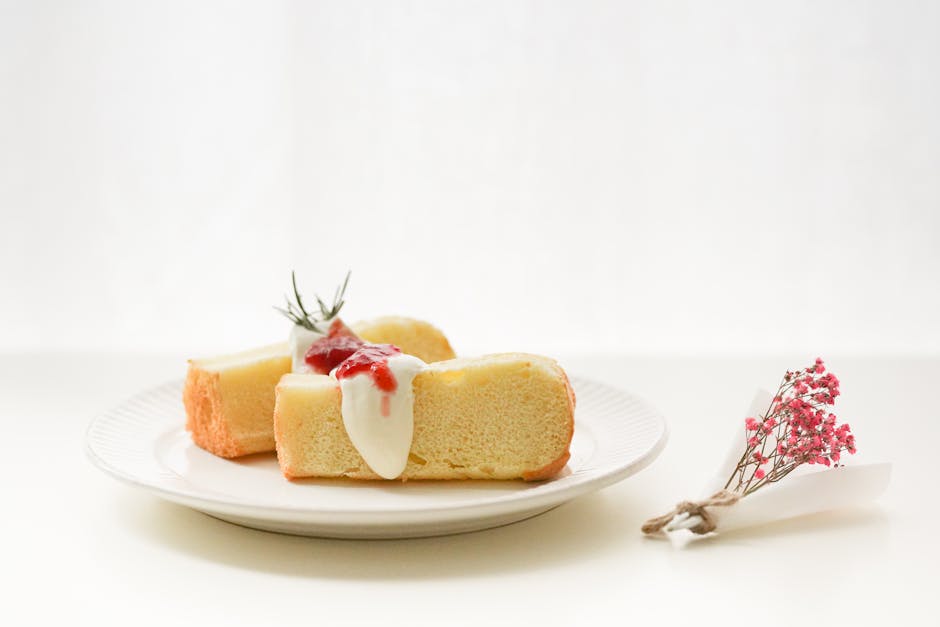
These are not aspirational weekend projects. Each uses cream as a central ingredient, takes under an hour of active time, and works reliably the first time — if you follow the ratios exactly.
- Lemon Posset. 300ml double cream, 75g caster sugar, juice of 1.5 lemons (roughly 60ml). Heat cream and sugar together until simmering — not boiling. Remove from heat. Stir in lemon juice. Pour into small glasses or ramekins. Refrigerate for a minimum of 4 hours. The acid in the lemon sets the cream without any gelatine. The result is silky, dense, and sharp. Serve with shortbread. No specialist equipment needed beyond a saucepan and a jug.
- Vanilla Panna Cotta. 500ml double cream, 50g caster sugar, 1 vanilla pod, 2.5 gelatine leaves soaked in cold water for 5 minutes. Heat cream, sugar, and split vanilla pod to just below boiling. Remove pod. Squeeze out gelatine leaves and stir into the warm cream until fully dissolved. Strain into moulds. Chill for at least 4 hours. The ratio is critical: too much gelatine produces a rubbery, bouncing set; too little and it slumps onto the plate. 2.5 leaves per 500ml is the number that works.
- Eton Mess. 300ml whipping cream, 6 meringue nests (Waitrose Duchy or M&S own-label both work), 400g strawberries, 2 tablespoons icing sugar. Whip cream to soft peaks. Crush meringues roughly. Mash half the strawberries with icing sugar. Fold everything together loosely and serve immediately. Do not make this ahead — it turns into a pink, soggy soup within two hours.
- Chocolate Ganache Tart. 200g dark chocolate (70% cocoa — Lindt Excellence or Valrhona Caraïbe), 200ml double cream, 1 pre-baked shortcrust pastry case. Heat cream until just simmering. Pour over finely chopped chocolate. Leave undisturbed for 90 seconds. Stir slowly from the centre outward until smooth. Pour into pastry case. Refrigerate for 2 hours. The 1:1 cream-to-chocolate ratio by weight gives a firm, sliceable ganache. Increase cream to 300ml if you want a softer, spooning texture.
- Coffee and Cream Mousse. 300ml whipping cream, 2 tablespoons cooled espresso, 50g icing sugar, 100g full-fat cream cheese (Philadelphia Original). Beat cream cheese until smooth. Add icing sugar and espresso and beat again. Fold in whipped cream. Spoon into glasses and chill for 1 hour. The cream cheese stabilises the mousse so it holds for up to 24 hours without weeping — unlike mousse made with cream alone, which begins to separate within 3 hours.
How to Whip Cream Without Ruining It
Whipping cream looks simple. Pour it in a bowl, beat it, stop when it looks right. In practice, most home bakers get it slightly wrong — not catastrophically, just enough that the result is under-structured or starts breaking down within an hour. Here is what actually controls the outcome.
Temperature is the non-negotiable variable
Cold cream whips. Warm cream does not. The cream should come straight from the fridge — ideally around 4°C. On a warm day, put the bowl in the freezer for 10 minutes before you start. The reason is structural: fat globules need to be firm and solid to trap air bubbles and hold them. At room temperature the fat softens, and the bubbles simply escape rather than being locked in place. If your kitchen is above 22°C, work fast and expect the result to be less stable at room temperature.
This is also why cream whipped on a hot afternoon and left out during a summer party collapses. It was never going to hold — the ambient temperature was working against the structure from the start.
The three stages you need to recognise
A timer tells you nothing useful. Learn to read these stages instead:
- Soft peaks: Cream thickens and falls off the whisk in a ribbon that briefly holds shape before dissolving back in. Right for mousses and trifles — it firms further when chilled.
- Medium peaks: Peaks hold their shape but curl at the tip. Right for cake filling, Chantilly cream, and pavlova topping.
- Firm peaks: Peaks stand straight without curling. Right for piping. One step from disaster — slow down here.
- Over-whipped: Grainy texture, slightly yellow, starting to look curdled. This is butter beginning to form. You cannot recover it for piping, but you can fold it into a batter or use it in a cooked sauce.
How to stabilise whipped cream so it actually holds
Plain whipped cream begins to weep liquid within 2–3 hours in the fridge. If you need it to last longer — a decorated cake, a trifle made the morning before a dinner party — stabilise it before serving. Three methods that work:
First option: add 1 tablespoon of icing sugar per 200ml of cream before whipping. The cornstarch present in icing sugar is a mild stabiliser and extends hold time noticeably without changing the flavour.
Second option: beat 2 tablespoons of full-fat cream cheese per 300ml of cream until smooth before adding the cream. This produces a denser texture but holds for 24 hours reliably.
Third option: Dr. Oetker Whip It cream stabiliser, available in most UK supermarkets. It is gelatine-based and extends hold time significantly. The result is slightly more commercial and uniform — better for piped decorations than for a folded dessert where texture matters.
Bottom Line: Cold cream, cold bowl, stop at firm peaks when uncertain. The cost of under-whipping is a soft finish. The cost of over-whipping is butterfat on a celebration cake the night before a party.
Baked Cream Desserts and What Changes in the Oven
Cream behaves very differently under heat. The emulsion that makes it smooth can fracture; the fat can separate to the surface. Understanding what prevents that is what separates crème brûlée that sets cleanly from crème brûlée with a greasy ring around the edge.
Does the fat content still matter when cream is baked?
Yes, and more so than when whipping. For custard-based baked desserts — crème brûlée, crème caramel, baked cheesecake — double cream is the correct choice. The fat content produces the characteristic richness and prevents the custard from becoming rubbery. The egg yolks set the mixture at around 75–80°C, which is why these desserts are baked in a bain-marie (a water bath that caps the oven temperature at 100°C and prevents hot spots from scrambling the eggs before the custard sets). Skip the bain-marie and you will have sweet scrambled egg.
When crème fraîche handles heat better than double cream
For baked fruit desserts — roasted peaches with a cream topping, baked figs with mascarpone — crème fraîche tolerates higher temperatures without splitting. Its lower fat content and natural acidity buffer the emulsion. Yeo Valley Organic Crème Fraîche specifically does not break when stirred into a warm fruit pan, unlike some supermarket own-labels that separate almost instantly above 65°C. Use it where you want a slightly tangy, pourable sauce rather than the richness of double cream.
The crème brûlée ratio that works every time
For four standard ramekins: 500ml double cream, 5 egg yolks, 100g caster sugar (plus extra for the burnt top). Heat cream to just below simmering. Whisk yolks and sugar until pale and slightly thickened. Pour the warm cream over the yolk mixture slowly, whisking constantly. Strain the mixture through a fine sieve. Pour into ramekins. Bake in a bain-marie at 150°C fan for 35–40 minutes. The custard is done when it wobbles as a single unit — like set jelly — rather than rippling in the centre. If it is fully firm in the oven, it will be rubbery when cold. Remove it early.
The Mistakes That Actually Ruin Cream Desserts
Most failures trace back to three sources: wrong fat content, wrong temperature, or incorrect ratios. These are the specific errors that appear most often — and what to do about each.
Using reduced-fat cream to cut calories
Elmlea Double is a plant-based cream alternative that closely mimics the fat behaviour of dairy double cream — it works well enough for ganaches and possets. Elmlea Single does not whip, and Elmlea Light does not either. Neither does any cream labelled “lighter” or below 30% fat. This is not a product criticism; it is a structural fact. If you are trying to reduce fat in a cream dessert, reduce the portion size — not the fat percentage of the cream. The recipe is built around that fat content.
Stirring ganache immediately after pouring hot cream
Ganache splits when you rush it. Pour just-simmering cream over finely chopped dark chocolate, then leave it alone for 90 seconds. The heat needs time to distribute evenly through the chocolate before you begin stirring. Start from the centre and work outward in small, slow circles. Never use a whisk — it introduces air and creates a bubbly, grainy texture instead of the smooth emulsion you want. If the ganache does split (it will look oily and separated), add a tablespoon of warm cream and stir slowly from the centre again.
Whipping cream in a warm or wet bowl
A bowl that has been washed in hot water and not fully dried will warm the cream from underneath as you work. The cream whips, but the structure is weaker than it should be and begins weeping within an hour. Take the extra time: dry the bowl completely, chill it if possible, and start with cream straight from the fridge.
Not tasting the cream before using it
Old cream tastes sour. Not dramatically — just slightly off. That taste transfers to the finished dessert and is not masked by sugar, vanilla, or chocolate. Fresh cream should taste clean and faintly sweet. If it does not, use a different pot.
Cream Ratios at a Glance
For anyone who wants the numbers without surrounding explanation:
- Posset: 300ml double cream / 75g sugar / 60ml lemon juice
- Panna cotta: 500ml double cream / 50g sugar / 2.5 gelatine leaves
- Ganache (firm, sliceable): 1:1 double cream to dark chocolate by weight
- Ganache (soft, spoonable): 200g chocolate to 300ml cream
- Crème brûlée: 500ml double cream / 5 egg yolks / 100g sugar
- Chantilly cream: 200ml whipping cream / 2 tbsp icing sugar / half teaspoon vanilla extract
- Stabilised whipped cream: 300ml whipping cream / 100g full-fat cream cheese / 50g icing sugar
These ratios are not suggestions. Adjusting them without understanding the chemistry behind each is where most dessert problems start.
Cream Desserts by Season: Matching the Dessert to the Occasion
Cream is available year-round, but the right dessert depends on the season — not for abstract reasons, but because kitchen temperature, available fruit, and serving context all change what actually works and what people actually want to eat.
| Season | Best Cream Dessert | Why It Suits the Season | Natural Fruit Pairing |
|---|---|---|---|
| Spring | Lemon Posset | Light, no-bake, sets in the fridge — citrus at its best in early spring | Raspberries, blood orange segments |
| Summer | Eton Mess or Fruit Fool | Cold, no oven needed, uses peak-season berries at their cheapest | Strawberries, peaches, gooseberries |
| Autumn | Vanilla Panna Cotta | Neutral base that pairs well with compotes from autumn harvests | Blackberries, plums, figs, poached pears |
| Winter | Chocolate Ganache Tart or Crème Brûlée | Rich, oven-based, warming — suited to dinner party portions and dark fruit | Candied orange zest, cherries, poached quince |
In summer, no-bake desserts are the practical choice — not just because of ambient heat, but because running an oven in a small kitchen in July is genuinely unpleasant and affects the structure of anything you are trying to set. A posset or fool can be made in the morning and refrigerated. Crème brûlée needs a ramekin, a blowtorch or very hot grill, a bain-marie, and 40 minutes of attention in a warm kitchen. Save it for October.
The technique behind cream desserts has not changed significantly in decades because the ingredient itself has not changed. Fat content, temperature, and ratio are the three variables that determine success. Master those, and the specific recipe becomes almost secondary — you can adapt any cream dessert to what is available, what is in season, and how much time you actually have.