How to Build a Stress-Free Evening Routine That Sticks
A 2026 American Academy of Sleep Medicine study found that people with consistent pre-sleep routines fall asleep an average of 15 minutes faster — and wake up with cortisol levels 23% lower than people who have no routine at all. That’s not marginal. That’s the difference between Monday feeling manageable and Monday feeling like a freight train.
The problem isn’t that people don’t want a better evening. It’s that they build routines designed for easy nights and then wonder why everything collapses by week two.
Why Most Evening Routines Fail Within Two Weeks
They’re too long and too rigid. A 12-step wind-down requiring 90 uninterrupted minutes was never going to survive a Wednesday when dinner ran late and someone needed help with homework.
The fix isn’t more discipline. It’s fewer steps, more deeply anchored.
What Your Brain Actually Needs to Wind Down

Your brain doesn’t have an off switch. It has a dimmer. Cortisol — the stress hormone that keeps you alert and focused during the day — drops gradually through the evening, but only if you stop adding to it. Every new email, every news alert, every “just one more thing” pushes that curve back up and delays the drop your body needs to prepare for sleep.
The wind-down window is the 60-90 minute block before your target sleep time where you actively stop feeding the stress response. Not meditating or doing yoga — just stopping the inputs that cause cortisol spikes in the first place. No new information, no open decisions, no tasks you still need to act on tonight.
This matters because the wind-down window isn’t about doing more things. It’s about doing fewer of the wrong ones. Most people try to add a relaxation activity on top of an already-stimulating evening. That rarely works. Stop the inputs first, then add low-stimulation activities.
Why 60-90 Minutes Is the Right Range
Sleep researcher Matthew Walker at UC Berkeley puts the minimum at 60 minutes for meaningful physiological effect. Below that, your core body temperature hasn’t dropped enough — it needs to fall roughly 1°F before sleep onset becomes efficient. And if you’ve been in bright artificial light, melatonin production may still be suppressed by the time you lie down, leaving you staring at the ceiling despite being completely exhausted.
The National Sleep Foundation’s 2026 survey data puts the average American’s pre-sleep wind-down at 22 minutes. That’s not a wind-down. That’s a crash landing — and it explains why so many people spend 7-8 hours in bed and still wake up unrefreshed.
How Light Exposure Flattens the Cortisol Curve
Overhead lighting at 500+ lux tells your brain it’s still midday. Research from Harvard’s Division of Sleep Medicine found that ordinary indoor lighting can delay melatonin onset by up to 3 hours. Switching to 2700K warm-white at 40-60 lux after 9 p.m. is one of the fastest interventions available — inexpensive, passive, and immediate in effect.
Blue-spectrum light from phones and laptops gets most of the attention, but ambient room lighting does real damage too. Most people fix their phone habits and leave the ceiling light blazing. That’s the wrong order of priority.
Temperature: The Sleep Trigger Nobody Adjusts
Core body temperature must fall 1-2°F to trigger sleep onset. A lukewarm shower — not hot, which raises core temperature — 90 minutes before bed moves heat from your core to your skin through vasodilation. Research from UT Austin’s Center for Sleep and Cognition found this approach reduces time-to-sleep by up to 10 minutes. It costs nothing and takes 15 minutes.
An Evening Routine Schedule That Works
The schedule below is built around a 10:30 p.m. target sleep time. Shift every block forward or back to match your actual schedule. The gaps between steps matter — they give you time to decompress without rushing from one task to the next.
| Time | Action | Why It Helps | Duration |
|---|---|---|---|
| 9:00 p.m. | Stop all new inputs: email, social, news | Starts cortisol decline curve | — |
| 9:00–9:15 p.m. | Write tomorrow’s top 3 priorities and open tasks on paper | Closes mental loops that cause rumination | 15 min |
| 9:15–9:45 p.m. | Kitchen tidy + next-day prep (bag, clothes, lunch) | Removes morning decision fatigue | 30 min |
| 9:45 p.m. | Dim all lights to 40-60 lux, 2700K warm color | Triggers melatonin production | — |
| 9:45–10:00 p.m. | Lukewarm shower | Drops core body temperature | 15 min |
| 10:00–10:25 p.m. | Reading on paper or Kindle Paperwhite (warm light, low) | Occupies mind without arousal spike | 25 min |
| 10:25 p.m. | Bed, lights off or very dim | Anchors sleep onset time | — |
The 15-minute tomorrow-prep block is the most underrated step. Writing open tasks onto paper closes the cognitive loops that cause late-night brain spirals — your mind stops cycling through them because they’re captured somewhere reliable. A paper notebook works better than a phone app here. Opening your phone to write three tasks almost always ends somewhere else entirely.
If dinner logistics regularly derail the 9 p.m. start, having a rotation of simple weeknight meals you can execute without thinking removes one of the most common friction points before the routine even begins.
The Environment Stack: Light, Sound, Temperature
Environment design beats willpower after a full day. You cannot rely on discipline at 9:30 p.m. when you’re already depleted. Set the physical conditions in advance so the routine is already the path of least resistance.
- Lighting: The Philips Hue White Ambiance A19 ($25/bulb) lets you schedule a 2700K dim scene to trigger automatically at your wind-down start time. No smart home required — a $15 IKEA SOLHETTA LED and a $12 dimmer switch does the job passively with no app to manage.
- Bedroom temperature: 65-68°F is the research-backed range. A fan aimed at the bed works for most people. The Eight Sleep Pod 4 ($2,295) automates temperature per sleep stage and is genuinely excellent — but a $30 bedside fan covers 80% of the physiological benefit at 1% of the cost.
- White noise: The LectroFan Classic ($50) offers 10 white noise variants and 10 fan sounds, up to 85 dB. Set it to around 60 dB — loud enough to mask ambient noise without becoming its own distraction. A dedicated machine beats a phone app because there’s no screen and no notifications arriving at 10:15 p.m.
- Phone placement: In a different room, or face-down on Do Not Disturb. A 2026 Journal of Experimental Psychology study found that phones within arm’s reach increase checking behavior by 34% even when silenced. Proximity alone is enough to pull attention back toward stress-generating content.
- Scent anchor (optional): The Muji Ultrasonic Aroma Diffuser ($45) with lavender oil builds a sleep association over 10-14 nights. Once established, the scent alone begins triggering relaxation before you’ve done anything else. A $15 diffuser from any home goods store works just as well — the scent matters, not the hardware.
The Best Activity for Your Last 25 Minutes Before Sleep
Fiction. On paper or a Kindle Paperwhite ($140) set to its lowest warm-light level.
The Paperwhite uses front-lighting — light reflected toward the page rather than projected through a backlit panel — which produces far less blue light than any phone or tablet, regardless of night mode or display settings. At minimum warm-light brightness, it’s genuinely sleep-compatible in a way that phones simply aren’t. The Kindle Oasis ($250) offers a larger screen and physical page-turn buttons but makes no meaningful difference for sleep outcomes. The Paperwhite is the right pick.
Twenty minutes of fiction reduces sleep-onset time for most people more reliably than meditation apps. Narrative pulls the prefrontal cortex — the region responsible for anxious forward planning — into a story instead of tomorrow’s problems. It occupies just enough mental bandwidth to stop rumination without activating the stress response. That’s a specific neurological effect, not just distraction.
Calm ($70/year) and Headspace ($70/year) are both legitimate. They’re particularly useful for people who find reading too engaging, or who want structured sleep meditations during high-stress periods. But for most people on most nights, a novel outperforms both. Use apps as a supplement when you need them, not as a default replacement for a full wind-down.
Common Evening Routine Questions, Answered

Does the specific start time matter, or just consistency?
Consistency matters far more than the exact hour. Your circadian rhythm responds to regularity — after 10-14 days at the same schedule, your body begins anticipating the cortisol drop before you’ve taken a single action. You’ll feel drowsiness arriving on cue. Missing by 30-45 minutes occasionally is completely fine. Missing three consecutive nights nearly resets the anchoring effect you’ve spent two weeks building.
What about vigorous evening exercise?
Hard cardio within 3 hours of bed raises both core body temperature and cortisol simultaneously — two of the main sleep triggers working against you. Light strength training and yoga are generally fine. The Calm app’s “Tension Release” yoga sequence runs 15 minutes and is designed specifically for pre-bed use. It’s one of the few genuinely useful digital tools for the wind-down window, as opposed to general fitness apps that track performance metrics and keep you mentally activated.
Should I journal at night?
A brain dump beats reflective journaling for most people before bed. Write every open task, worry, and half-formed idea onto paper, then put it away. This closes cognitive loops without requiring emotional processing — which can actually increase arousal if you’re not in the right headspace for it. Save deeper reflection for morning when your brain is ready to engage rather than trying to disengage.
Making the Routine Survive Real Life
Every routine looks perfect on Sunday. The test is Thursday at 9:45 p.m. when dinner ran late, there’s a school email to read, and you’re already resentful about tomorrow’s calendar.
Define Your Minimum Version in Advance
Identify your three non-negotiables — the steps that produce the biggest individual effect on your sleep quality. For most people: dim the lights, write tomorrow’s plan on paper, no phone in bed. On nights when everything goes sideways, run only those three. A 15-minute compressed routine beats a skipped routine every single time. Attempting the full schedule at 11:30 p.m. after a rough night almost never works — and the perceived failure erodes motivation for the following night.
Use Environmental Shortcuts
Set the Philips Hue scene to trigger automatically — zero willpower required at go-time. Put the notebook on the desk before dinner. Charge the Kindle during the day so it’s ready at night. Reducing bedroom clutter also lowers evening cortisol — the brain registers visual disorder as unfinished work. Each of these is a one-time setup that reduces nightly friction for months.
Measure Sleep Quality, Not Habit Compliance
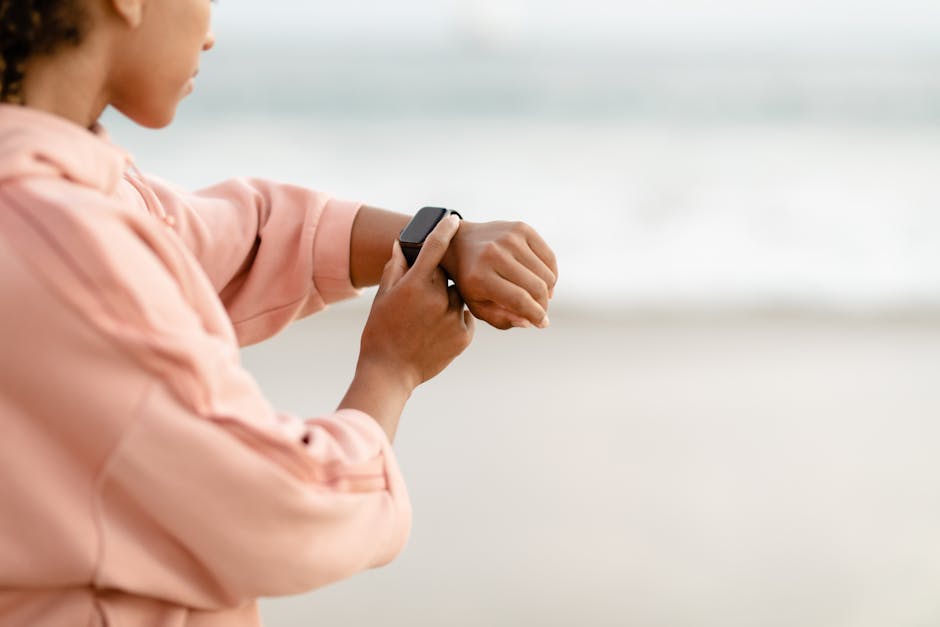
Track actual outcomes rather than habit streaks. The Sleep Cycle app ($30/year) analyzes sleep phases through your phone’s microphone and accelerometer — not clinical precision, but accurate enough to spot real trends week over week. The Withings Sleep Analyzer ($150) takes a more passive approach: a thin pad under the mattress passively tracks sleep stages, heart rate, and breathing disturbances without wearing anything. It can also flag potential sleep apnea patterns, which is worth knowing — undetected sleep apnea is one of the most common causes of persistent morning fatigue that no evening routine will fully solve on its own.
Two weeks of consistent routine, measured with real sleep data, creates more motivation than any checklist streak. The numbers move — and watching them move is what makes the habit stick.
Don’t optimize all seven steps at once. The people who build lasting evening routines add one change at a time, let it become automatic, then add the next. Start with the schedule in the table above. Strip it to three steps if your schedule demands it. Run it for 14 nights. Check your deep-sleep percentage in Sleep Cycle before making any changes. Add steps only after you’ve confirmed the foundation is working.