Want a cake that tastes bright in the middle of winter without turning sharp, dry, or bitter? This blood orange almond cake is the one I bake when January fruit needs a little help. It has a tender crumb, a clear almond flavour, and enough citrus juice to keep every slice lively.
The trick is not simply adding more orange. Blood oranges bring less predictable sweetness than ordinary navel oranges, and their dark red juice can vary from mild to tart. Almond flour adds moisture, but it also makes a cake slower to set. I balance those two traits with a low oven, careful zesting, and a short rest before slicing.
Why blood orange works in an almond cake
Almonds soften winter citrus
Blood orange and almond make sense together because they solve each other’s weak spots. Blood orange supplies acidity, floral aroma, and a berry-like edge. Almonds bring fat and a soft, rounded flavour that takes the edge off tart juice. The result tastes fuller than a plain orange sponge, but it still feels fresh after a heavy winter meal.
Ground almonds also hold more moisture than wheat flour alone. That helps the cake stay tender for two or three days, especially when the batter includes olive oil or melted butter. The tradeoff is structural: almond flour contains no gluten, so it cannot build the stretchy network that keeps a wheat cake upright. Eggs and a small amount of regular flour must do that work.
Zest gives more flavour than juice
Most of the orange’s fragrant oils sit in the coloured outer skin. The white pith underneath tastes bitter. I grate only the bright red-orange surface with a fine rasp, then rub the zest into the sugar before mixing the batter. This releases the oils and spreads them through the cake instead of leaving small, dry flecks in one place.
Use juice for acidity and moisture, not as the main source of flavour. Four tablespoons of blood orange juice are enough for a standard 23 cm cake. Adding much more can leave the centre gummy because the liquid has nowhere to go while the almond flour is still absorbing it. My verdict is simple: use two blood oranges for zest and juice, then save a third for the top if its colour is especially striking.
How to prepare the batter without losing the citrus flavour
My preferred method is a one-bowl batter followed by a slow bake. It keeps the process relaxed, but the order still matters. Bring the eggs to room temperature, weigh the almond flour, and line the base of the pan with parchment. Cold eggs make the oil seize into small beads, while an unlined pan can tear the soft bottom when you lift the cake.
Measure the ingredients
- Heat the oven to 170°C conventional or 160°C fan. Grease and line a 23-centimeter round cake pan.
- Weigh 180 grams of almond flour, 90 grams of plain flour, 170 grams of caster sugar, 120 grams of unsalted butter, 3 large eggs, 2 blood oranges, 8 grams of baking powder, and 2 grams of fine salt.
- Zest two oranges, taking only the coloured skin. Squeeze enough juice to measure 60 milliliters. If the oranges are very tart, add 10 grams of honey to the wet mixture.
Build the batter in the right order
Rub the zest into the sugar with your fingertips for about 30 seconds. The sugar should smell strongly of orange. Beat in the softened butter until the mixture looks pale, then add the eggs one at a time. Scrape the bowl after each egg. Add the almond flour, plain flour, baking powder, salt, and orange juice in two additions. Stop mixing as soon as no dry pockets remain.
The finished batter should fall from a spoon in a thick ribbon. If it looks watery, wait five minutes before changing anything. Almond flour absorbs liquid slowly. If it still looks loose after the rest, stir in 15 grams of plain flour. Do not add a large scoop of flour by instinct; that is how a moist cake becomes heavy.
Use a gentle finish
Spoon the batter into the pan and smooth the top with the back of a spoon. Bake for 42 to 50 minutes. The surface should be golden, the centre should spring back lightly, and a skewer should come out with a few damp crumbs. Let the cake cool in the pan for 15 minutes, then move it to a rack.
For the cleanest citrus taste, brush the warm cake with a syrup made from 30 milliliters of blood orange juice and 25 grams of sugar. Warm the mixture until the sugar dissolves, then brush it over the top in two passes. The cake will absorb the first layer before the second goes on.
Blood orange almond cake timing and texture guide
The table below is the timing guide I use for a 23-centimeter round cake. It gives the batter enough time to set without drying the edges. Oven thermostats can be inaccurate, so texture matters more than the clock.
Follow the visual cues
| Stage | Time | What to look for |
|---|---|---|
| Oven preheat | 20 minutes | Oven reaches 170°C conventional or 160°C fan |
| Mixing and pan preparation | 15 minutes | Thick batter with no dry flour pockets |
| First bake check | 40 minutes | Golden top and slightly raised centre |
| Full bake | 42–50 minutes | Skewer shows a few damp crumbs, not wet batter |
| Pan cooling | 15 minutes | Edges loosen while the centre firms |
| Rack cooling | 60 minutes | Crumb finishes setting before slicing |
| Best serving texture | 2–4 hours later | Almond crumb is moist but cuts cleanly |
Why the cake needs a full cool-down
Warm almond cake often looks underbaked even when it is ready. The butter is still fluid, the syrup has not spread evenly, and the crumb has not finished setting. Cutting it after ten minutes can create a sticky centre and make you bake the next cake too long. Give it at least one hour on a rack before judging the texture.
My verdict: trust the skewer and the spring of the centre, then cool the cake fully. A cake that seems slightly soft while warm often becomes exactly right at room temperature.
What makes this cake fail, and how to fix it
A wet centre with browned edges
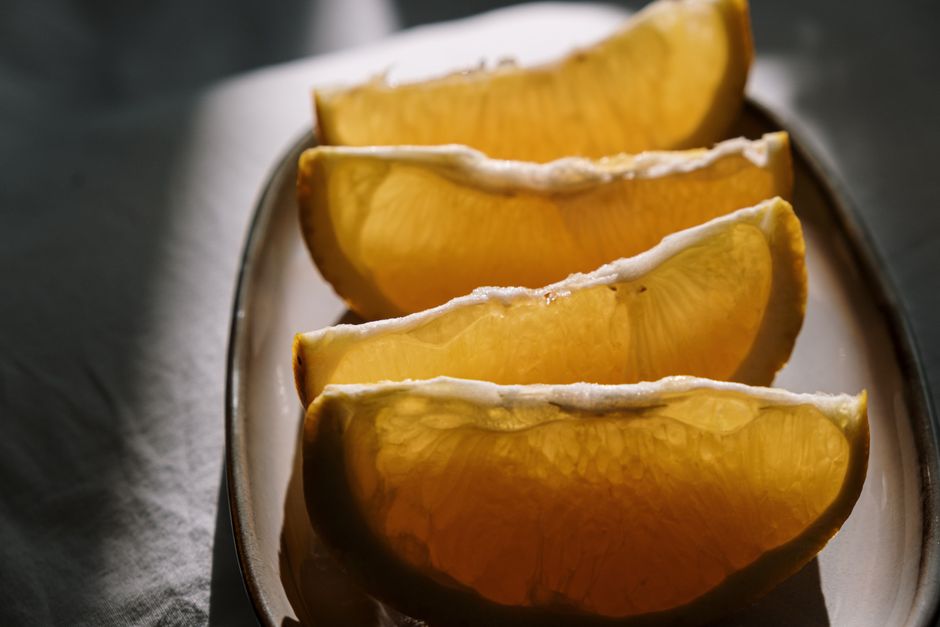
This is the most common failure. The oven is too hot, the pan is too small, or the batter contains more juice than the flour can hold. Blood orange slices placed on top can also release liquid into the centre. If the cake is dark after 35 minutes but still wobbles in the middle, cover it loosely with foil and continue baking at 160°C. The foil slows browning while the centre catches up.
Next time, check the pan size before mixing. A 20-centimeter pan produces a taller cake and may need 10 to 15 extra minutes. If you use a loaf pan, fill it no more than two-thirds full and expect a different baking time. Do not solve a wet centre by adding extra almond flour at the end; that makes the crumb dense without fixing the liquid balance.
A bitter or flat orange taste
Bitter flavour usually comes from pith, overcooked slices, or a burnt syrup. Run the zester lightly across the fruit instead of pressing hard. If you need more orange aroma, add another teaspoon of zest rather than another splash of juice. Juice increases moisture much faster than it increases fragrance.
Flat flavour has a different cause: the batter lacks salt or the oranges are mild. The 2 grams of salt in this recipe are not optional. Salt sharpens the fruit and keeps the almond from tasting dull. For a stronger finish, make the syrup with fresh juice after the cake leaves the oven. Do not pour cold juice directly over a hot cake; it cools the surface unevenly and can leave a wet patch.
A dry, crumbly slice
Dryness often means the cake stayed in the oven after the skewer was already clean. Almond cake should leave a few moist crumbs on the tester. It can also happen when flour is measured by cups and packed tightly. Weighing the 90 grams of plain flour is the safer choice. Finally, wrap the cooled cake well. An uncovered cake loses moisture quickly, even in a cool January kitchen.