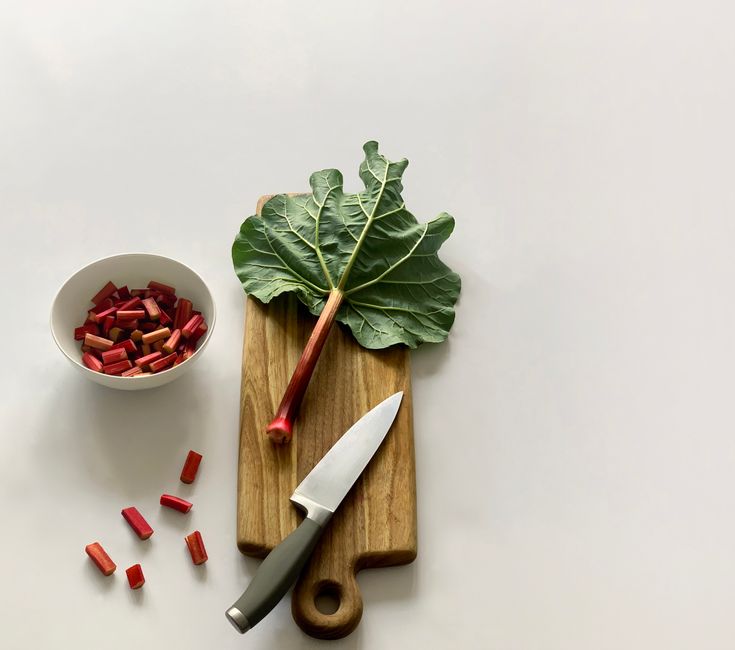
Forced rhubarb is not just pale outdoor rhubarb. It grows in darkness, which gives it slimmer stalks, softer texture, and a cleaner tart flavour. That makes it excellent in cake, but only if you control the water. Dump raw rhubarb into batter and you can get a wet middle with a crisp top sitting on soggy crumbs. The fix is simple: use a firm cake base, drain the fruit, and keep the crumble topping coarse.
Why forced rhubarb works in a winter crumble cake
The stalks bring brightness when winter fruit tastes flat
Forced rhubarb arrives before most local berries and stone fruit, so it gives a winter bake the sharp, fresh flavour people usually chase with lemon. Its tartness cuts through butter, brown sugar, and cream. The colour also matters. Pink stalks make a plain traybake look deliberate, not beige and heavy.
Its texture needs less cooking than outdoor rhubarb
Slice the stalks into 1.5 cm pieces and bake them directly on the cake. Do not stew them first. Forced rhubarb softens quickly, and pre-cooking adds a pool of juice that the crumb cannot absorb. Toss 300 g sliced rhubarb with 25 g caster sugar and leave it for only 10 minutes. Drain the liquid before layering it over the batter.
The cake needs a sturdy base, not a dry one
Use 220 g plain flour, 150 g unsalted butter, 140 g light brown sugar, two large eggs, 120 g sour cream, and 2 teaspoons of ground ginger. Sour cream adds moisture while the flour and eggs give the cake enough structure to hold the fruit. Bake at 175°C (155°C fan) in a lined 23 x 33 cm tin for 38 to 45 minutes. The centre should spring back lightly, and a skewer should show moist crumbs rather than wet batter. That is the correct balance: tender cake, visible rhubarb, and no collapsed middle.
The ratios that keep rhubarb cake from turning wet
Use this working formula
The dependable ratio is three parts cake batter to one part prepared rhubarb, with a crumble layer that covers the surface without forming a solid blanket. Weigh the rhubarb after trimming the leaves and ends. The leaves are not food, and the stalk weight changes fast once you start cutting.
| Component | Amount | Why it matters |
|---|---|---|
| Forced rhubarb | 300 g, sliced 1.5 cm thick | Enough tart fruit without flooding the crumb |
| Plain flour | 220 g for cake, 100 g for topping | Structure plus a crisp crumble surface |
| Butter | 150 g softened for cake, 75 g cold for topping | Soft crumb and sandy topping |
| Brown sugar | 140 g for cake, 75 g for topping | Depth without hiding the rhubarb |
| Ginger | 2 teaspoons ground plus 35 g stem ginger | Warm spice with bright, chewy pieces |
Do not fix a loose batter with extra flour
A thick batter is useful, but adding flour by eye creates a heavy cake. If the mixture looks split after the eggs go in, add one tablespoon of the measured flour and keep mixing. Stop as soon as it comes together. The better correction is draining the rhubarb properly and spreading it in one layer. For this bake, water control beats flour correction every time.
How to stop rhubarb from making the cake soggy
Follow these four steps
- Cut evenly. Use 1.5 cm pieces so thin strips do not dissolve before thick pieces soften.
- Sweeten briefly. Toss the rhubarb with sugar for 10 minutes, not an hour. Long maceration pulls out too much liquid.
- Drain hard. Tip the rhubarb into a sieve and press it lightly with the back of a spoon. Do not squeeze it dry; you still want fruit, not stringy shards.
- Keep it off the pan. Spread the batter fully into the lined pan before adding rhubarb. Fruit pressed against the sides can caramelise too quickly and stick.
Know when the cake is actually baked
Colour is not enough. Crumble topping browns before the middle is ready, especially in a dark pan. Test the centre between two rhubarb pieces. A skewer with glossy batter means another five minutes. A skewer with a few damp crumbs means stop. More baking after that point dries the edges while the fruit keeps releasing juice.
Cool it before cutting
Leave the cake in the pan for 25 minutes, then lift it onto a rack and cool for another 35 minutes. Cutting while hot makes the crumb look underbaked because the butter and fruit juices have not settled. This is not a minor serving detail. It determines whether the first slice holds together.
Ginger should sharpen the rhubarb, not bury it
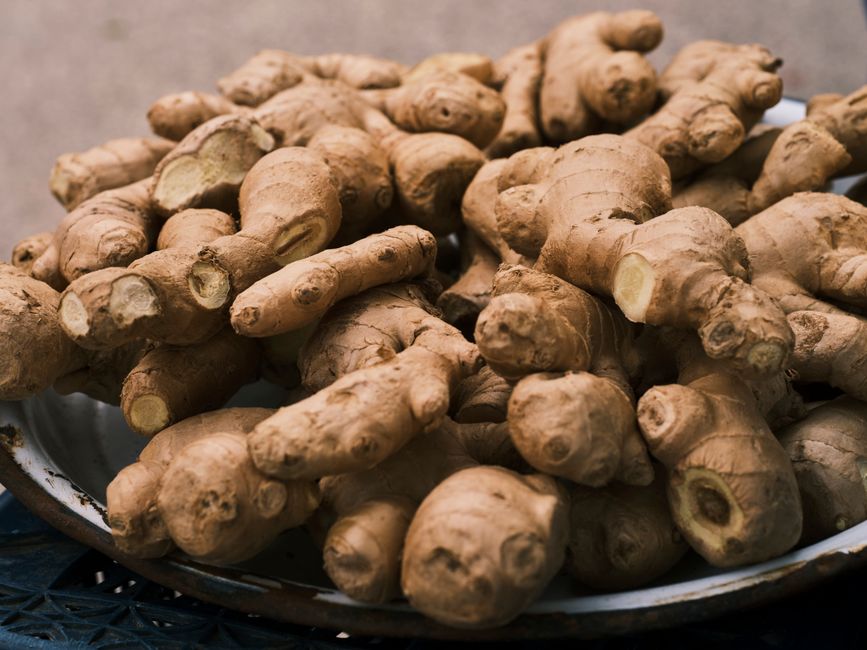
Use two forms for better flavour
Ground ginger spreads through the batter, while finely chopped stem ginger gives occasional hot, chewy pockets. Use 2 teaspoons ground ginger and 35 g stem ginger for a clear ginger note. Add the grated zest of one orange if the rhubarb tastes especially sharp. The orange does not make the cake sweeter; it rounds the edges and keeps the filling tasting fresh.
Keep the topping restrained
A topping made from 100 g flour, 75 g cold butter, 75 g brown sugar, and 30 g rolled oats gives enough crunch without sealing the fruit under a thick lid. Rub the butter in until some crumbs are pea-sized. Small crumbs turn sandy. Large crumbs give the cake the rough, bakery-style finish this recipe needs. The verdict is straightforward: ginger leads, orange supports, and cinnamon should stay out unless you want a warmer, less vivid cake.
Serve it slightly warm with thick yogurt or cold with custard. The contrast works because the cake has both sharp fruit and rich spice. More sweetness is not the answer.
Can you use ordinary rhubarb instead of forced rhubarb?
What changes with outdoor rhubarb?
Yes, but choose slender, firm stalks and trim away any coarse strings. Outdoor rhubarb is often more fibrous and can release more liquid after cutting. Use 275 g instead of 300 g, slice it slightly thinner, and give it the same short 10-minute sugar rest. If the stalks are thick and green, the flavour may be more aggressive. Add the orange zest and keep the stem ginger; both help soften the rougher profile.
When should you use frozen rhubarb?
Frozen rhubarb works when fresh forced stalks are unavailable, but it is the risky option for a neat cake. Thaw it fully in a sieve over a bowl, then leave it for at least 30 minutes. Blot the surface with kitchen paper before adding it. Never fold frozen pieces into the batter. They chill the centre, release water as they thaw, and extend the bake long enough to dry the edges. Frozen fruit is fine for a spoon dessert. For a clean-cut crumble cake, fresh rhubarb wins.
When should you skip rhubarb cake entirely?
Do not make this bake if you need a cake that travels warm or sits uncovered for hours. The fruit keeps softening as it rests. Choose ginger loaf instead when portability matters, or make a plain crumble when the rhubarb is watery and limp. The forced rhubarb version earns its place when you want a bright, seasonal cake with a clear contrast between tart fruit and buttery crumb.
Is forced rhubarb crumble cake worth baking in winter?
The clear verdict
Yes. For a winter bake that tastes fresh rather than heavy, forced rhubarb and ginger crumble cake is the better choice than apple spice cake. The winning method is 300 g drained rhubarb, a sour-cream batter, two forms of ginger, and a coarse topping baked in a light metal pan. That combination protects the crumb and lets the fruit stay sharp.
What to expect from the finished cake
The top should crack in places, the rhubarb should remain visible, and the centre should cut cleanly after cooling. It will not taste like strawberry cake, and that is the point. Forced rhubarb has a sharper, greener edge that makes butter and brown sugar taste less dull. Keep portions modest, serve with yogurt or custard, and store leftovers covered at room temperature for one day or chilled for three.
Winter baking is moving toward fruit with character instead of fruit drowned in sugar. Forced rhubarb fits that shift perfectly: bright, local-looking, and bold enough to carry a cake before spring berries arrive.