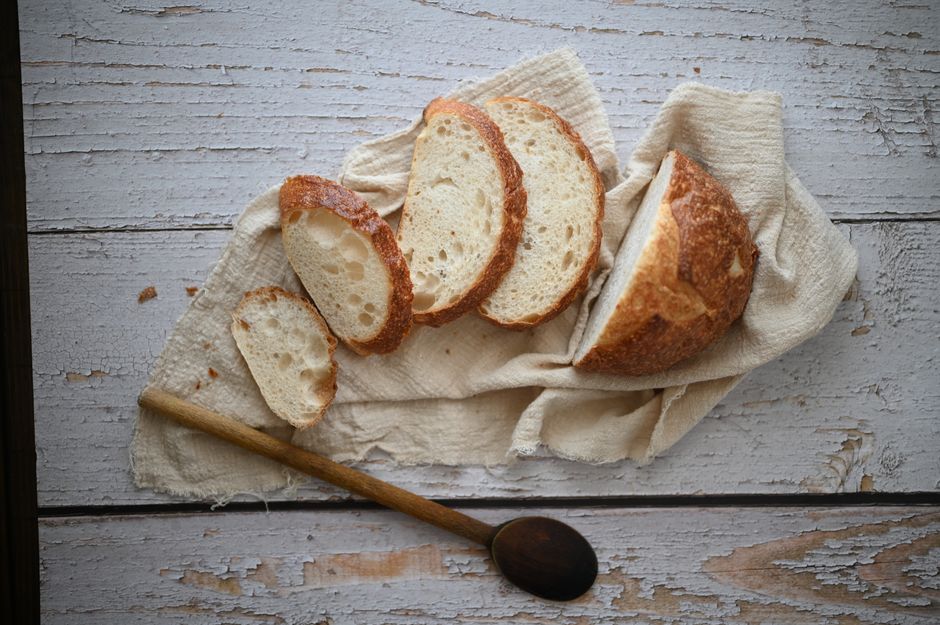
A ripe banana is roughly three-quarters water, yet banana bread can turn dry overnight when the recipe has too much flour or the loaf stays uncovered. The reliable fix is not extra banana alone. It is a controlled balance of water, sugar, fat, flour, and baking time.
This is not legal advice — consult a licensed attorney.
How Do Moist Banana Bread Variations Compare?
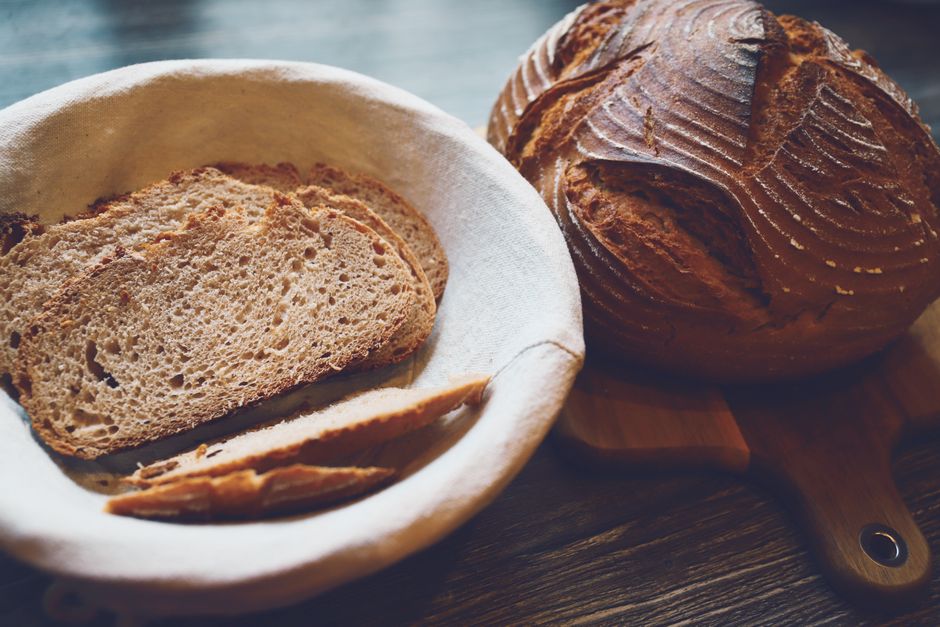
Comparison table for four-day texture
| Variation | Moisture adjustment | Bake guidance | Best result |
|---|---|---|---|
| Classic banana | 330 g banana, 190 g flour, 80 g fat | 350°F for fifty to sixty minutes | Soft slices with a clear banana flavor |
| Almond banana | Replace 60 g flour with 60 g almond flour | 350°F; cool fully before cutting | Rich, tender crumb with mild nuttiness |
| Pumpkin banana | Add 120 g pumpkin and reduce banana to 250 g | 350°F for sixty to seventy minutes | Dense, moist loaf with warm spice |
| Chocolate banana | Add 85 g chocolate chips and 15 g extra flour | 350°F; check the center carefully | Soft loaf with sweet pockets of chocolate |
How to choose the strongest variation
The classic version is the safest choice when you want predictable moisture and a strong banana taste. For an almond variation, Bob’s Red Mill Super-Fine Almond Flour has a fine texture that blends more evenly than coarse meal; replacing 60 grams of wheat flour is enough to soften the crumb without making the loaf collapse. Libby’s 100% Pure Pumpkin works well in the pumpkin version because its smooth canned texture adds water without large fibers.
For chocolate banana bread, Ghirardelli 60% Cacao Bittersweet Chocolate Premium Baking Chips provide a clear cocoa flavor without requiring a major change to the batter. The table’s key rule is simple: every wet addition needs a structural adjustment. Extra pumpkin, yogurt, or melted chocolate without a small flour correction can leave a wet center even after the edges look finished.
Why Do Some Banana Loaves Dry Out Overnight?
The science of a soft crumb
A moist loaf depends on how the batter handles water during mixing and baking. Flour proteins form gluten when they meet water and movement. A little gluten gives banana bread enough strength to stand, but heavy stirring develops a tougher network that makes the slice feel dry even when it contains plenty of banana. Mix the dry ingredients into the wet mixture only until no broad streaks of flour remain.
Sugar helps because it attracts and holds water. Brown sugar also brings molasses, which adds flavor and a slightly softer texture. Fat coats some flour particles and limits gluten formation, so oil-based loaves often stay tender longer than butter-only loaves. Eggs do two jobs: their proteins set the crumb, while their yolks add fat and emulsifying power. Too many eggs can create a rubbery center, so adding an extra egg is not a safe shortcut.
Why baking temperature matters
The outside of a loaf loses moisture first. A dark metal pan absorbs heat quickly and can dry the edges before the center sets. A light-colored 9-by-5-inch pan usually gives a more even result at 350°F. If the top browns early, cover it loosely with foil after about 35 minutes, but do not lower the temperature sharply because the center still needs enough heat to set.
Pull the loaf when the center reaches about 200 to 205°F. A skewer should show moist crumbs, not liquid batter. The loaf continues cooking from stored heat for several minutes, so waiting for a completely dry skewer often produces an overbaked edge and a dry second-day slice.
What Is the Exact Method for a Four-Day Loaf?
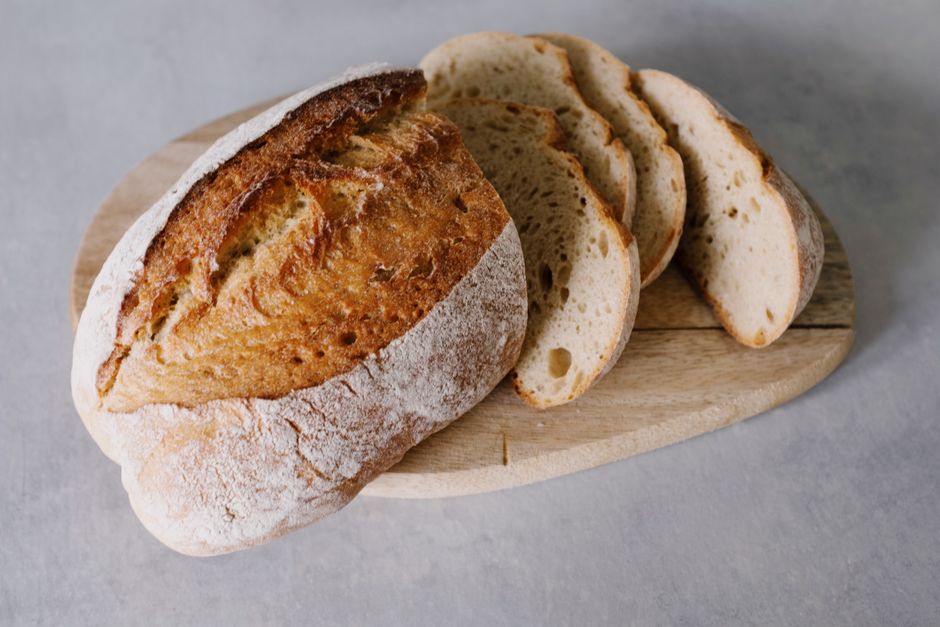
Follow these steps in order
- Heat the oven to 350°F and place a rack in the middle position.
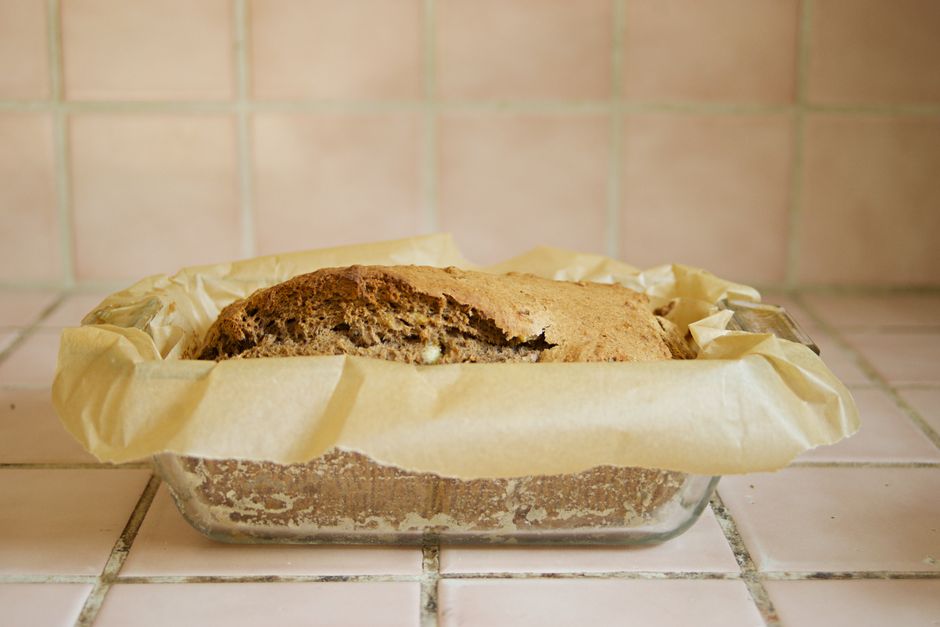
- Line a 9-by-5-inch loaf pan with parchment, leaving paper over the long sides for lifting.
- Mash 330 grams of very ripe peeled banana until mostly smooth, with a few small pieces left for texture.
- Whisk in two large eggs, 80 grams of melted butter or oil, 120 grams of brown sugar, and 60 grams of plain yogurt.
- In a second bowl, combine 190 grams of flour, 1 teaspoon baking soda, 1/2 teaspoon salt, and 1 teaspoon cinnamon.
- Fold the dry mixture into the banana mixture with a flexible spatula. Stop as soon as the flour disappears.
- Transfer the batter to the pan and tap it once on the counter to remove large air pockets.
- Bake for 50 to 60 minutes, covering the top loosely if it browns before the center sets.
- Check the center with a thermometer. Remove the loaf at 200 to 205°F.
- Cool in the pan for 15 minutes, then lift it onto a rack and cool completely before wrapping.
The mistake that ruins the method
Do not slice the loaf while it is hot. Steam escapes rapidly from a hot cut surface, and the crumb can seem wet at first, then dry by the next morning. Letting the loaf cool for at least two hours allows moisture to spread through the crumb. Wrap the fully cooled loaf in parchment or plastic wrap, then place it in an airtight container. That sequence protects the texture better than placing a warm loaf in a sealed container, where condensation can make the crust sticky.
Which Ingredients Earn a Place in Moist Banana Bread?
My pick for the most reliable pantry version
For a classic four-day loaf, choose oil, brown sugar, and plain yogurt. This combination gives the best balance of softness, flavor, and predictable structure. King Arthur Unbleached All-Purpose Flour is milled for a consistent 120-gram cup, making it useful when a recipe is written by weight or volume. Use 190 grams in the base formula, not an overflowing cup.
Oil keeps the crumb soft after refrigeration, while butter gives more flavor but firms when cold. Brown sugar holds moisture better than white sugar alone. Plain yogurt contributes acidity, which helps baking soda lift the batter, and its protein gives the loaf enough body to stay sliceable. The result is softer on day four than a butter-only loaf, without the pudding-like center created by excessive wet ingredients.
When another brand or ingredient makes sense
Bob’s Red Mill Super-Fine Almond Flour is the better choice for a richer crumb, but replace only part of the wheat flour because almond flour has no gluten. Libby’s 100% Pure Pumpkin is useful when the bananas are small or underripe; use 120 grams pumpkin and remove 80 grams of banana from the base formula. Ghirardelli 60% Cacao Bittersweet Chocolate Premium Baking Chips are a strong choice for chocolate variation because their bittersweet profile keeps the loaf from tasting flat.
My clear recommendation is King Arthur flour for the classic version, almond flour for tenderness, and pumpkin only when you want a denser spiced loaf. Do not add all three in one batter. The added fat, water, and solids make the center harder to set.
How Should You Store and Reheat Banana Bread?
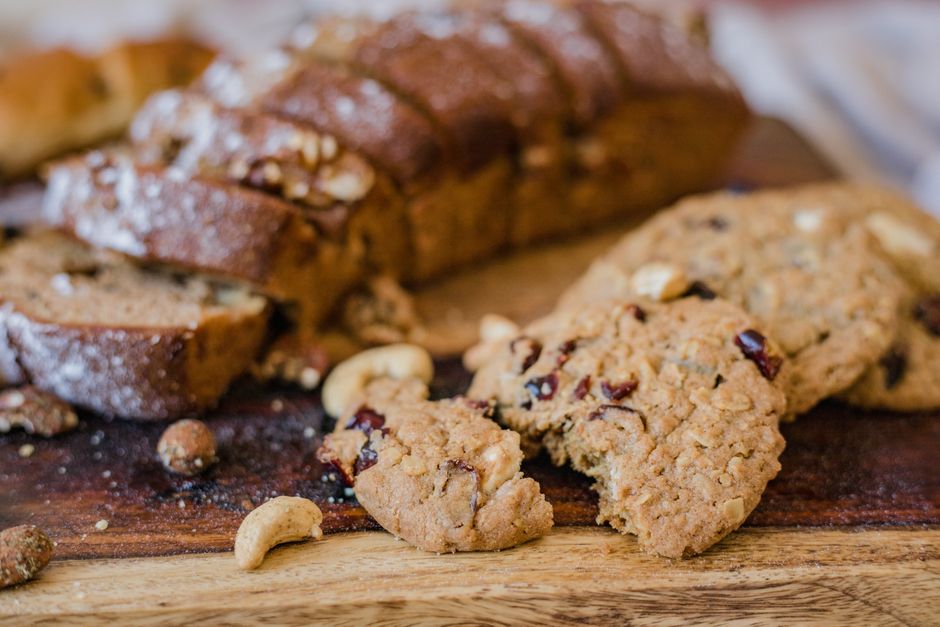
Can banana bread stay moist at room temperature?
Yes. A fully cooled loaf typically stays soft for three to four days at room temperature when wrapped tightly and kept away from direct heat. Slice only what you plan to eat. A whole loaf has less exposed surface area than individual slices, so it loses moisture more slowly. Store it in a sealed container lined with parchment rather than on an uncovered plate.
Should you refrigerate or freeze it?
Refrigeration slows mold growth but can make the crumb feel firm because starches tighten in the cold. Refrigerate only when your kitchen is hot, the loaf contains a highly perishable filling, or you need to keep it beyond four days. For longer storage, freeze individual slices in a single layer, then transfer them to a freezer bag. Thaw at room temperature for 30 to 45 minutes, or warm one slice for 10 to 15 seconds in a microwave.
Do not reheat the whole loaf repeatedly. Each heating cycle drives off more water. Freezing portions gives better texture and less waste than storing the entire loaf in the refrigerator.
What Mistakes Make Moist Banana Bread Fail?
When not to add another wet ingredient
Do not add extra banana, milk, yogurt, or pumpkin simply because the batter looks thick. Banana bread batter should fall slowly from a spatula, not pour like cake batter. If the mixture already contains 330 grams of banana and 60 grams of yogurt, adding more liquid can create a sunken center. Also avoid swapping whole wheat flour cup for cup without adding a little more liquid; its bran absorbs water and can make the loaf feel dry.
Do not buy a specialty bread improver for this problem. It cannot fix an overloaded batter, a packed flour measure, or an oven that runs hot.
Final recommendation for a dependable moist loaf
The strongest choice is the classic banana bread formula: 330 grams of ripe banana, 190 grams of measured flour, 80 grams of oil or melted butter, 120 grams of brown sugar, and 60 grams of plain yogurt. Bake in a light 9-by-5-inch pan at 350°F until the center reaches 200 to 205°F, cool it completely, and wrap it before storage. For the best balance of tenderness and four-day freshness, use oil in the batter and choose the classic variation over pumpkin or chocolate unless you specifically want their denser texture.