The usual problem with rhubarb and custard crumble bars is not the flavour. It is the middle. The base turns soft, the rhubarb releases water, and the custard slides out when you cut the tray. The reliable fix is to control each layer separately: roast or drain the rhubarb, blind-bake the base, thicken the custard before it reaches the oven, and chill the finished bars completely.
This recipe makes 16 square bars in a 20cm square tin. The rhubarb stays sharp, the custard tastes rich without becoming rubbery, and the crumble remains crisp enough to contrast with the soft centre.
Why rhubarb bars turn soggy in early spring
Rhubarb contains more water than the filling can handle
Early-spring rhubarb looks firm, but the stalks still hold a lot of water. When heat reaches the fruit, the cells collapse and release juice. If you place raw rhubarb directly over pastry, that liquid sinks into the base before the custard has time to set. The result is a damp strip beneath the fruit.
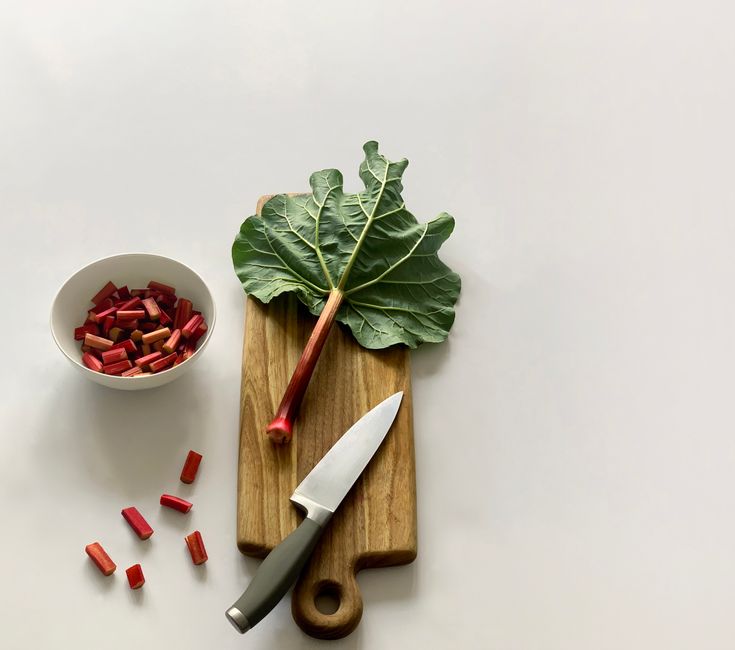
Cut the rhubarb into pieces about 1cm thick. Smaller pieces soften quickly and spread more evenly. Toss 350g prepared rhubarb with 50g caster sugar and 1 teaspoon of lemon juice, then leave it for 15 minutes. Tip the pieces into a sieve and let the liquid drain. Do not squeeze them. Squeezing turns the stalks mushy and removes the sharp flavour that makes this dessert work.
Each layer needs a different job
The base needs to support the filling, so it must be cooked before the wet ingredients arrive. The custard needs enough egg and starch to hold its shape, but not so much that it becomes a firm baked pudding. The crumble needs a lower moisture level and a little extra baking time after the custard has set.
Use a 20cm square metal tin lined with baking paper. Metal transfers heat faster than glass, which helps the pastry base brown before the custard overcooks. Bake the base at 180°C conventional or 160°C fan for 18 minutes, then continue with the filling at 170°C conventional or 150°C fan. That small temperature drop protects the custard from splitting.
The key principle is simple: remove excess fruit water before assembly. No amount of extra flour scattered over the rhubarb can replace that step.
Rhubarb, custard and crumble timing at a glance
The correct order prevents a wet base
Prepare the components in an order that gives the pastry time to cool slightly while the custard thickens. The fruit can drain while you weigh the dry ingredients. This keeps the process calm and avoids pouring hot custard onto a hot, fragile base.
| Stage | Temperature | Time | What to look for |
|---|---|---|---|
| Drain sugared rhubarb | Room temperature | 15 minutes | Juice collects below the sieve |
| Blind-bake shortbread base | 180°C conventional | 18 minutes | Edges are pale gold |
| Thicken custard on the hob | Medium-low heat | 6-8 minutes | It coats the spoon |
| Bake assembled bars | 170°C conventional | 32-38 minutes | Centre has a slight wobble |
| Cool in the tin | Room temperature | 90 minutes | Filling no longer moves |
| Chill before slicing | Refrigerator | 2 hours | Clean cuts are possible |
Use visual cues instead of the clock alone
Ovens vary, especially fan ovens. The base is ready when the centre looks dry and the edges have just started to colour. The custard is ready when the outer 4cm looks set but the centre moves like jelly when the tin is nudged. A liquid wave means it needs more time. A completely rigid centre often means the eggs have overcooked.
Do not judge the final texture while the bars are hot. Custard firms as it cools, and the crumble loses its last trace of softness during chilling. Cutting early gives a false impression that the filling has failed.
How to build the bars without a soggy bottom
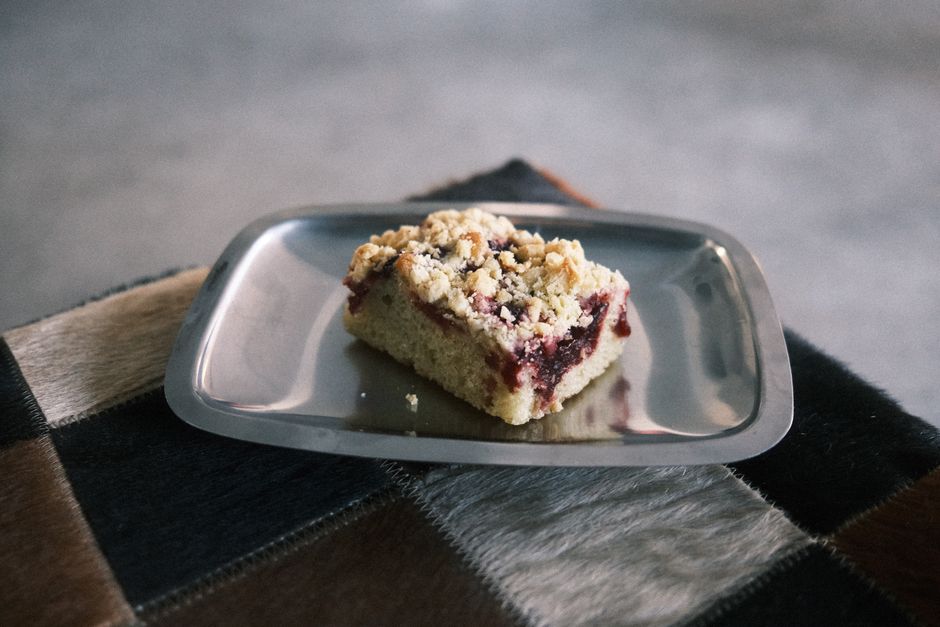
1. Make the shortbread base
- Heat the oven to 180°C conventional or 160°C fan. Line a 20cm square metal tin with baking paper, leaving paper over two sides for lifting.
- Rub 150g plain flour, 40g icing sugar and 1g fine salt into 100g cold unsalted butter until the mixture looks like fine crumbs.
- Press the mixture firmly into the tin. Use the flat bottom of a glass to create an even layer about 8mm thick.
- Prick the surface lightly with a fork. Bake for 18 minutes, until the edges are pale gold and the centre looks dry.
2. Add the fruit, custard and crumble
- For the crumble, mix 75g plain flour, 50g rolled oats, 55g light brown sugar and 60g cold butter. Rub until you have a mixture with both fine crumbs and pea-sized pieces.
- For the custard, whisk 2 egg yolks, 1 whole egg, 70g caster sugar, 25g cornflour, 250ml double cream and 150ml whole milk in a saucepan. Add 1 teaspoon of vanilla and a small pinch of salt.
- Cook over medium-low heat for 6 to 8 minutes, whisking often. Stop when the custard thickly coats the back of a spoon. It should be pourable, not stiff.
- Spread the drained rhubarb over the baked base. Pour the warm custard over it. Scatter the crumble evenly across the top.
- Lower the oven to 170°C conventional or 150°C fan. Bake for 32 to 38 minutes. Cool for 90 minutes, then chill for at least 2 hours.
Keep the crumble loose. Pressing it down creates a second pastry layer that traps steam. A loose topping lets moisture escape and gives you crisp edges.
My strongest recommendation: keep the custard thick and lightly flavoured
Choose ingredients for structure, not decoration
The best version uses cornflour-thickened custard rather than a thin pour-in custard. Cornflour gives the filling enough body to sit between the fruit and crumble, while the eggs provide richness. A custard made only from eggs can split if the oven runs hot. A custard made with too much cornflour tastes pasty.
If you use named pantry products, the useful differences are practical. Kerrygold Unsalted Butter is sold in a 227g block and has a rich, high-fat texture that works well in both the base and crumble. Bird’s Custard Powder comes in a 250g tin and can replace the cornflour in a pinch, but use only 20g and reduce the caster sugar by 10g because the flavour is stronger and the texture is more pudding-like.
Vanilla should support the rhubarb
More vanilla makes the bars taste sweet before the rhubarb has a chance to cut through the custard.
My pick is a plain homemade custard with cornflour and a single teaspoon of vanilla. It tastes cleaner than a heavily flavoured mix and holds its shape after chilling. Use custard powder only when speed matters more than a fresh dairy flavour.
Common questions about rhubarb custard crumble bars
Can frozen rhubarb replace fresh rhubarb?
Yes, but thaw it completely and drain it for at least 20 minutes. Frozen rhubarb releases more liquid than fresh stalks because ice crystals break the plant cells. Weigh 350g after thawing, not before. If the pieces still look wet, spread them on kitchen paper for 5 minutes before adding them to the base.
Do not cook frozen rhubarb into a loose compote for this recipe. Compote contains too much liquid and makes the custard layer difficult to set. If you want a softer, spoonable dessert, use a compote and serve it over the bars instead.
Why did the custard crack after cooling?
A cracked surface usually means the custard became too hot or baked too long. The eggs tightened, pushed out moisture and pulled the surface apart. Remove the tin when the centre still has a small wobble. It will continue cooking from the heat held by the metal tin.
Another cause is pouring very hot custard onto a cold base and then using a high oven temperature. Let the base cool for 5 minutes, keep the cooked custard warm rather than boiling, and bake at 170°C conventional. Small cracks do not ruin the flavour, but a deep split often comes with a dry, rubbery filling.