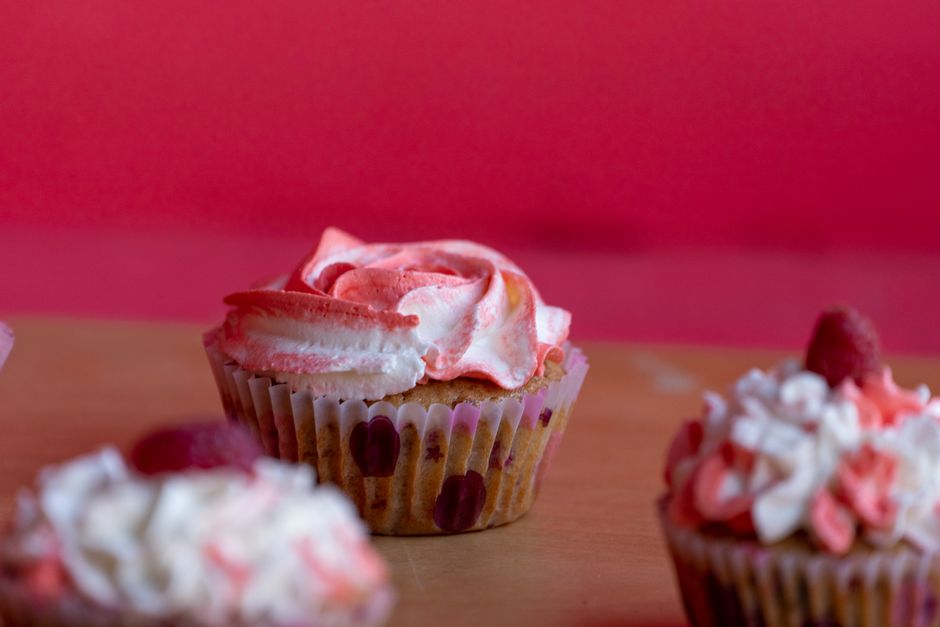
A common misconception is that lemon meringue cupcakes are ordinary lemon cupcakes with sweet frosting. They are not. The filling and topping solve two different problems: lemon curd adds sharp, moist flavour inside the cake, while toasted meringue adds a light, stable finish on top. Treating both parts as one frosting job creates soggy centres, loose filling, or a topping that slides by dessert time. My clear verdict is simple: bake a lightly sweet lemon cake, use a thick egg-yolk curd, and finish with Swiss meringue. That three-part structure gives the strongest contrast and the cleanest cut.
Why lemon curd belongs inside the cupcake
Acid, fat, and sugar need balance
Lemon curd exists because lemon juice alone cannot deliver a rich filling. Juice brings acid and water, but egg yolks supply structure, butter supplies body, and sugar softens the sharp edge. A reliable small batch uses 120 grams of lemon juice, the finely grated zest of three lemons, 150 grams of sugar, four egg yolks, one whole egg, and 85 grams of unsalted butter. The eggs thicken the mixture as their proteins set. The butter cools into a smooth, spoonable texture.
Choose a filling that stays put
For cupcakes, curd must be thicker than a sauce but softer than jam. Stop when the curd coats the spatula and a finger drawn across it leaves a clean line. Strain it immediately, then press plastic wrap directly against the surface and chill it for at least two hours. My recommendation is to pipe 18 to 22 grams into each standard cupcake. That amount gives a visible lemon centre without weakening the cake walls.
Do not fill warm cupcakes. Heat melts the butter in the curd and turns the centre runny. A completely cool cupcake and cold curd produce the most dependable result.
How to bake a cupcake that will not collapse
Use a firm but tender crumb
The cake must support a wet filling, so an ultra-soft sponge is the wrong choice. For 12 standard cupcakes, mix 180 grams of cake flour, 150 grams of sugar, 1½ teaspoons of baking powder, ¼ teaspoon of baking soda, ¼ teaspoon of salt, 115 grams of softened unsalted butter, two large eggs, 120 grams of buttermilk, 30 grams of lemon juice, and the zest of two lemons. Cream the butter and sugar for three minutes. Add the eggs one at a time, then alternate the dry ingredients with the buttermilk mixture. Stop mixing as soon as no dry streaks remain.
Control the bake, not just the recipe
Bake for 18 to 22 minutes, rotating the pan once after 12 minutes. Cool the cupcakes in the pan for five minutes, then move them to a rack. If the tops sink, the usual causes are underbaking, too much liquid, or opening the oven early.
My verdict: a slightly domed, fully baked cake is better than a delicate cake that promises softness but cannot carry curd. Flavour improves when the lemon zest goes into the sugar before mixing because the sugar pulls fragrant oils from the zest.
Swiss meringue is the safest toasted topping
Heat the egg whites and sugar together
Swiss meringue gives lemon meringue cupcakes a smooth finish and better heat control than a raw French meringue. For 12 cupcakes, combine 100 grams of egg whites, 200 grams of superfine sugar, and a pinch of cream of tartar in a clean metal bowl. Rub a little between two fingers; it should feel smooth, not gritty. This heating step also makes the topping safer to serve.
Whip to a firm, glossy peak
Move the bowl to a stand mixer and whip on medium-high speed for seven to ten minutes. The bowl should cool, and the meringue should hold a sharp peak. Add ½ teaspoon of vanilla only after the whites have gained volume. Pipe a tall spiral on each cooled cupcake. A kitchen torch should pass over the surface in short sweeps, never resting in one place. The meringue will brown quickly because sugar darkens faster than the cake.
My clear pick is Swiss meringue for home bakers who want a toasted finish without the added step of making Italian syrup.
Which meringue method gives the best tradeoff?
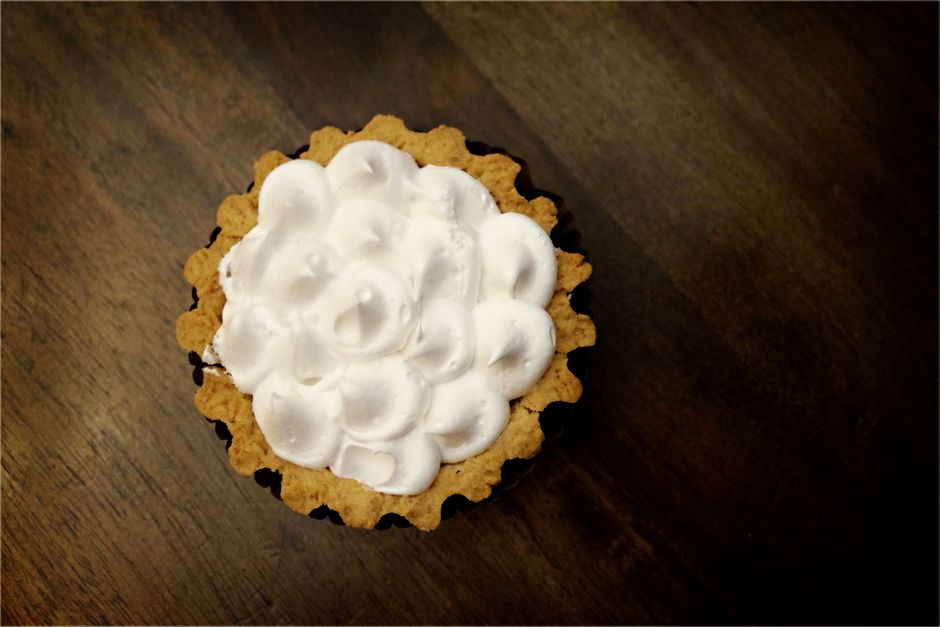
Compare the three practical options
All three meringues can work, but they do not carry the same risk. For lemon meringue cupcakes, Swiss meringue wins because it balances stability, texture, and manageable technique.
Make the final call
Choose French meringue only when speed matters more than holding power. Choose Italian meringue for a wedding table, outdoor party, or any display lasting more than four hours. For the normal home batch, Swiss is the strongest value because it gives a professional surface with less equipment and less syrup handling. None of these toppings should sit in direct sun. Heat softens the fat in the curd and makes every meringue less reliable.
Five mistakes that ruin lemon meringue cupcakes
Fix the failure before it reaches the table
- Curd leaking through the bottom: The cupcake was filled before it cooled, or the cavity was too deep. Chill both cake and curd, then pipe into a shallow centre opening.
- Weeping meringue: Sugar crystals, grease, or under-whipped whites caused the problem. Use a clean bowl, dissolve the sugar fully, and whip until the bowl feels cool.
- Burnt peaks: The torch stayed still too long. Keep the flame moving and toast from at least two inches away.
- Rubbery cake: Overmixing developed too much gluten. Fold only until the flour disappears, then portion the batter at once.
Know when to change the plan
Do not buy specialty tools or attempt a tall meringue display if you need cupcakes that can travel unrefrigerated for a full day. A lemon glaze and buttercream topping will tolerate transport better, although they will not deliver the same toasted-marshmallow texture. My recommendation is to make meringue cupcakes for serving within four hours and choose a sturdier topping for long delivery.
These failure checks matter more than decorative piping. A plain swirl with a stable centre beats a dramatic cupcake that leaks into its wrapper.
Should you make them ahead, and how should they be stored?
Can the components be prepared separately?
Yes. Make the curd up to five days ahead and keep it covered in the refrigerator. Bake the cupcakes one day ahead, cool them fully, and store them airtight at room temperature. Make the Swiss meringue on the day of serving. This schedule protects the cake from condensation and keeps the topping glossy.
How long will finished cupcakes last?
Finished cupcakes are strongest within four hours, especially after torching. Refrigeration can firm the curd, but it also creates moisture on the meringue and softens the cake. If refrigeration is necessary, use a covered container and let the cupcakes stand for 20 minutes before serving. Do not stack them. The topping is fragile, and contact with a lid will remove the toasted ridges.
For a party, pipe the curd and meringue as close to serving as practical. For transport, keep the cakes and curd chilled, carry the meringue separately if possible, and torch them at the destination. The opening misconception now has a useful answer: these are not lemon cupcakes wearing one sugary topping. They are a firm cake, a sharp cooked filling, and a carefully heated meringue, each doing a separate job. That separation is what makes the finished cupcake hold together and taste bright rather than merely sweet.