Why pumpkin cupcakes turn dense instead of tender
The common mistake is assuming that more pumpkin creates a better cupcake. It does not. Pumpkin adds water, fiber, and weight, so too much puree makes the crumb gummy and causes the centers to sink. The reliable target is 240 grams of pumpkin puree for 12 standard cupcakes, paired with enough flour and leavening to hold that moisture.
The dependable ingredient balance
| Ingredient | Amount for 12 cupcakes | What it controls |
|---|---|---|
| Plain flour | 180 grams | Structure and lift |
| Pumpkin puree | 240 grams | Moisture, color, and flavor |
| Light brown sugar | 150 grams | Sweetness and softness |
| Neutral oil | 120 milliliters | A moist crumb that stays soft when chilled |
| Large eggs | 2, about 100 grams without shells | Emulsion and stability |
| Baking soda | 1 teaspoon | Spread and browning |
This ratio works because oil keeps the cake soft after refrigeration, while eggs and flour give the batter enough strength to rise without collapsing. Use plain pumpkin puree, not sweetened pumpkin pie filling. A 15-ounce can of Libby’s 100% Pure Pumpkin contains roughly 425 grams, so one can gives you enough for one batch plus a small leftover portion.
The best texture target
A properly baked cupcake should feel springy at the center and show a few moist crumbs on a skewer. It should not look wet, shiny, or sunken. For the most consistent result, weigh the pumpkin and flour instead of relying on packed cups.
Which pumpkin puree gives the best result?
Is canned pumpkin better than fresh?
For cupcakes, canned puree is the better choice. Commercial puree has a steady water content, a smooth texture, and a strong orange color. Fresh pumpkin varies widely. A watery sugar pumpkin can make loose batter, while a dry roasted pumpkin can produce a thick mixture that bakes unevenly. If you use fresh pumpkin, roast it until tender, drain it in a fine sieve for 30 minutes, then weigh 240 grams.
What should the label say?
Choose a can labeled 100% pumpkin with no sugar, spices, or dairy. Libby’s 100% Pure Pumpkin is a dependable example because its texture is smooth and its can size is easy to measure. Farmer’s Market Organic Pumpkin also works, but drain it if the puree looks loose. Pumpkin pie filling is not a shortcut. It already contains sugar and spices, which can make the cupcakes overly sweet and throw off the liquid balance.
How much spice is enough?
Use 2 teaspoons ground cinnamon, 1 teaspoon ground ginger, ½ teaspoon ground nutmeg, and ¼ teaspoon ground cloves for 12 cupcakes. This blend tastes warm without masking the pumpkin. A premixed pumpkin pie spice can replace those spices at a total of 3¾ teaspoons. Check the date on an older jar; stale spices create a flat, dusty flavor that extra sugar cannot fix.
How to mix and bake the batter
The strongest method is simple: mix the wet ingredients fully, combine the dry ingredients separately, then bring them together with a light hand. Overmixing develops gluten and leaves pumpkin cupcakes rubbery.
- Heat the oven to 175°C or 350°F. Line a 12-cup muffin tin with paper cases.
- Whisk 150 grams of brown sugar, 120 milliliters of neutral oil, 2 eggs, 240 grams of pumpkin puree, and 1 teaspoon vanilla until smooth.
- In a second bowl, whisk 180 grams of flour, 2 teaspoons cinnamon, 1 teaspoon ginger, ½ teaspoon nutmeg, ¼ teaspoon cloves, 1 teaspoon baking soda, ½ teaspoon baking powder, and ½ teaspoon salt.
- Add the dry mixture to the wet mixture. Fold just until no dry flour remains. A few small lumps are fine.
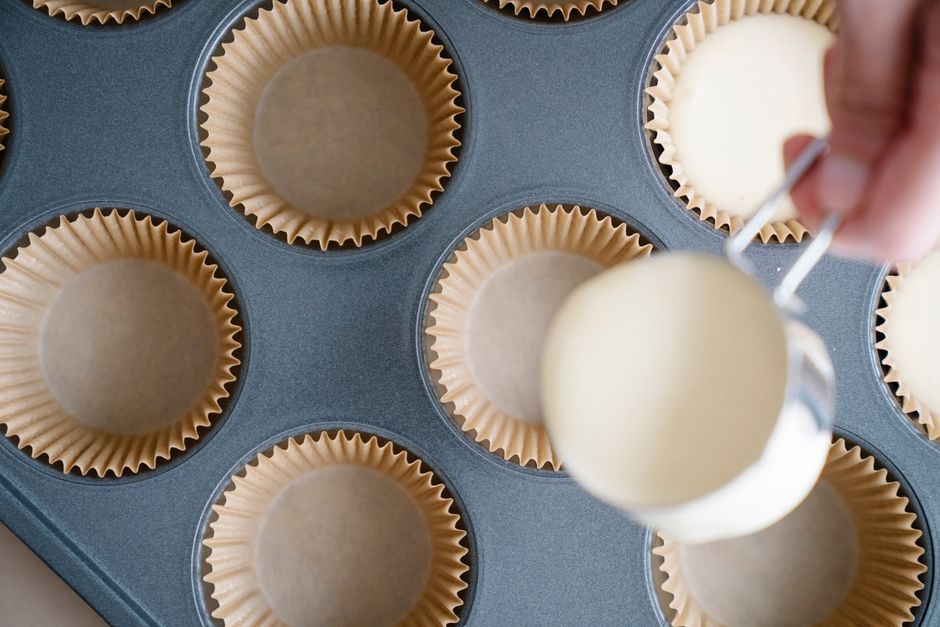
- Divide the batter evenly. Each liner should hold about 60 grams, or fill it roughly two-thirds full.
- Bake for 19 to 23 minutes. Rotate the pan once after 14 minutes if your oven has a hot side.
- Cool the cupcakes in the tin for 5 minutes, then move them to a rack. Cool completely before frosting.
The clear verdict: weigh the batter portions if you want matching cupcakes. Equal portions bake at the same speed, which matters more than decorative skill.
How to make cream cheese frosting that holds its shape
Cream cheese frosting fails when it contains too much liquid or when the cream cheese becomes warm. The frosting should taste tangy and rich, but it must also stay on top of a room-temperature cupcake. For 12 cupcakes, use 115 grams of unsalted butter, 225 grams of full-fat block cream cheese, 360 grams of sifted powdered sugar, 1 teaspoon vanilla, and a pinch of salt.
Use block cream cheese, not spreadable cream cheese
Philadelphia Original cream cheese in the 8-ounce block format is a reliable example. Spreadable tubs contain extra water and often produce loose frosting. Let the butter soften until it dents when pressed, but keep the cream cheese cool. Beat the butter alone for 2 minutes. Add the cream cheese and beat for only 30 to 45 seconds, just until smooth.
Add sugar in stages
Mix in the powdered sugar in three additions on low speed. Add the vanilla and salt at the end. Stop as soon as the frosting looks smooth. Long mixing warms the cream cheese and creates a slack texture. If the frosting seems soft, chill it for 20 minutes before piping. Do not add large amounts of extra sugar to rescue it; that makes the frosting cloying and heavy.
Choose the right finish
A large closed-star tip gives a stable swirl with less pressure than a small tip. Pipe only after the cupcakes have cooled completely. For a clean autumn finish, add a light dusting of cinnamon or a few finely chopped toasted pecans. Refrigerate frosted cupcakes in a covered container for up to 3 days, then let them stand for 20 minutes before serving. The frosting will firm in the refrigerator, while the oil-based cake remains tender.
Five mistakes that ruin pumpkin spice cupcakes
Most failures come from measurement, temperature, or timing. Fix the cause instead of changing several ingredients at once.
- Using pumpkin pie filling: The added sugar and spices change the recipe balance. Use unsweetened puree.
- Measuring flour by scooping: A packed cup can add 20 to 30 grams of flour, which makes the cupcakes dry and dense. Spoon flour into a cup and level it, or weigh 180 grams.
- Overmixing after adding flour: Stir only until the dry streaks disappear. Extra mixing creates a chewy crumb.
- Opening the oven too early: Keep the door closed for at least 17 minutes. A sudden temperature drop can sink the centers.
- Frosting warm cupcakes: Heat melts the butter and cream cheese. Cool the cupcakes until the bases feel neutral, not warm.
- Baking by time alone: Ovens vary. Test the center with a skewer and look for spring-back when you press the top lightly.
The strongest rescue for a soft center
If the edges are baked but the middle is wet, return the pan to the oven for 3 to 5 minutes. If the tops are already dark, place a loose sheet of foil over the pan. Do not frost a sunken cupcake to hide it; the center will remain gummy.
When to change the recipe
The standard recipe is the best choice for a classic cupcake, but not every variation improves it. Do not replace the oil with all butter if your priority is a soft texture after refrigeration. Butter adds flavor, yet it firms when cold. Do not double the pumpkin for a stronger color; that adds moisture without adding structure.
For less sweetness
Reduce the cupcake sugar from 150 grams to 125 grams, but keep the frosting amount close to the original. A larger sugar reduction can make the crumb less tender and less browned. To balance the frosting, pipe a thinner layer rather than cutting the powdered sugar sharply.
For whole-wheat flour
Replace up to 60 grams of the plain flour with whole-wheat flour. More than that can make the cupcakes heavy because whole-wheat flour absorbs more water and adds bran. Let the mixed batter stand for 5 minutes before portioning so the flour can hydrate.
For a dairy-free batch
Use a plant-based block for the frosting and a neutral oil-based cake. Check the label for a firm, spoonable texture rather than a soft spread. The result will have less tang and may need 1 teaspoon of lemon juice, added slowly, to sharpen the flavor. For the most traditional cream cheese taste, the dairy version remains the clear winner.
Which version should you bake?
The classic formula wins for a reliable autumn bake because it balances moist pumpkin cake with a cool, tangy frosting. Variations have a place, but each changes a specific part of the result. Use the table as the final decision guide.
| Version | Best for | Main tradeoff | Verdict |
|---|---|---|---|
| Classic pumpkin cupcakes | Soft texture and clear spice flavor | Requires full cooling before frosting | Best overall choice |
| Extra-pumpkin version | A darker color and stronger pumpkin taste | Higher risk of a gummy center | Not worth the texture loss |
| Whole-wheat version | A nuttier, more substantial crumb | Less delicate and slightly heavier | Use for breakfast-style cupcakes |
| Dairy-free version | Guests avoiding dairy | Less tang and softer frosting | Best only when needed |
| Butter-based cake | Rich flavor served at room temperature | Firmer texture when chilled | Choose for same-day serving |
For a bake that stays moist for several days, choose the oil-based classic with full-fat block cream cheese. For the neatest frosting, chill the finished cupcakes before transport. The winning combination is not the one with the most pumpkin or sugar. It is the one with controlled moisture, measured flour, and enough cooling time.