Here’s the problem with most Stilton beef burger recipes you find online: they treat the cheese as an afterthought. A crumble on top. A last-minute garnish. That’s not how you get the full punch of salty, tangy, creamy Stilton into every bite. You need a different approach — one that considers fat content, melting point, and how the cheese interacts with the beef’s own juices.
I’ve tested this specific combination about a dozen times over the past two months. The difference between a good Stilton burger and a great one comes down to three things: the beef-to-cheese ratio, the cooking method, and the bun. Get those right, and you have a burger that beats anything from a gastropub. Get them wrong, and you’re eating a dry patty with cold blue cheese on top.
The 80/20 Rule Is Non-Negotiable Here
Stilton is a crumbly, high-moisture cheese. When it melts, it releases liquid. If your beef is too lean — say, 93/7 — that liquid runs straight through the patty and out onto the grill. You end up with a dry burger and a mess of burnt cheese on the grates.
80/20 ground beef is the only option for Stilton burgers. The 20% fat content does two things: it keeps the patty juicy enough to absorb the cheese’s moisture, and it creates a crust that traps the Stilton inside as it melts. I use Waitrose Essential British Beef Mince 20% Fat (£4.50 for 500g) for this. It’s consistent, doesn’t have that weird metallic taste some budget brands carry, and the fat renders evenly.
Why Lean Beef Fails Here
I tried 85/15 beef once. The patty was noticeably drier. The Stilton leaked out through the cracks and formed a sticky residue on the pan. The burger itself was edible — barely. The cheese flavor was muted because most of it had escaped. If you only have lean beef in the fridge, make something else. This recipe demands fat.
The Exact Fat Percentage You Need
20% is the sweet spot. 25% works but you’ll need to drain the pan halfway through cooking, which is annoying. 15% is too lean. 10% is a waste of Stilton. If you’re buying pre-packaged mince, check the label. If you’re grinding your own, use chuck with a 80/20 ratio. Don’t guess.
How to Build the Patty (and What Not to Do)
Most people overwork the meat. They add breadcrumbs, egg, Worcestershire sauce, diced onions, herbs. Stop. You’re making a burger, not a meatloaf. Stilton is strong enough to carry the flavor. Adding anything else just dilutes it.
Here’s the exact process I use:
- Take 150g of 80/20 mince per patty. Do not press it tight. Form it into a loose ball, then flatten it to about 1 inch thick. Make a thumb-sized indent in the center — this prevents the patty from puffing up into a dome.
- Season generously with Maldon sea salt flakes and fresh black pepper. Only season the outside, not mixed in. Mixing salt into the meat changes the protein structure and makes it dense.
- Take 30g of Stilton — about a 1-inch cube — and press it into the center of the patty. Seal the edges around it so the cheese is fully enclosed. You want the cheese inside, not on top.
- Chill the patties in the fridge for 20 minutes. This firms up the fat and keeps the cheese from leaking out too early.
The Biggest Mistake: Overworking the Meat
Handle the beef as little as possible. Every time you squeeze and knead, you’re breaking down the fat and making the final texture more like a sausage than a burger. I’ve seen recipes that tell you to “mix until combined” — that’s bad advice. Just bring it together gently. The patty should feel slightly fragile before it hits the heat.
Grill vs. Cast Iron: Which Gives You a Better Crust?
I tested both methods side by side. Cast iron skillet wins for Stilton burgers. Here’s why: the cheese inside the patty melts and creates pockets of liquid. On a grill, that liquid drips through the grates and causes flare-ups. The flames char the outside unevenly and leave bitter burnt spots. In a cast iron pan, the liquid stays in the pan and helps create a deep, dark crust.
| Cooking Method | Crust Quality | Cheese Retention | Time | Verdict |
|---|---|---|---|---|
| Cast iron skillet (medium-high heat) | Excellent — deep brown, crispy | High — cheese stays inside, minimal leakage | 4 minutes per side | Best for Stilton burgers |
| Charcoal grill (direct heat) | Good — smoky char, but uneven | Medium — some cheese leaks through grates | 5 minutes per side | Works if you’re careful, but not ideal |
| Gas grill (medium heat) | Fair — less smoky flavor, more drying | Low — cheese tends to drip and burn | 6 minutes per side | Avoid for Stilton burgers |
| Oven (400°F, after searing) | Good crust, but interior can overcook | High — minimal leakage | Sear 2 min + bake 8 min | Good for thick patties (1.5 inches+) |
Cast Iron Technique
Heat your skillet on medium-high for 3 minutes. Add a thin layer of neutral oil (grapeseed or avocado, not olive oil — it burns). Place the patty in the pan and leave it. Don’t touch it for 4 minutes. No pressing down with a spatula. That squeezes out the juices and the cheese. After 4 minutes, flip. Cook another 4 minutes for medium. Add 1 minute per side for well done.
When the Grill Is Better
If you’re cooking 6+ burgers at once, the grill is faster. Use a Weber Original Kettle Premium 22-inch (£119) with a two-zone fire. Put the patties over indirect heat first for 5 minutes, then move them to direct heat for the last 2 minutes per side to get a sear. This reduces flare-ups. But honestly? For two or three burgers, cast iron is less hassle and gives a better result.
The Bun, the Toppings, and the Assembly Order
This is where most recipes fall apart. A soggy bun ruins the entire experience. Stilton burgers release more liquid than regular burgers because the cheese melts and adds extra moisture. You need a bun that can handle it.
Brioche buns are the standard choice, but they’re too soft. They disintegrate within two bites. Instead, use a sesame seed brioche bun from Sainsbury’s Taste the Difference (£1.25 for 4) — they have a slightly firmer crumb that holds up better. Or go with a potato roll like Martin’s Long Potato Rolls (£2.50 for 8 at Waitrose). They’re denser, slightly sweet, and they don’t turn to mush.
Toppings That Work (and One That Doesn’t)
- Caramelized onions — essential. The sweetness cuts through the salty Stilton. Cook them low and slow for 20 minutes with butter and a pinch of sugar.
- Arugula — the peppery bite contrasts the richness. Skip lettuce; it’s too watery.
- Bacon — crispy, thick-cut. Adds texture. Use Nueske’s Applewood Smoked Bacon (£5 for 12 oz) if you can find it.
- Tomato — only if it’s in-season and ripe. A pale winter tomato adds nothing but sogginess.
- Ketchup or mustard — no. The Stilton is the condiment. Adding sauce just muddles the flavor.
The Assembly Order (Do Not Skip This)
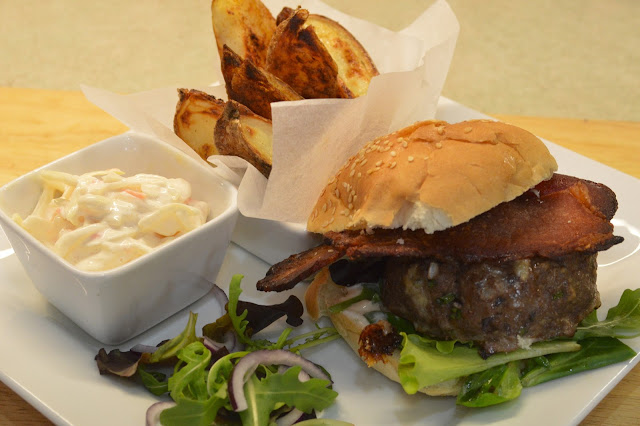
Toast the bun halves in the same pan you cooked the patties in, cut-side down, for 30 seconds. Bottom bun first, then a layer of arugula (acts as a moisture barrier), then the patty, then caramelized onions, then bacon, then top bun. Serve immediately. The cheese inside the patty will still be molten for about 3 minutes. After that, it starts to set. Eat fast.
Three Common Failures and How to Fix Them
I messed up plenty of these before getting it right. Here are the three most common problems and exactly what to do about them.
Failure 1: The cheese leaks out completely. This happens when you don’t seal the edges properly or when the patty is too thin. Fix: use 150g of meat per patty minimum. Make a well in the center, place the cheese, then fold the meat over and pinch the seams. Chill for 20 minutes before cooking. If you skip the chill, the cheese melts and escapes before the meat has a chance to form a crust.
Failure 2: The burger is dry. You’re either using lean beef or overcooking it. 80/20 beef cooked to medium (internal temp 145°F / 63°C) should be juicy. Use an instant-read thermometer. The Thermapen ONE (£69) is expensive but accurate to within 0.5°F. A cheaper Lavatools Javelin PRO Duo (£28) works fine for home cooking. Don’t guess doneness by pressing on the patty.
Failure 3: The bun falls apart. You used a cheap brioche bun that’s basically cake. Switch to a firmer bun. Also, toast it. Toasting creates a barrier that slows moisture absorption. And don’t pile on wet toppings like raw tomato slices or pickles. If you want pickles, serve them on the side.
When not to make Stilton beef burgers. If you’re cooking for someone who doesn’t like strong blue cheese, this isn’t the recipe to convert them. Stilton is assertive — it’s not subtle like Gorgonzola dolce. Make a classic cheddar burger instead. Also, if you’re on a low-fat diet, this isn’t for you. 80/20 beef plus Stilton plus bacon is not a light meal. It’s a once-a-month indulgence. Own that.
For a straightforward, repeatable Stilton burger that delivers every time: 80/20 beef, 30g Stilton stuffed inside, cast iron skillet, toasted potato roll, arugula, caramelized onions. No egg. No breadcrumbs. No sauce. That’s it.