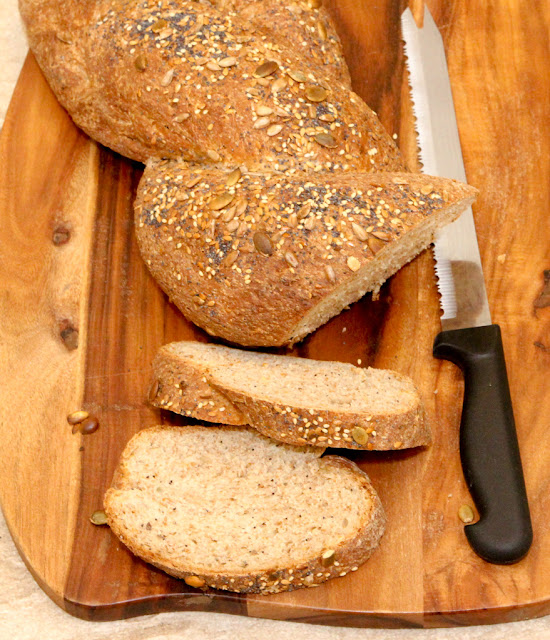
You followed a recipe. You weighed the ingredients. You pulled out a rustic, seed-flecked loaf from the oven, anticipating that perfect slice. But it’s a brick. Dense, gummy, maybe even a bit raw in the middle. The seeds are there, but the promised airy texture? Gone. You wanted a wholesome, satisfying bread. You got a doorstop. This isn’t about blaming the recipe; it’s about understanding the process.
Why Your Seed Loaf is a Bust, and What You’re Doing Wrong
You think you’re baking bread. You’re actually performing a delicate chemical dance. Most home bakers screw up seed loaves by misjudging hydration, mishandling the seeds themselves, or just plain over-mixing. It’s not complex, but it demands attention. Ignore these basics, and you’ll keep pulling out heavy, unappetizing loaves. Period. The problem isn’t your oven; it’s your technique.
The Hydration Tightrope: Too Much or Too Little?
Seed loaves are tricky because seeds absorb a lot of water. If you don’t account for this, your dough will be either too dry to develop gluten properly, resulting in a dense crumb, or so wet it collapses, giving you a gummy, flat mess. Most recipes provide a starting point, but you need to feel the dough. It should be tacky, but not sticky. Think about it: a dry dough prevents proper yeast fermentation, and a soggy one drowns the gluten structure. You need balance. This isn’t rocket science; it’s observation.
Seeds: To Soak or Not to Soak? Always Soak.
This isn’t an option; it’s a requirement for many seeds. Raw seeds are hard. They stay hard. And they will suck moisture directly from your dough during proofing and baking, throwing off your carefully balanced hydration. Soaking softens them, kickstarts their enzymatic activity, and ensures they contribute to the loaf’s texture, not detract from it. Skipping this step is a fundamental error. Flaxseeds, chia seeds, even sunflower seeds benefit massively from a pre-soak. Don’t be lazy.
Over-Mixing is a Real Killer
You see recipes calling for “kneading.” Great. But too much kneading, especially with a stand mixer, can destroy the nascent gluten structure, particularly in whole grain flours which are already tougher on gluten. Whole grains have sharp bran particles that cut gluten strands. Add seeds, and you increase that friction. You’re aiming for development, not destruction. Stop when the dough is smooth and elastic. Don’t keep going “just in case.” You’re overdoing it.
The Science Behind a Great Seed Loaf: It’s Not Magic, It’s Chemistry
Forget the romantic notion of “artisan baking” for a moment. Baking a mixed seed loaf is applied science. The success or failure hinges on understanding three core processes: gluten development, yeast activity, and the interaction of seeds with both. Get these wrong, and your loaf won’t just be sub-par; it’ll be inedible. This isn’t about intuition; it’s about control.
Gluten Formation: It’s Not Magic, It’s Protein
Gluten is the structural framework of your bread. It’s formed when gliadin and glutenin proteins in flour combine with water and are worked (kneaded). This creates an elastic network that traps the CO2 gas produced by yeast, giving bread its rise and open crumb. In a seed loaf, whole grain flours often have less strong gluten-forming proteins compared to white flour, and the bran can physically cut those delicate gluten strands. This means you need precise hydration and careful kneading to build a robust network without tearing it apart. Underextension leads to a dense, tight crumb. Overextension leads to a collapsed, coarse crumb. You need to be aware of the dough’s resistance and elasticity. When it stretches thin without tearing, you’re there.
Yeast Activity: Temperature and Time Matter, A Lot
Yeast are living organisms. They consume sugars and produce carbon dioxide and alcohol. This fermentation is what makes bread light and airy. Their activity is highly dependent on temperature. Too cold, and they’re sluggish, leading to a long, underdeveloped proof. Too hot, and they overproduce gas too quickly, exhausting their food supply and often leading to an over-proofed loaf that collapses in the oven. The ideal dough temperature, usually around 75-80°F (24-27°C), ensures a steady, controlled rise. Don’t guess; use a thermometer. Water temperature for activating yeast is critical too: around 105-115°F (40-46°C). Much hotter and you kill them. Much colder and they snooze.
Seeds: They Drink Water, A Lot of It
This is the single biggest overlooked factor in mixed seed loaves. Seeds like flax, chia, and even sunflower, are incredibly thirsty. If you don’t hydrate them before they go into the dough, they will act like tiny sponges, sucking up free water from your flour and yeast. This directly impacts your dough’s hydration, making it stiffer than intended and hindering gluten development. It also messes with yeast activity by reducing the available moisture. Pre-soaking seeds in a separate bowl of water (not just the dough water) ensures they are plump and ready, contributing moisture to the dough during the bake, rather than stealing it. Use hot water for soaking; it speeds things up. This step is non-negotiable for a consistent crumb.
The Right Tools for Seed Loaf Superiority
You can try to bake amazing bread with inadequate tools. Don’t. You’ll fail. Good equipment doesn’t make you a great baker, but bad equipment guarantees a miserable experience and mediocre results. Invest in the right gear. It’s not optional for consistency.
| Tool Category | Key Benefit | Why You Need It | Common Brands/Examples |
|---|---|---|---|
| Stand Mixer | Consistent, powerful kneading | Develops gluten efficiently without arm fatigue, especially for stickier doughs like seed loaves. Critical for proper aeration. | KitchenAid Artisan, Bosch Universal Plus |
| Digital Kitchen Scale | Precision ingredient measurement | Baking is chemistry. Grams are accurate; cups are not. Essential for exact hydration and ingredient ratios. | OXO Good Grips, Escali Primo |
| Dough Scraper | Clean handling, portioning | Manages sticky doughs with ease, cleans bowls, and portions dough cleanly. Improves handling without excess flour. | Bench Scraper (various brands) |
| Proofing Basket (Banneton) | Holds shape during proofing | Prevents wide, flat loaves by supporting the dough’s structure during its final rise. Wicks away surface moisture for a crispier crust. | Round/Oval Banneton (various brands) |
| Oven Thermometer | Accurate oven temperature | Your oven’s thermostat is often wrong. Baking relies on specific temperatures. Ensures consistent baking and proper crust development. | Taylor, ThermoPro |
Best Stand Mixers for Bread Dough: Don’t Skimp
A powerful stand mixer with a robust motor is a for bread, particularly heavier doughs like seed loaves. Hand-kneading these can be a workout, and it’s hard to get consistent gluten development without a machine. A KitchenAid Artisan series will get the job done for most home bakers, but if you’re serious, look at a Bosch Universal Plus. They handle high-hydration, heavy doughs without straining. Get one. It makes a difference.
Digital Scales: Non-Negotiable Precision
Baking is a science of ratios. Volume measurements (cups, spoons) are notoriously inaccurate, especially for flour, which can compact differently. A digital kitchen scale measures in grams, providing the precise measurements crucial for consistent bread. You need to know exactly how much flour, water, and seeds you’re using. An OXO Good Grips scale is affordable and reliable. Use it. Every time.
The Proving Basket’s Role: Structure is Key
A proofing basket, or banneton, isn’t just for aesthetics. It’s functional. It supports your dough during its final proof, preventing it from spreading out and losing its shape. This support is especially valuable for higher-hydration doughs common in seed loaves. It also helps to wick away a small amount of surface moisture, which contributes to a better crust. A simple rattan banneton is all you need. Get the right size for your loaf.
Perfecting Your Seed Selection and Preparation for Max Flavor and Texture
Seeds aren’t just for show. They’re for flavor, texture, and nutrition. But if you toss them in haphazardly, you’re missing the point. Proper selection and preparation elevate your loaf from “bread with stuff in it” to a truly exceptional mixed seed experience. It’s about intention.
-
Choose the Right Mix: Balance is Everything
You can’t just throw every seed you own into the bowl. Think about texture and flavor contribution.
- Flaxseeds: High in mucilage, helps with binding, provides a subtle nutty flavor. Essential for a good seed loaf.
- Chia Seeds: Similar to flax in mucilage, absorbs a lot of water. Great for a moist crumb.
- Sunflower Seeds: Crunchy, nutty, robust flavor. Adds significant texture.
- Pumpkin Seeds (Pepitas): Earthy, chewy, adds color and a different kind of crunch.
- Sesame Seeds: Delicate, adds a distinct aroma and crispness to the crust.
- Poppy Seeds: Tiny crunch, subtle flavor. More for visual appeal and a slight textural pop.
A good ratio is often 2:1:1:1 for flax/chia:sunflower:pumpkin:sesame. Adjust to your preference, but don’t overload it. Too many seeds will inhibit gluten development and make the loaf dense.
-
Toast for Depth: Don’t Skip This
Raw seeds taste flat. Toasted seeds burst with flavor. It’s that simple. Spread your seeds (excluding flax and chia, which are better soaked without toasting first) on a baking sheet and toast them in a 300°F (150°C) oven for 5-10 minutes, or gently in a dry skillet over medium heat, until fragrant and slightly browned. Watch them; they burn fast. This step unlocks their full aromatic potential. It makes a huge difference.
-
The Soaking Protocol: Hydrate or Fail
As stated, this is critical. For every 100g of seeds (total mix, focusing on the highly absorbent ones like flax and chia), you need about 150-200g of hot water. Combine the seeds and hot water in a bowl. Let them sit for at least 30 minutes, or up to several hours, until they form a gel-like consistency (especially flax and chia) and the other seeds are plump. Drain any excess water you might have, but usually, they absorb it all. This ensures they don’t steal moisture from your dough later. For seeds like sunflower and pumpkin that you might toast, you can soak them after toasting or add them dry and adjust dough hydration if you prefer a crunchier element. But for optimal crumb, pre-soaking is your best bet for the majority of your seed blend.
Troubleshooting Your Mixed Seed Loaf: Common Problems, Direct Answers
You’ve done everything right, or so you think, and still your loaf isn’t perfect. Don’t panic. These are common issues with straightforward fixes. Stop guessing.
Q: Why is my mixed seed loaf so flat and dense?
A: You’ve got under-proofed dough, weak gluten development, or incorrect hydration. First, check your yeast. Is it active? Are you proofing at the right temperature (75-80°F)? If it’s too cold, your dough won’t rise enough. Second, rethink your kneading. Did you develop the gluten enough? A weak gluten network can’t trap gas, so the loaf collapses. Third, hydration: did the seeds suck up too much water? Always pre-soak. A flat loaf means a structural failure, usually from one of these three.
Q: What causes a gummy or raw-tasting crumb in my seed loaf?
A: You didn’t bake it long enough, or your oven temperature was too low. The internal temperature of a baked loaf should be 200-210°F (93-99°C). If it’s lower, it’s underbaked, simple as that. Use an instant-read thermometer. Also, excessive hydration can lead to a gummy texture, even if fully baked. Re-evaluate your water amount, especially considering the pre-soaked seeds. If your oven temperature is off (check with an oven thermometer), the outside might look done while the inside is still raw. Don’t pull it out early.
Q: How do I get more flavor and texture into my seeds?
A: Toast them. Seriously. Raw seeds are bland. Toasting sunflower, pumpkin, and sesame seeds before soaking (if soaking them) or adding to the dough brings out their essential oils and deepens their nutty flavor profile. Don’t toast flax or chia if you’re soaking them for mucilage, as it can affect their gelling properties. Also, ensure you have a good variety of seeds. A mix of crunchy (sunflower, pumpkin) and softer, gelling seeds (flax, chia) provides complexity. Don’t rely on just one type.
The Ultimate Mixed Seed Loaf Recipe Blueprint: No More Guesswork
This isn’t a vague guideline; it’s a solid framework. Follow this, and you’ll get a loaf you’re proud of. This blueprint prioritizes structure and flavor. It’s designed to minimize common failures.
Key Ingredient Ratios (Baker’s Percentages)
For a standard loaf, these percentages are crucial. They represent the weight of each ingredient relative to the flour (flour is always 100%).
- Strong Bread Flour: 70% (e.g., King Arthur Bread Flour, though no specific product recommendation, just a type)
- Whole Wheat Flour: 30% (adds flavor and nutrition)
- Water: 75-80% (adjust based on flour absorption and seed type, this is your starting point)
- Salt: 2%
- Instant Yeast: 1%
- Mixed Seeds (Pre-soaked): 20-30% (total weight, including water absorbed during soak)
- Optional Sweetener (Honey/Maple Syrup): 5% (for flavor and a touch of yeast food)
Example for 500g total flour: 350g bread flour, 150g whole wheat flour. Water at 75% would be 375g. Salt 10g. Yeast 5g. Seeds 100-150g (pre-soaked). This isn’t flexible without understanding why you’re changing it.
Mixing and Kneading Methods: Don’t Rush It
Combine all flours, salt, and yeast in your stand mixer bowl. Add water and soaked seeds. Mix on low speed for 2 minutes until just combined. Let it rest for 20-30 minutes (autolyse). This allows the flour to fully hydrate before gluten development. Then, knead on medium speed for 8-10 minutes. The dough should become elastic and pass the windowpane test (stretch a small piece thin enough to see light through without tearing). Don’t overdo it. Stop when it’s just right. Transfer to a lightly oiled bowl, cover, and let it bulk ferment.
Proofing and Baking Times: Patience Pays Off
Bulk Fermentation: Let the dough rise at room temperature (75°F/24°C) for 1.5-2 hours, performing a stretch and fold every 30 minutes for the first hour. It should double in size.
Shaping: Gently deflate, shape into a tight loaf, and place seam-side up in a floured banneton.
Final Proof: Proof for another 45-60 minutes at room temperature, or cold proof in the fridge overnight for deeper flavor. It should feel airy but still have some resistance when gently poked.
Baking: Preheat your oven with a Dutch oven or baking stone to 450°F (230°C) for at least 30 minutes. Score the loaf. Bake in the Dutch oven (covered) for 20 minutes, then uncover and bake for another 25-30 minutes at 425°F (220°C) until deep golden brown and the internal temperature reaches 200-210°F (93-99°C). Cool completely on a wire rack before slicing. This is crucial for crumb structure.
The Verdict: Get it Right, Every Time
Stop making dense, gummy seed loaves. It’s a waste of good ingredients and your time. Understand the science: hydration, yeast, gluten, and seed prep are non-negotiable. Use the right tools, follow the blueprint, and bake it properly. Your next mixed seed loaf will be exactly what you want: hearty, airy, and full of flavor.