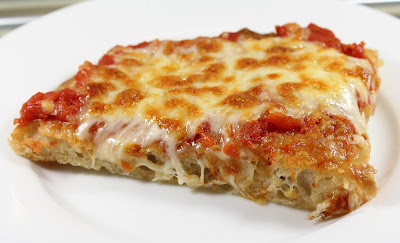
You’ve seen it on menus: “White Pizza.” And if you’re like many home cooks, you’ve probably tried to replicate it by simply omitting the tomato sauce from your usual pizza recipe. The result? Often a dry, tough, and frankly, disappointing crust that lacks flavor and the airy texture you crave. This common misconception is where most attempts at Pizza Bianca fall flat. It’s not just a pizza without red sauce; it’s an entirely different culinary experience, a specific Roman bread with its own distinct characteristics and demands.
My own journey to understanding Pizza Bianca began with those same lackluster results. I chased the perfect Roman street food memory, only to find my kitchen efforts yielded something more akin to a cracker than the cloud-like, olive-oil-rich bread I remembered. The problem wasn’t my ambition; it was a fundamental misunderstanding of what Pizza Bianca actually is, and more importantly, how to make it.
The Misunderstood Identity of Pizza Bianca
The biggest hurdle for many is treating Pizza Bianca like a blank canvas for toppings, rather than appreciating it as a standalone masterpiece. In Rome, where it originated, Pizza Bianca is often served simply: drizzled with olive oil, sprinkled with salt, and sometimes rosemary. It’s meant to be light, airy, and incredibly flavorful on its own. It’s closer in spirit and texture to a perfectly baked focaccia, but with a thinner profile and a more pronounced crispness, especially around the bubbles that form on its surface. When you try to force a traditional, lower-hydration pizza dough to perform this task, you’re setting yourself up for failure.
A conventional pizza dough, designed to hold up to heavy sauces, cheeses, and toppings, typically has a hydration level between 60-70%. This creates a robust, chewy crust. Pizza Bianca demands a much higher hydration, often exceeding 80%, to achieve its signature open crumb and delicate crispness. The methods for handling these two dough types are also vastly different, requiring a shift in approach from kneading aggressively to folding gently.
What Sets Pizza Bianca Apart
True Pizza Bianca distinguishes itself with a few key features. First, its texture: it’s incredibly light and airy on the inside, almost like a ciabatta, yet boasts an irresistible crispness on the exterior. This isn’t just a happy accident; it’s a direct result of its high hydration dough and specific baking techniques. Second, its flavor profile is simple but profound. High-quality extra virgin olive oil is not just a condiment; it’s an integral ingredient, enriching the dough and creating a beautiful aroma and mouthfeel. Finally, its simplicity in toppings allows the bread itself to shine. Often, it’s just olive oil and coarse salt, sometimes with a scattering of fresh rosemary. This minimalist approach requires the bread to be perfect on its own merits.
Why a Regular Pizza Dough Fails
Using a standard pizza dough for Pizza Bianca results in a product that is too dense, too chewy, and fundamentally lacks the open crumb structure necessary for authenticity. A dough with lower water content simply cannot achieve the same level of internal airiness and crisp exterior that defines Pizza Bianca. When baked, the lower hydration dough resists the expansive forces of steam, leading to a tighter crumb. It also tends to dry out more quickly in the oven, resulting in that unappealing, cracker-like texture that so often disappoints. The olive oil, while present, struggles to penetrate and enrich the denser structure, leaving it feeling more like an afterthought than a core component.
The Cornerstone: High Hydration Dough
The secret to Pizza Bianca’s ethereal texture lies almost entirely in its dough’s hydration. We’re talking about a significant amount of water here, often 75% to 85% of the flour’s weight. This high hydration might feel intimidating at first, making the dough seem sticky and unmanageable, but it’s precisely what s the incredible oven spring and open, airy crumb that defines a great Pizza Bianca. More water allows for greater steam production during baking, which in turn puffs up the dough, creating those signature large holes and crispy, delicate crust. The extra moisture also contributes to a tender interior that stays fresh longer.
Beyond hydration, the choice of flour plays a critical role. Different flours have different protein contents, which dictate how much water they can absorb and how strong their gluten network will be. A balance is key: enough protein for structure, but not so much that it becomes overly chewy. And finally, patience. Slow fermentation, particularly a cold proof, builds complex flavors and further relaxes the gluten, making the dough easier to handle and contributing to a superior final product.
Choosing the Right Flour: ’00’ vs. Bread Flour
For an authentic, soft, yet crisp Pizza Bianca, many Italian bakers swear by ’00’ flour. This finely milled wheat flour, like Antimo Caputo Classica ’00’ flour, typically has a protein content around 11-12.5%. Its fine grind and moderate protein level result in a very extensible dough that can absorb a lot of water without becoming overly tough. It produces a tender crumb with a delicate crispness. A 1kg bag of Caputo ’00’ flour often retails for around $7-9, depending on the supplier.
However, if ’00’ flour isn’t readily available, a good quality bread flour can work well. Brands like King Arthur Bread Flour, with a protein content of around 12.7%, provide the strength needed to handle high hydration. The resulting Pizza Bianca will likely be slightly chewier than one made with ’00’ flour, but it will still be light and airy if handled correctly. King Arthur Bread Flour usually costs around $5-7 for a 1.3kg bag. The trade-off is often a slightly less delicate texture with bread flour, but a more robust gluten structure that can be forgiving for beginners.
The Water-to-Flour Ratio Sweet Spot
As mentioned, aim for a hydration level between 75% and 85%. For example, if you’re using 500 grams of flour, you’d want to add between 375 grams (ml) and 425 grams (ml) of water. Starting around 78-80% is a good sweet spot for beginners, offering manageability while still delivering excellent texture. This high ratio demands a different mixing technique than traditional kneading. Instead of beating the dough into submission, you’ll be encouraging the gluten to develop through gentle stretches and folds over time.
Slow Fermentation for Flavor and Structure
Resist the urge to rush. A long, slow fermentation, especially a cold proof in the refrigerator for 24-48 hours, is crucial. This extended time allows enzymes to break down complex starches into simpler sugars, deepening the flavor profile of the dough. It also gives the gluten network ample time to relax and strengthen without aggressive kneading. The result is a more extensible dough that’s easier to handle and produces a more complex, nuanced flavor in the final bake. This isn’t just about convenience; it’s fundamental to the dough’s character.
Crafting the Dough: A Step-by-Step Guide to Airiness
Making a high-hydration dough for Pizza Bianca is less about brute force and more about patience and gentle handling. The goal is to build a strong yet extensible gluten network without degassing the dough. This process often involves a technique called “stretch and folds,” which gently strengthens the dough over time. Here’s a streamlined approach:
- Autolyse (30-60 minutes): In a large bowl, combine all the flour and water for your recipe. Mix just enough to bring everything together into a shaggy mass. Do not add salt or yeast yet. Cover the bowl and let it rest for 30 to 60 minutes. This step allows the flour to fully hydrate and enzymes to start breaking down starches, leading to better gluten development with less effort.
- Add Yeast and Salt (Initial Mix): After the autolyse, sprinkle your active dry yeast (typically 0.5-1% of flour weight) and fine sea salt (around 2% of flour weight) over the dough. Using wet hands, gently work the yeast and salt into the dough until fully incorporated. This might feel messy, but keep at it.
- First Series of Stretch and Folds (Every 15-30 minutes for 2 hours): For the next two hours, perform a series of stretch and folds. Every 15-30 minutes, with wet hands, reach under the dough, grab a section, stretch it upwards, and fold it over itself. Rotate the bowl and repeat this 4-6 times until you’ve worked your way around the dough. This process develops gluten without intensive kneading. The dough will become progressively smoother and more elastic with each session.
- Bulk Fermentation (1-2 hours at room temperature): After the stretch and folds, let the dough rest, covered, at room temperature for another 1-2 hours, or until it has visibly increased in volume by about 20-30%. This initial rise helps kickstart fermentation.
- Cold Proof (12-48 hours in the refrigerator): Transfer the covered bowl to the refrigerator for a long, slow cold proof. This extended cold fermentation (12 to 48 hours is ideal, 24 hours being a sweet spot) deepens flavor, improves dough extensibility, and makes the dough easier to handle when shaping.
- Divide and Shape (Gentle Handling): On baking day, gently turn the cold dough out onto a lightly floured surface. Using a bench scraper, divide it into two or three equal portions. Gently stretch each portion into a rectangular or oval shape, being careful not to degas it too much. Drizzle generously with high-quality extra virgin olive oil.
Oven Temperatures and Baking Surfaces
Achieving that signature crisp exterior and airy interior requires very high heat. Your home oven can get you there, but the right baking surface makes a significant difference. Preheating is crucial; you need to ensure your baking surface is screaming hot to provide an immediate burst of heat to the dough, maximizing oven spring and creating a crisp crust. Different surfaces offer different thermal masses and heat transfer properties, influencing the final texture.
Here’s a comparison of common home baking setups:
| Baking Surface | Temperature | Preheating Time | Crust Result |
|---|---|---|---|
| Pizza Steel | 500-550°F (260-288°C) | 45-60 minutes | Extremely crisp, often with beautiful leopard spots and excellent bottom browning. |
| Pizza Stone | 450-500°F (232-260°C) | 45-60 minutes | Very crisp, good browning, but slightly less intense heat transfer than steel. |
| Heavy Baking Sheet (Inverted) | 425-450°F (218-232°C) | 20-30 minutes | Chewier crust, good rise, but less bottom crispness and overall color than steel or stone. |
| Cast Iron Pan | 450-500°F (232-260°C) | 30-40 minutes | Excellent bottom crispness and browning, can be good for thicker styles, but tricky for large Bianca. |
Achieving the Oven Spring
No matter your surface, the key is to get it as hot as possible. For a pizza steel or stone, place it on the top rack of your oven and preheat for at least 45 minutes, preferably an hour, at your oven’s highest temperature setting. This saturates the surface with heat. When you slide the Pizza Bianca onto this intensely hot surface, the sudden thermal shock causes the moisture in the dough to rapidly turn to steam, inflating the dough almost instantly. This rapid expansion is known as oven spring, and it’s essential for creating those large, irregular holes in the crumb and a light texture. Don’t crowd the oven; bake one Pizza Bianca at a time to maintain consistent temperature.
The Essential Role of Olive Oil
The quality of your olive oil isn’t just a suggestion; it’s non-negotiable for true Pizza Bianca. Forget the generic cooking oil. You need a robust, flavorful extra virgin olive oil, preferably Italian, to truly elevate this bread. It imbues the dough with richness, helps achieve that golden, crisp crust, and adds a fragrant aroma that defines the experience. Skimping here is like building a luxury car with cheap tires; it fundamentally undermines the entire endeavor.
Troubleshooting Common Pizza Bianca Pitfalls
Even with the right knowledge, things can sometimes go sideways. Here are some common problems and their solutions:
Why is my Pizza Bianca dense and tough?
A dense, tough crust typically points to either insufficient hydration, underdeveloped gluten, or overworking the dough. First, check your hydration levels; aim for 75-85%. If the dough still feels stiff after mixing, you might need to add a touch more water, a tablespoon at a time, especially if using a high-protein flour. Second, ensure you’re performing enough stretch and folds over a sufficient period to develop the gluten. The dough should feel extensible and elastic. Finally, avoid aggressive kneading or pressing out too much air when shaping; gentle handling preserves the internal structure.
My crust isn’t crisping up, what’s wrong?
Lack of crispness usually comes down to insufficient heat or moisture management. Is your oven preheated long enough (at least 45-60 minutes for a steel/stone)? Is your oven temperature set to its maximum? A cold baking surface won’t deliver the necessary thermal shock. Also, ensure your dough isn’t too thick; a thinner profile helps crispness. Some bakers like to spritz a little water into the oven (carefully!) at the beginning of baking to create a burst of steam, which can enhance crust development, but this is less common with Pizza Bianca’s inherent high hydration.
Why does my dough stick to everything?
High hydration doughs are inherently sticky. This is normal. The key is to use plenty of flour on your work surface and especially on your hands when handling and shaping. A good bench scraper is indispensable for dividing and moving the dough. Don’t be afraid to lightly dust your hands with flour repeatedly. Also, liberal use of olive oil on the dough itself, especially before the final proof and baking, helps prevent sticking and adds flavor. If the dough is still excessively sticky, your hydration might be too high for the flour you’re using or your skill level; try reducing it by 2-3% next time.
From Doughy Disappointment to Roman Rhapsody
That initial frustration with a dry, bland “white pizza” can now be a distant memory. By understanding that Pizza Bianca is a specific, high-hydration Roman bread and not just a sauce-less pizza, you unlock its true potential. The journey from a dense, tough crust to one that’s remarkably light, crisp, and bursting with olive oil flavor is a matter of respecting the dough, embracing patience, and paying attention to the details of temperature and technique.
Your next attempt at Pizza Bianca won’t be a shot in the dark. Instead of lamenting another chewy, flavorless disk, you’ll be pulling a golden, bubbly masterpiece from the oven. Imagine the aroma filling your kitchen – rich olive oil, a hint of yeast, and subtle flour notes. This isn’t just baking; it’s a revival of an ancient Roman tradition, brought to life with deliberate care.
The Joy of a Perfect Crust
The satisfaction of biting into a perfectly made Pizza Bianca is profound. The subtle crackle of the crust giving way to an interior that’s airy, almost hollow, with large, irregular bubbles, is incomparable. It’s the texture that tells the story of careful fermentation and high heat. Drizzled with a final touch of high-quality extra virgin olive oil and a sprinkle of coarse sea salt, it transcends simple bread. It becomes a testament to the power of a few simple ingredients, thoughtfully combined.
Your Next Steps to Bianca Bliss
Ready to transform your kitchen into a Roman bakery? Start by sourcing the right flour, be it ’00’ or a strong bread flour. Invest in a good bottle of extra virgin olive oil. And most importantly, commit to the process: the slow fermentation, the gentle handling, and the fierce heat. Once you master the nuances of high-hydration dough and its specific baking requirements, that memory of the perfect Pizza Bianca won’t be a frustrating chase, but a delightful, achievable reality in your own home. You’ll be making not just bread, but a piece of Italian culinary history, perfectly crisp and utterly satisfying.