What strawberry shortcake scones need to do
You have warm scones on the table, strawberries leaking juice across the cream, and guests arriving in twenty minutes. That is the moment this recipe either works or falls apart. Good strawberry shortcake scones need three things: a tender crumb, a firm enough crust to split cleanly, and berries that taste fresh without soaking the middle.
The scone is the structure
A scone is not just a small cake. It has to carry cream, fruit and jam without collapsing. Cold butter creates small pockets in the dough. Heat melts those pockets, and the water in the butter turns to steam. That gives the crumb lift and leaves the centre soft. Mix too much and you press those pockets out. Add too much liquid and the dough spreads instead of rising.
The shortcake filling needs contrast
Strawberries bring sweetness, water and a light sharpness. Cream brings fat and softness. Jam adds a denser fruit flavour. The scone must stay plain enough to balance all three. A very sweet dough makes the plate heavy. A bland dough tastes dry once the cream is added. The best version uses a lightly sweetened scone, ripe berries with a little acidity, and thick cream that holds its shape.
How to mix and shape the dough without tough scones
Cold ingredients and a light touch matter more than fancy equipment. The dough should look rough before it goes into the oven. Smooth dough usually means overworked dough.
Use these measurements
- 350g plain flour
- 50g caster sugar
- 2 teaspoons baking powder
- 1/4 teaspoon fine salt
- 85g cold unsalted butter, cut into small cubes
- 175ml cold whole milk, plus extra for brushing
- 1 teaspoon vanilla extract
Follow this mixing order
- Heat the oven to 220°C conventional or 200°C fan. Put a heavy baking tray inside while the oven heats.
- Whisk the flour, sugar, baking powder and salt in a wide bowl.
- Rub in the cold butter with your fingertips until the mixture looks like coarse crumbs. A few flat flakes of butter are useful.
- Stir the vanilla into the milk. Pour it into the flour in one go.
- Use a blunt knife or spatula to fold until no dry patches remain. Stop immediately.
- Tip the dough onto a lightly floured surface. Press it to about 3cm thick. Do not knead it like bread.
- Cut six or seven rounds with a sharp 7cm cutter. Press straight down rather than twisting.
Give the dough a short chill
Place the cut scones on baking paper and chill them for 15 minutes. This firms the butter and helps the sides rise instead of spreading. Brush only the tops with milk. If milk runs down the sides, it can glue the layers together and make the rise uneven.
Bake for 12 to 15 minutes, until the tops are lightly golden and the sides feel set. Split them while warm, but do not fill them until they are just above room temperature.
How to prepare strawberries without making the centres soggy
Do not put wet strawberries straight onto a warm scone. That single shortcut ruins more cream teas than a weak oven does. The fruit needs seasoning, but the liquid needs control.
Slice for a clean bite
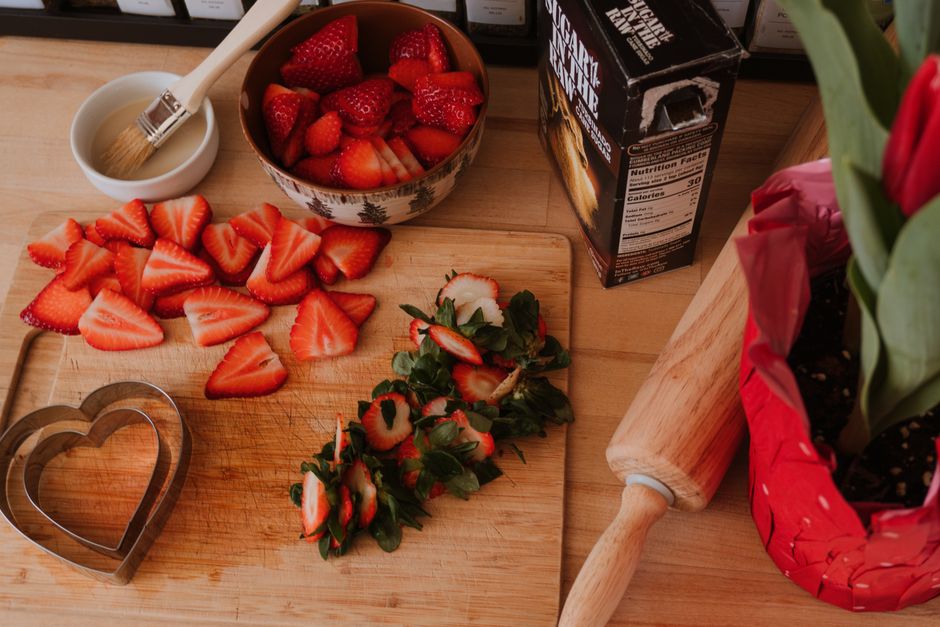
Choose firm, ripe strawberries with a strong smell and bright colour. Remove the green tops, then cut small berries into thin slices or larger berries into quarters. Very large chunks slide out when someone bites the scone. Tiny diced pieces release too much juice and turn the filling into a loose sauce.
Macerate briefly, then drain
For 450g strawberries, use 1 tablespoon caster sugar and 1 teaspoon lemon juice. Toss gently and leave the bowl for 15 to 20 minutes. That time draws out enough juice to soften the fruit and sharpen its flavour. Do not leave the berries for an hour. They will become limp, wet and difficult to pile onto the scone.
Drain the fruit in a sieve for five minutes before serving. Keep the juice for another use, such as brushing over the cut sides of the scones or stirring into sparkling water. Pat the berries once with kitchen paper if they still look glossy. They should be juicy inside, not dripping on the plate.
Use the right filling order
Split the cooled scone. Add cream first, then strawberries, then a small spoonful of jam. The cream forms a barrier between the bread and the fruit. If you put berries directly on the lower half, their juice reaches the crumb before the first bite.
For a firmer filling, fold one tablespoon of icing sugar into every 300ml of softly whipped cream. Stop when the cream holds a peak. Stiff cream tastes heavy and can push the berries out.
Which cream and jam actually work with the berries?
Rodda’s Cornish Clotted Cream is the best choice for a classic cream tea. Its thick texture stays in place, and its rich flavour lets you use less without making the scone greasy. Whipped cream is lighter, but it disappears quickly between the fruit and the crumb.
| Filling | Pack size or measure | Best use | Verdict |
|---|---|---|---|
| Rodda’s Cornish Clotted Cream | 227g tub | Traditional cream tea | Best for rich flavour and a stable spoonful |
| Double cream, softly whipped | 300ml batch | Lighter summer serving | Best when the strawberries are very sweet |
| Bonne Maman Strawberry Preserve | 370g jar | Bright fruit layer | Best for visible strawberry pieces and gentle sweetness |
| Homemade quick strawberry compote | 250g strawberries | Soft, saucy filling | Use only with fully cooled scones |
Pick jam that does not drown the fruit
Bonne Maman Strawberry Preserve works because it has a loose texture and visible fruit pieces without the sharp, artificial edge found in some very sweet preserves. Use about 2 teaspoons per scone. More than that covers the fresh strawberries and makes the filling slide.
Know when butter is the better choice
Serve salted butter instead of cream when the scones are for breakfast or a packed picnic. Butter handles heat and travel better. It does not create the same shortcake effect, but it will not melt into a puddle. For a formal cream tea, Rodda’s wins. For transport, butter wins.
The clear combination for a traditional plate is a plain scone, Rodda’s clotted cream, fresh macerated strawberries and a thin layer of Bonne Maman preserve.
Which mistakes make strawberry scones fail?
Most failures come from a short list. Fix these and the recipe becomes reliable.
- Warm butter: Soft butter blends into the flour and removes the flaky pockets. Chill the cubed butter for 10 minutes if the kitchen is hot.
- Too much flour on the counter: Extra flour gets folded into the dough and makes the scones dry. Dust lightly, then brush away the excess.
- Twisting the cutter: Twisting seals the edges. Press straight down and lift straight up.
- Overbaking: Dark tops and a hard centre mean the oven stayed on too long. Start checking at 12 minutes.
- Over-macerating the berries: Sugar keeps drawing out water. Drain the fruit after 20 minutes.
- Filling hot scones: Heat melts cream and pulls moisture into the crumb. Wait until the scones are barely warm.
- Using thin cream: Single cream runs straight off the plate. Choose clotted cream or softly whipped double cream.
When not to make the filled version
Do not assemble strawberry shortcake scones for a journey longer than 30 minutes unless you can carry the parts separately. Pack the cooled scones, drained berries, cream and preserve in separate containers. Fill them at the destination. For a hot picnic, skip whipped cream altogether and use butter with a small pot of jam.
When frozen strawberries are a poor substitute
Frozen berries work in a compote, but not in this fresh filling. Thawing breaks their cell walls and releases too much water. Use fresh strawberries for the shortcake version. Save frozen fruit for a cooked sauce where the extra juice becomes part of the dish.
How should you assemble and serve the final scones?
Fill each scone shortly before serving and keep the layers modest. A tall stack looks generous but falls apart after one bite. The best serving has enough cream and fruit to taste luxurious while still letting the scone remain the main structure.
Use this assembly
- Split one cooled scone with your hands or a serrated knife.
- Spread or spoon 1 tablespoon of Rodda’s clotted cream onto the lower half.
- Add 2 to 3 tablespoons of drained strawberries.
- Finish with 2 teaspoons of Bonne Maman Strawberry Preserve.
- Set the top half slightly off-centre so the filling stays visible.
Answer the practical serving questions
Should cream go on before jam? Yes. Cream protects the scone from the berry juice and gives the preserve something to cling to.
Can you make the scones ahead? Yes. Bake them up to one day ahead, but fill them at serving time.
Can you use whipped cream? Yes, when you want a lighter dessert. For the strongest cream tea result, clotted cream is better because it stays firm and tastes richer.
What is the clear recommendation? Bake plain 7cm scones with cold butter, macerate fresh strawberries for no more than 20 minutes, drain them well, and serve them with Rodda’s Cornish Clotted Cream and a thin layer of Bonne Maman Strawberry Preserve. That combination gives the best balance of crisp edges, soft crumb, fresh fruit and stable cream for a summer cream tea.