A medium apple provides about 4 grams of fiber, but its water content matters just as much in the oven. That moisture decides whether a cake stays tender, a turnover leaks, or a tarte fine turns crisp. In April 2026, availability depends on location: Northern Hemisphere bakers are usually working with stored autumn apples, while Southern Hemisphere bakers may find late-season local fruit. The practical rule is simple: choose apples for their baking behavior, not only their sweetness.
Which apples bake best in April?
April apples often have spent months in cold storage. That does not make them useless, but it can soften their texture and reduce their sharpness. A good baking apple should hold its shape, bring enough acidity to balance sugar, and release moisture at a manageable rate. The table below gives a working guide for three pastries rather than a single winner for every recipe.
Apple varieties by pastry
| Apple type | Texture after baking | Best use | Cut size |
|---|---|---|---|
| Granny Smith | Firm and slightly tart | Turnovers and crumble cake | 8 to 10 mm pieces |
| Pink Lady | Sweet, firm, and fragrant | Tarte fine and lighter cakes | 2 to 3 mm slices |
| Braeburn | Balanced and moderately firm | All three pastries | 8 mm pieces or thin slices |
| Golden Delicious | Soft and mild | Cake filling with less added sugar | 10 mm pieces |
| Bramley or another cooking apple | Sharp and quick to soften | Crumble cake with a sweet topping | 10 to 12 mm pieces |
For one apple that can move between recipes, Braeburn is the safest choice. It has enough firmness for a layered tarte, enough acidity for a cake, and a flavour that remains clear after baking. Granny Smith is the better pick when the recipe includes a rich crumble or a sweet glaze. Pink Lady wins for tarte fine because its thin slices keep a clean shape and look attractive without heavy decoration.
Use two varieties when the fruit tastes flat. Combining one tart apple with one sweeter apple creates more depth than adding extra sugar. That approach is especially useful with stored fruit from an older harvest.
Why apple moisture changes the result
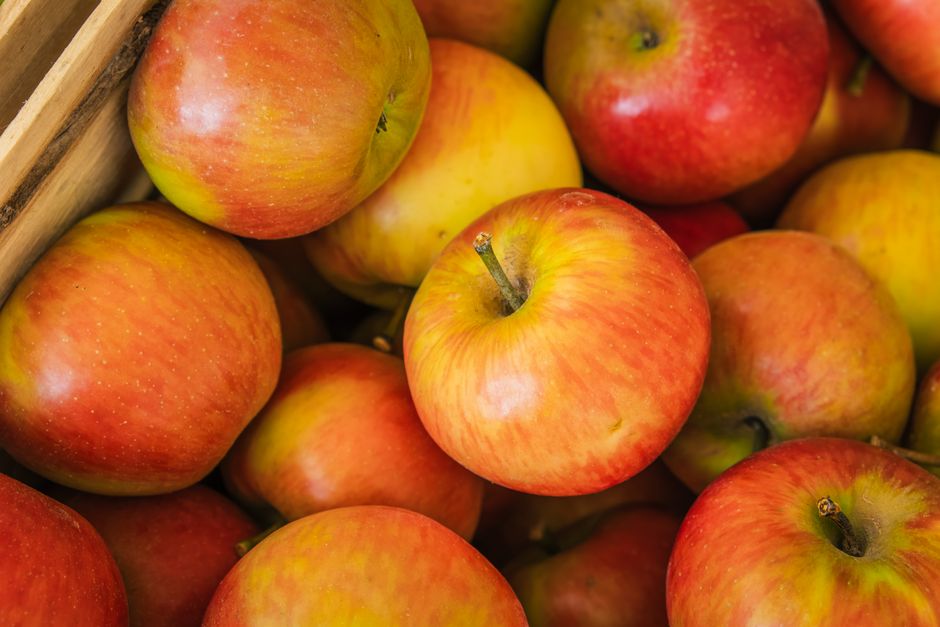
Apple pastry fails for one main reason: the fruit releases water faster than the crust or cake can absorb it. The result may be a wet layer under the crumble, a split turnover seam, or pastry that browns before the apple softens. This is a physical problem, not a sign that the recipe needs more sugar. Sugar pulls water from fruit, and a large amount can make the filling even looser.
Surface area controls moisture
Thin slices expose more apple surface to heat, so they soften quickly and lose water quickly. That is useful for tarte fine, where the slices must cook during a short bake. Small cubes behave differently. They create gaps inside a cake and release liquid into the crumb, which is why a cake filling needs a light coating of flour or starch. Large chunks retain their shape but may remain firm when the surrounding cake is already done.
Temperature controls structure
A moderate oven gives a cake time to set around the fruit. A hotter oven works better for laminated pastry because it creates steam and browns the layers before butter leaks away. For an apple crumble cake, use 175°C conventional heat or 160°C fan heat and bake until the centre reaches about 96°C if you use a thermometer. For turnovers and tarte fine, begin near 200°C conventional heat or 180°C fan heat, then reduce the heat only if the pastry browns too quickly.
Do not rinse cut apples immediately before filling the pastry. Extra surface water dilutes the thickener and encourages leaks. Peel only when the skin feels tough or the finished texture needs to be smooth. A thin peel can add colour and help apple slices hold together.
How to make an apple crumble cake that stays tender
The best crumble cake has three separate textures: a soft cake base, a concentrated apple layer, and a topping that stays rough and crisp. The following method works for a 20 cm round tin or a 20 cm square tin.
Prepare the layers
- Heat the oven to 175°C conventional or 160°C fan. Grease the tin and line the base with baking paper.
- Cut 350 g of firm apples into 8 mm pieces. Toss them with 15 g plain flour, 1 teaspoon of lemon juice, 1 teaspoon of cinnamon, and 25 g brown sugar.
- Make a batter with 120 g softened butter, 120 g caster sugar, 2 eggs, 150 g plain flour, 6 g baking powder, and 60 ml milk. Stop mixing as soon as the flour disappears.
- Spread the batter in the tin, arrange the apples in an even layer, and press them lightly into the surface.
Build a crisp topping
Rub 60 g cold butter into 90 g plain flour, then mix in 60 g rolled oats, 60 g brown sugar, and a pinch of salt. The mixture should form uneven clumps rather than a smooth paste. Scatter it over the apples without pressing it down. Bake for 45 to 55 minutes, checking the centre with a skewer. A few moist crumbs are acceptable; wet batter is not. Cool for at least 25 minutes before slicing, because the fruit juices thicken as the cake rests.
The clear verdict is to keep the apple layer shallow. More fruit may sound generous, but a layer deeper than 2 cm makes the centre heavy and can leave the cake underbaked.
Turnovers or tarte fine: which pastry deserves the apple?
The hand-held choice
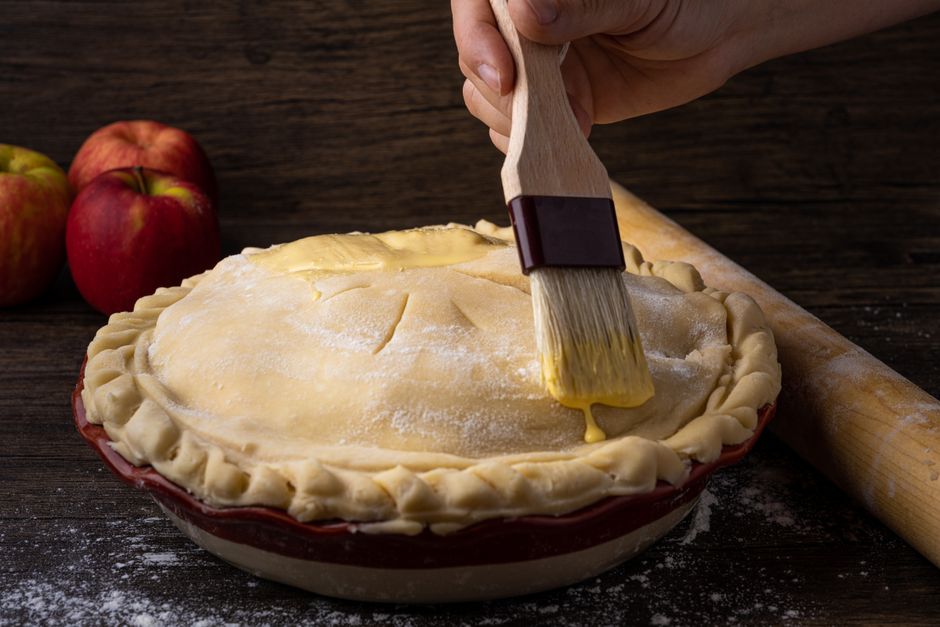
Choose turnovers when the purpose is portability, portion control, or serving pastry warm without plates, because each 12 cm square of puff pastry can hold roughly 80 g of diced apple, 10 g of sugar, and a small pinch of starch while the folded edges protect the filling from direct heat; seal the border with water, press it with a fork, cut two vents in the top, brush with beaten egg, and bake at 200°C conventional heat for 22 to 28 minutes, accepting that some juice may escape because a sealed pastry pocket concentrates steam.
The fastest table dessert
Choose tarte fine when crisp edges and visible apple slices matter more than a generous filling, because a 25 cm pastry sheet can take only 2 to 3 mm slices arranged in overlapping rows before the fruit becomes too thick to cook evenly; brush the slices with melted butter, add a restrained layer of sugar, and bake at 200°C conventional heat for 18 to 24 minutes, making it the stronger choice for a quick dessert that looks finished without icing or a second crust.
The specific recommendation
For family breakfasts, bake the crumble cake; for lunch boxes, make turnovers; for an April dinner, choose tarte fine because it gives the clearest apple flavour and the crispest contrast.
Five apple pastry mistakes that cause most failures
Apple desserts rarely fail because of one dramatic error. Small choices add up: wet fruit, a crowded pan, a weak seal, or a cake that leaves the oven too early. These are the failure modes worth checking before changing the recipe.
Crust and pastry failures
- Overfilling turnovers: Keep the filling below 80 g per 12 cm pastry square. A larger amount pushes against the seam and creates leaks.
- Skipping the vent: Steam needs an escape route. Without two small cuts, the top can split at its weakest point.
- Using warm pastry: Chill shaped turnovers for 15 minutes before baking. Cold butter creates better layers and slows early spreading.
- Adding wet filling: Drain apples after macerating and mix the released liquid back only in small amounts.
Cake and fruit failures
- Cutting apples too thick: Pieces larger than 12 mm may stay firm while the cake dries around them.
- Adding extra sugar to bland apples: Improve flavour with lemon zest, cinnamon, or a second apple variety before increasing the sugar.
- Checking only the edge: The middle of an apple cake sets last. Test the centre, not the browned rim.
- Serving immediately: A 20 to 30 minute rest lets the crumb firm and the fruit juices settle.
The most common avoidable mistake is treating all apple varieties as interchangeable. A sweet, soft apple needs less sugar and a shorter bake than a firm, tart apple.
Can you adapt these apple pastries without losing texture?
Can you reduce the sugar?
Yes, but reduce it with a purpose. In a cake, remove up to 25 g from the batter when using sweet apples, but keep the sugar in the crumble because it helps the topping brown and crisp. In tarte fine, reduce the surface sugar by one-third and add lemon zest for sharper flavour. Do not remove every sweetener from a turnover filling; the fruit may taste harsh after its moisture concentrates.
Can you use gluten-free flour?
For crumble cake, replace the plain flour with a reliable gluten-free baking blend by weight and add 15 g ground almonds if the blend lacks structure. Let the baked cake cool fully before slicing because gluten-free crumbs firm more slowly. Turnover pastry is less forgiving. Use ready-made gluten-free puff pastry only if it rolls without cracking, and keep the filling small. Tarte fine is the easiest adaptation because the pastry carries less weight from the fruit.
When should you not choose tarte fine?
Do not choose tarte fine for apples that collapse quickly, for a dessert that must travel warm, or for a crowd expecting large portions. The thin format offers a crisp finish, but it does not hide bland fruit or compensate for excessive moisture. Use crumble cake when the apples are soft, use turnovers when the dessert needs to travel, and use tarte fine only when the fruit is firm enough to remain visible.
Which apple pastry is the best April plan?
A sensible April schedule starts with the fruit that needs the most protection and ends with the pastry that shows the fruit most clearly. That order reduces waste and gives you a useful way to judge stored apples before committing to a delicate bake.
A practical three-bake schedule
| Day | Pastry | Apple preparation | Oven and timing |
|---|---|---|---|
| Friday | Apple crumble cake | 8 mm pieces, lightly floured | 175°C, 45 to 55 minutes |
| Saturday | Apple turnovers | Small dice, 80 g per pastry | 200°C, 22 to 28 minutes |
| Sunday | Tarte fine | 2 to 3 mm slices | 200°C, 18 to 24 minutes |
The final recommendation
For most April bakers, the apple crumble cake is the best first choice because it tolerates stored fruit, moderate variation in apple sweetness, and small cutting errors while still delivering a clear contrast between soft cake, tender fruit, and crisp topping. Choose Braeburn for the most balanced result, Granny Smith when the crumble is rich, and Pink Lady when a thin tarte needs neat slices.