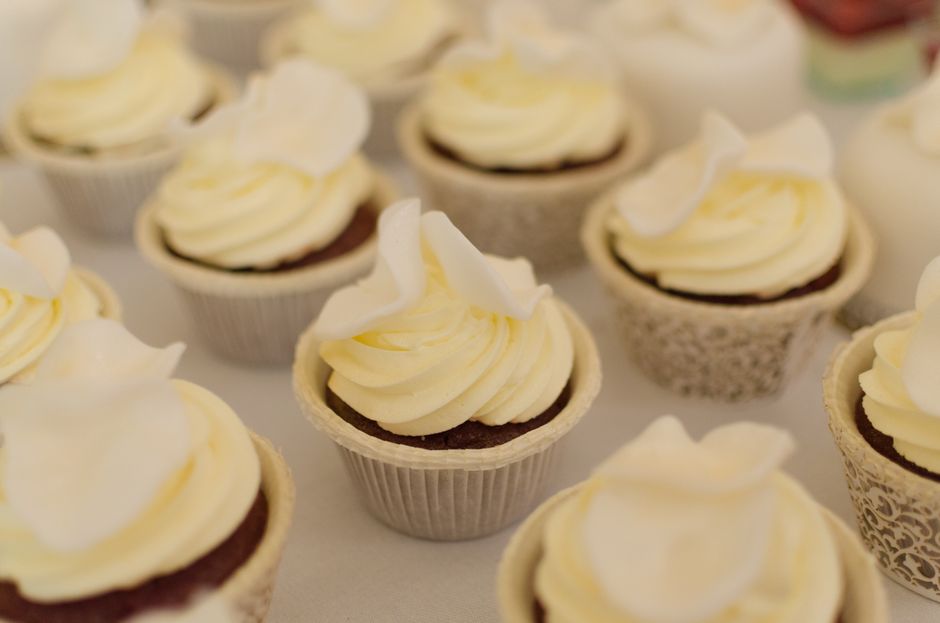
You pipe a perfect swirl, leave the tray on the counter, and return to find soft frosting sliding down the sides. The usual causes are simple: warm ingredients, weak structure, or cupcakes that were still hot when you decorated them.
Why vanilla cupcakes sink or lose their shape
Start with the batter temperature
Vanilla cupcakes need a balanced batter, not a heavy one. Use room-temperature eggs, milk, and butter, but do not let the butter turn oily. Soft butter should press easily under a finger and still hold ridges. Melted butter changes the batter structure and often produces greasy, flat cupcakes.
Cream the butter and sugar for 3 to 4 minutes at medium speed. The mixture should look pale and fluffy, with no dense yellow streaks. That step traps air. Add the eggs one at a time, scraping the bowl after each addition. If the mixture looks curdled, add a spoonful of the measured flour before continuing.
Measure the raising agents precisely
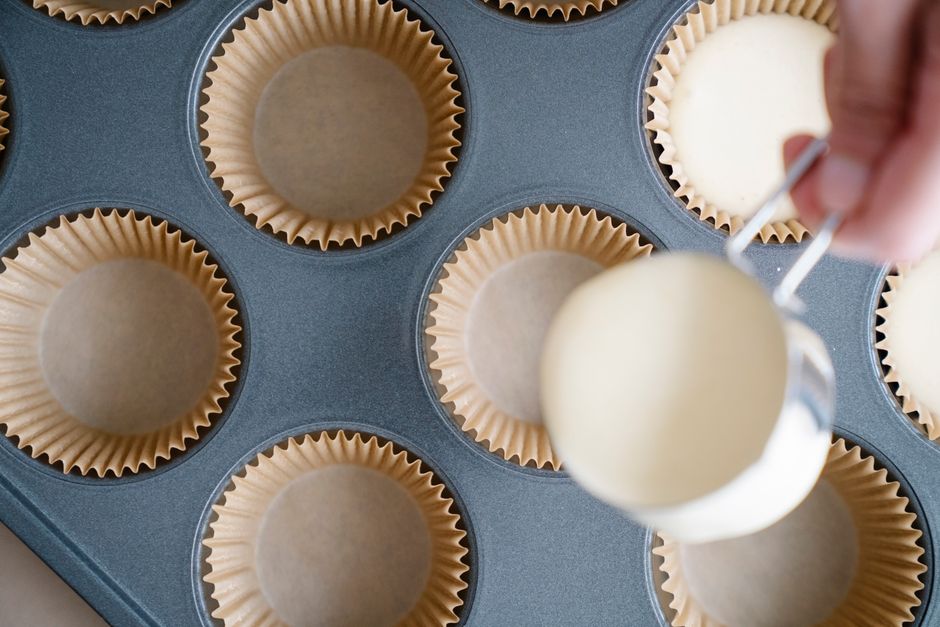
For 12 cupcakes, use 150 g all-purpose flour, 150 g sugar, 115 g unsalted butter, 2 large eggs, 120 g whole milk, 6 g baking powder, 2 g fine salt, and 10 g vanilla extract. Fill each liner two-thirds full, about 55 g of batter. Bake at 175°C or 350°F for 18 to 21 minutes.
Do not open the oven during the first 15 minutes. A sudden temperature drop can collapse the center. The cupcakes are ready when the tops spring back and a toothpick shows a few moist crumbs. A completely clean toothpick usually means you baked them too far.
How to make buttercream that holds a sharp swirl
Build the frosting around a firm ratio
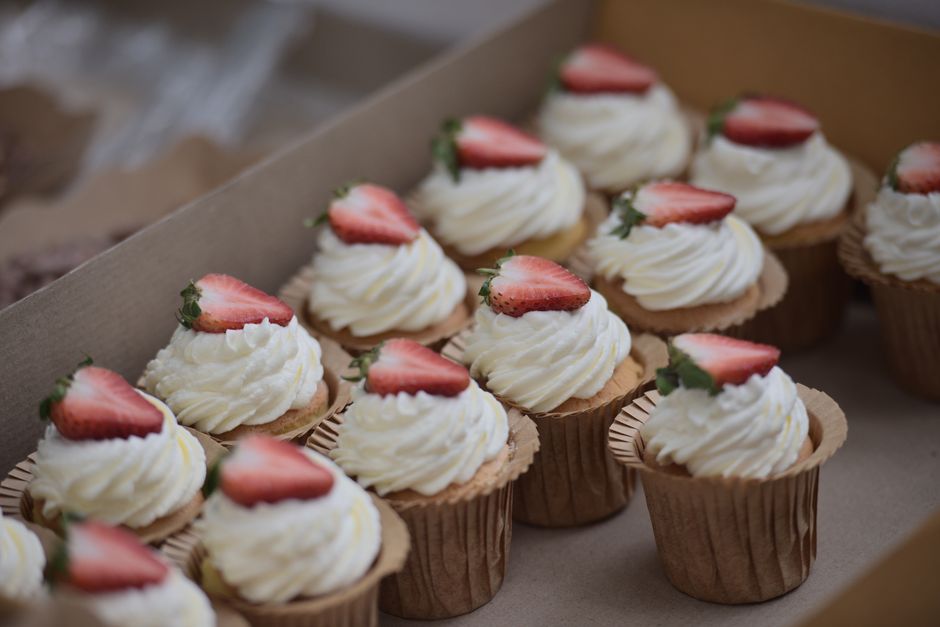
Stable American buttercream starts with structure. Beat 225 g unsalted butter for 5 minutes, then add 360 g sifted powdered sugar in three additions. Mix in 30 g heavy cream, 5 g vanilla extract, and 2 g salt. Beat for another 3 minutes. This gives you enough sugar for shape without turning the frosting into a dry paste.
The frosting should stand on the paddle when you lift it. If it slumps, add powdered sugar 15 g at a time. If it feels stiff and tears in the piping bag, add cream 5 g at a time. Do not pour in a large splash. That is how a stable batch becomes loose.
Control heat before you pipe
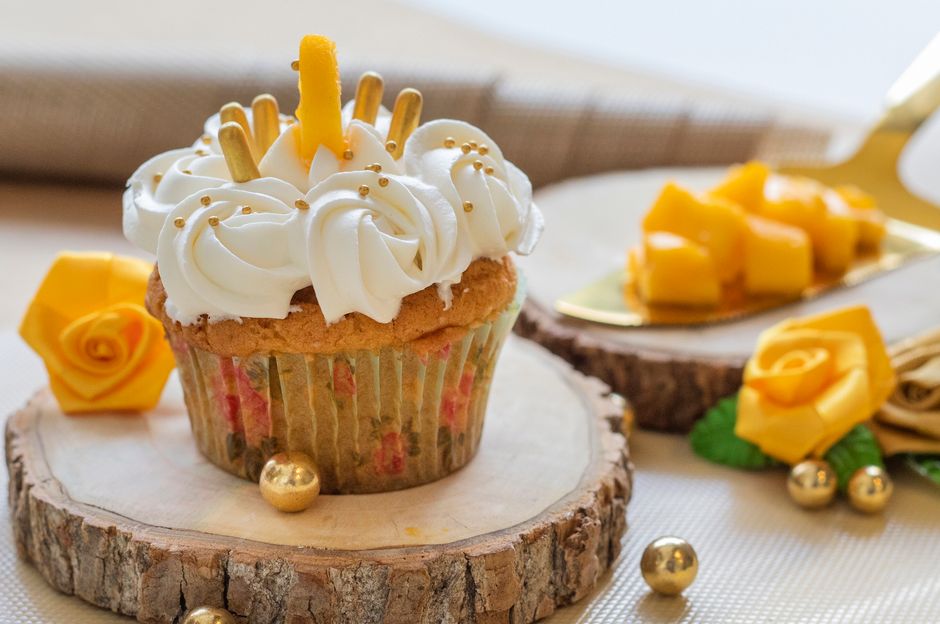
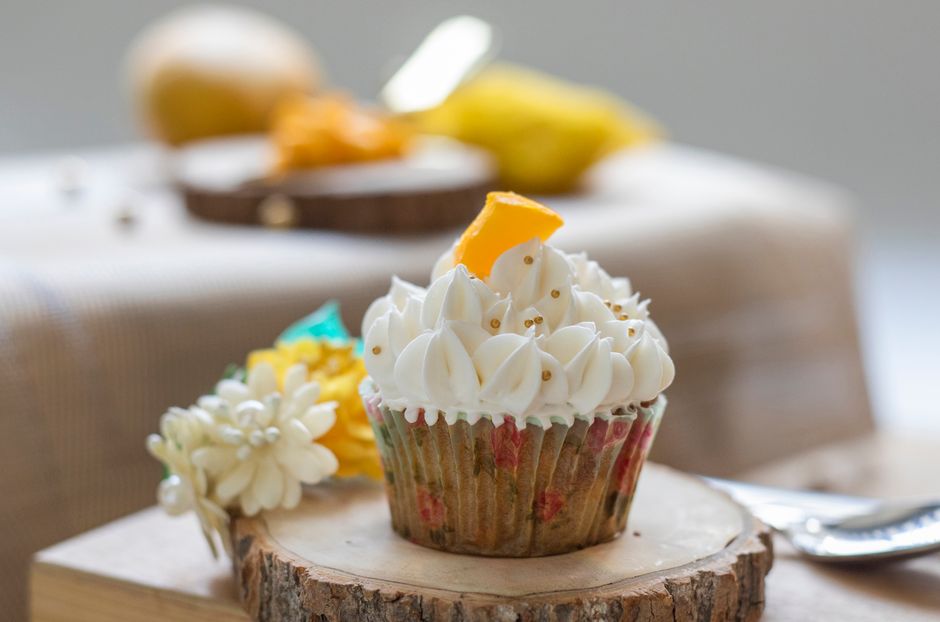
Buttercream softens quickly above 24°C or 75°F. Chill the finished bowl for 10 minutes, then beat it again for 60 seconds. Fit a piping bag with a large open-star tip and fill it only halfway. A packed bag warms from your hands faster, and the last cupcakes will have softer swirls than the first.
For a firm finish, pipe the cupcakes and chill them for 20 minutes before adding sprinkles, fruit, or small sugar decorations. Cold buttercream sets its outer shape while the center stays creamy.
Which ingredients and tools give the most reliable result?
The brand matters less than the measurement, but some products make consistency easier. Use a kitchen scale for flour, butter, sugar, and milk. Cups are useful for quick checks, not for accuracy.
| Ingredient or tool | Useful specification | How to use it |
|---|---|---|
| King Arthur Baking Unbleached All-Purpose Flour | 120 g per level cup | Weigh 150 g for 12 cupcakes; never pack the cup |
| Kerrygold Unsalted Butter | 113 g per US stick; about 80% butterfat | Use 115 g for the batter and softened, not melted, butter for frosting |
| Nielsen-Massey Madagascar Bourbon Pure Vanilla Extract | 5 g per teaspoon | Use 10 g in the batter and 5 g in the buttercream |
| KitchenAid Artisan Series 5 Quart Tilt-Head Stand Mixer | 325-watt motor; paddle attachment | Use medium speed for creaming and low speed after adding sugar |
| Wilton 1M Open Star Piping Tip | Open-star tip for ridged swirls | Pipe from the center upward for a clean bakery-style finish |
Choose fresh leavening
Baking powder loses strength in a damp cupboard. Test it by dropping 6 g into hot water. It should fizz immediately. If the reaction looks weak, replace it. Old baking powder is a cheap ingredient that can ruin an entire batch.
Use liners that release cleanly
Thin paper liners can pull away from the cake when the cupcakes contain too much moisture. Standard foil-lined liners hold their shape better, especially when the cakes cool in a humid kitchen. Let the cupcakes cool in the pan for 5 minutes, then move them to a rack so steam does not collect underneath.
How to decorate cupcakes without tearing the frosting
Follow this order
- Cool the cupcakes completely. The centers should feel neutral, not warm, when you touch the bottom of a liner.
- Beat the buttercream again for 30 to 60 seconds after chilling. This removes firm lumps.
- Press the piping bag against the counter to push out air pockets before piping.
- Hold the tip 1 cm above the cupcake center. Squeeze until the frosting reaches the edge.
- Keep squeezing while moving in a slow circle, then lift slightly and release pressure.
- Chill the finished cupcakes for 20 minutes before transporting them.
Do not drag the piping tip through a warm cupcake top. Crumbs will break loose and stain the frosting. If the cake top is uneven, trim only the tallest ridge with a small serrated knife. Removing too much cake creates a thin base that cannot support a tall swirl.
Keep decorations light
Small sprinkles, sanding sugar, and thin chocolate pieces work well. Heavy fruit, thick fondant shapes, and wet jam centers can pull the buttercream sideways. Add fruit immediately before serving, and pat cut surfaces dry with paper towel. Moisture is the enemy of sharp piping.
American buttercream is the best choice for most decorating jobs
Why I would pick it first
For home bakers who need reliable swirls, American buttercream wins. It needs no cooked syrup, no egg whites, and no specialist thermometer. The high powdered-sugar ratio gives it enough body to hold stars, rosettes, and simple borders for several hours in a cool room.
Swiss meringue buttercream tastes less sweet and feels silkier, but it takes more work. You must heat egg whites and sugar to about 71°C or 160°F, whip the mixture until the bowl cools, then add butter slowly. French buttercream is rich and soft because of the egg yolks. It is excellent for filling, but it is a poor pick for a warm party table.
Know when to choose another frosting
Pick Swiss meringue buttercream when sweetness is your main complaint and you have time to cook the base. Pick cream cheese frosting for carrot cake or red velvet, where its tang fits the cake. Do not choose a soft cream cheese frosting for tall vanilla cupcake roses. It will slump unless you chill it constantly.
For a standard birthday tray, use American buttercream. It is the clearest choice because it balances speed, stability, and easy repairs.
Common buttercream and cupcake questions
Why is my frosting melting in the piping bag?
Your hands are warming it, or the butter was too soft before mixing. Chill the filled bag for 10 minutes. If the frosting still droops, beat in 30 g powdered sugar and test one swirl. Keep unused frosting in the bowl and work in small batches.
Why do my cupcakes have greasy wrappers?
The batter may contain too much fat, the oven may be too cool, or the cakes may have sat in the hot pan too long. Confirm the oven with an oven thermometer, weigh the butter, and move the cupcakes to a rack after 5 minutes. Greasy wrappers are a process problem, not something extra flour will fix.
Can I decorate cupcakes the day before?
Yes. Pipe them, place them in a single layer, and refrigerate them in a sealed carrier. Remove them 45 to 60 minutes before serving. Do not seal warm cupcakes; trapped condensation will soften both the cake surface and the frosting.
Fix the failure before you bake another batch
Use this quick diagnosis
- Sunken centers: too much liquid, an early oven door opening, or underbaking. Weigh the milk and bake until the center springs back.
- Dry cupcakes: overbaking or too much flour. Pull them when moist crumbs cling to the toothpick.
- Runny frosting: warm buttercream or excess cream. Chill first, then add powdered sugar in small amounts.
- Broken swirls: air pockets or a narrow piping tip. Refill the bag halfway and use a large open-star tip.
- Frosting sliding off: warm cupcakes or wet toppings. Cool the cake fully and dry fruit before adding it.
The final decorating verdict
Use gram weights, cool the cupcakes completely, and give the buttercream enough sugar to stand. The recipe is not difficult; rushing the temperature control is what causes most failures.
For vanilla cupcakes that stay neat and decorate cleanly, cool the cakes fully before piping a firm American buttercream.